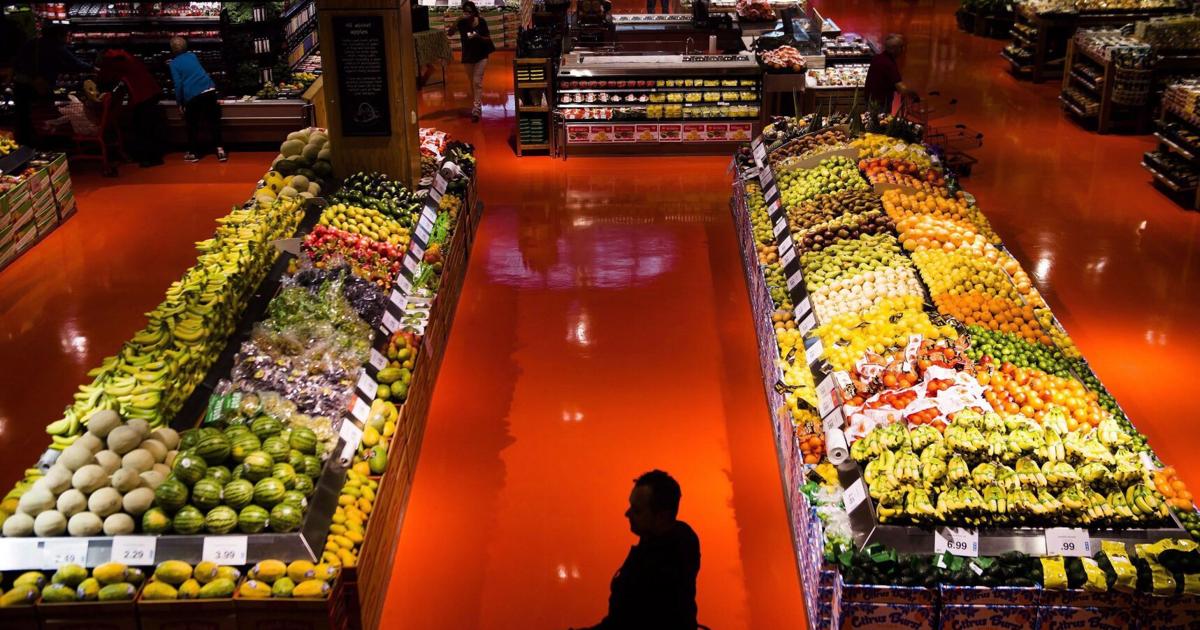
Loblaw is bringing back country-of-origin signs and maple leaves to mark Canadian produce, shortly after the company removed them from its aisles, a spokesperson confirmed Tuesday.
The grocery giant is also bringing back the T symbol on American products that are impacted by the tariffs, Youmna Rab, a retail communications manager for Loblaw, said. The move comes after the Canadian government announced they will impose counter tariffs on $27.6 billion in U.S. imports, including several food staples like dairy, fish and seafood beginning on Sept. 8.
The company faced criticism for removing the markers earlier in the month, but reversed the decision on Tuesday.
Sobeys parent company Empire Co. also said Wednesday it is planning to ramp up its store signs to highlight Canadian products after taking them away in March. A spokesperson for Metro confirmed their stores continue to display country-of-origin signs.
“As Canada enters another period of trade uncertainty with the United States, we are once again taking steps to give customers clear information about products affected by tariffs,” Rab said in an emailed statement about changing course. “Supporting Canadian suppliers can further strengthen domestic supply chains and reduce our exposure to some international disruptions.”
The grocery giant has previously faced fines for incorrectly labelling Canadian products.
There is no federal requirement for grocers to identify the source country on retail displays like shelf tags or price signs, according to the Canadian Food Inspection Agency (CFIA), though some country-of-origin labels remained in Ontario due to stricter provincial laws. The CFIA fined Loblaw-owned Real Canadian Superstore $10,000 in February for “misleading” Product of Canada signs at a Toronto location.
They initially got rid of the signs to mitigate risk, despite critics complaining that it is already difficult enough to “Buy Canadian” with misleading labels said Michael von Massow, a food economics professor at the University of Guelph.
“It becomes an administrative nightmare to highlight which products are Canadian at which time of the week.”
Von Massow said the backlash for mislabelling was more harmful to the brand than the actual fines: “There’s the perception that, ‘oh, they’re screwing us.’”
How to actually buy Canadian
Food can use the Product of Canada claim when “all or virtually all major ingredients, processing, and labour used to make the food product are Canadian,” according to the CFIA.
The agency said that imported fresh fruits and vegetables that were packaged before coming into the country, like a bag of apples, have to divulge the country of origin on a label. The CFIA added that all voluntary and involuntary signs have to be accurate, as it could impact shoppers.
Von Massow said there are often challenges for consumers in individually labelled produce. He recently got fooled by a halal ground beef package that boasted a large maple leaf on the front, only to find out that the beef was just Canadian certified, and the back label specified that it was a product of New Zealand.
He added that some produce, like broccoli, typically doesn’t have stickers on it.
Mike Chromczak, an asparagus and watermelon grower who also serves as Chair of The Ontario Fruit and Vegetable Growers’ Association (OFVGA) said he still believes most packaging is accurate.
“The best thing to do is look for logos, particularly the Foodland Ontario logo,” Chromczak said.
While his members grow year-round, he said now is a good time for the “Buy Canadian” movement to pick up some steam as so much produce is in season, which makes it cheaper for shoppers.
With files from the Canadian Press.