

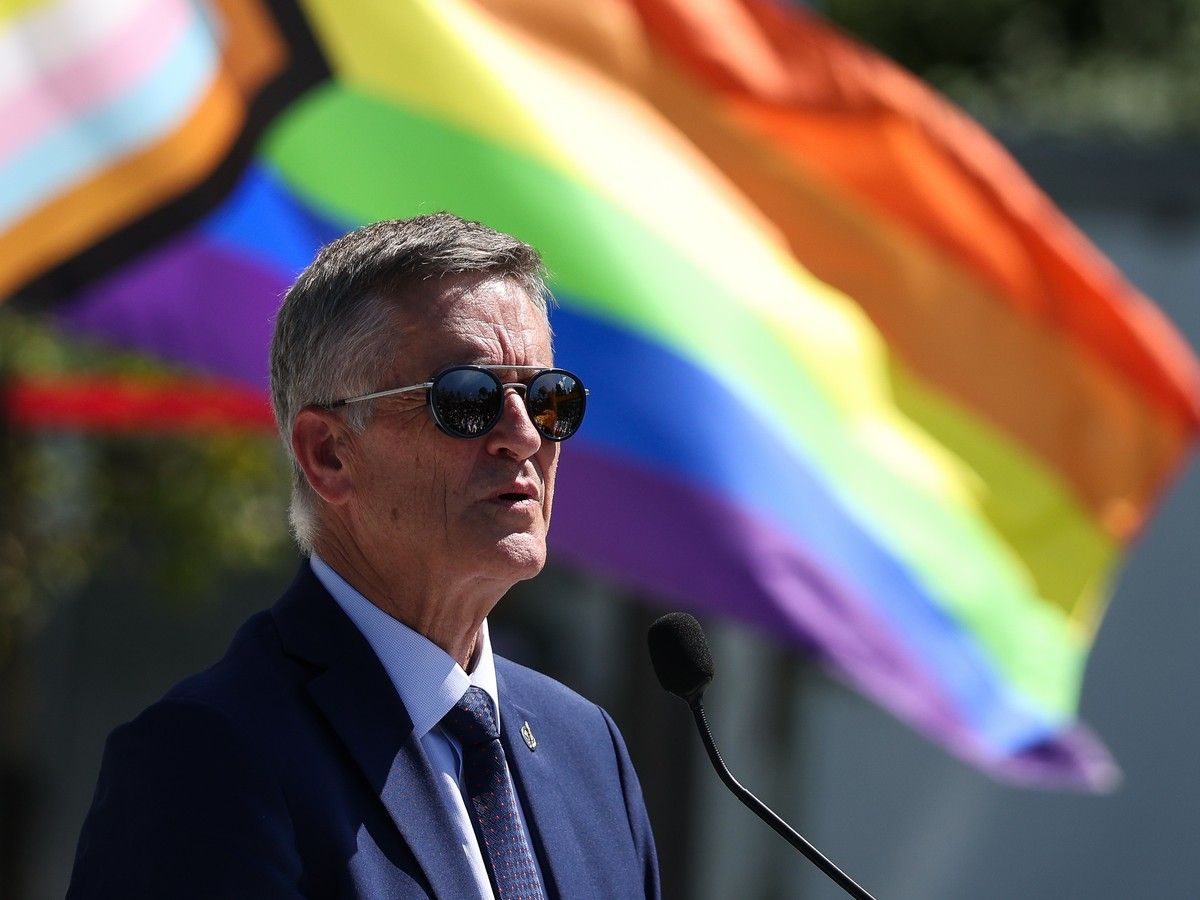
Svend Robinson says it was the early 1980s when he started hearing from public servants who’d been purged.
In the decades since, first as a long-serving NDP Member of Parliament and more recently as a consultant for the LGBT Purge Fund, Robinson has worked to shed light on the long history of the LGBT Purge in Canada’s federal public service .
The purge refers to a period from the mid-1950s to the mid-1990s during which members of the Canadian Armed Forces , RCMP and federal public service were discriminated against, harassed or sometimes fired from jobs based on their sexual identity.
During the Cold War, a widespread view across government held that gay and lesbian public servants represented a security risk because their sexuality could be exploited by the Soviets.
The government hired informants and spied on its own workers. Hundreds were fired, demoted or forced to inform on their co-workers. An estimated 9,000 people were harmed.
“This was evil,” said Robinson, who was first elected as an MP in 1979 and later became the first Canadian MP to openly identify as gay.
“This was evil — the treatment of these people, a number of whom committed suicide. Many of them had years of therapy that they needed, drug abuse, and so on. It was truly evil.”
On Aug. 21, Robinson spoke at the unveiling ceremony for Thunderhead, the new national monument recognizing discrimination against LGBTQ+ people, including victims of the purge.
In an interview with the Ottawa Citizen, Robinson said he felt as though the ceremony had put him in touch with those who were no longer around to celebrate. He remembered stories of resistance from those who fought back. And, he said, he felt “rage.”
“Rage at the Department of Justice, who continue to block access to the truth and have done that from Day One,” he said.
For Robinson, the unveiling of the monument was both a cause for celebration and a reminder of an ongoing battle to access key documents he believes are necessary to telling a full history of the purge.
‘Massive redactions’
In 2018, the federal government settled a nation-wide class action lawsuit for $145 million, including $110 million for damages paid to victims of the purge.
The LGBT Purge Fund, a not-for-profit corporation set up to manage a portion of the funds dedicated to “reconciliation and memorialization measures,” received nearly $24 million of the settlement.
The fund, which created the Thunderhead monument, is required to wind down and disburse all the funds under its management by June 30, 2027.
But the monument isn’t the fund’s only job.
Another of its mandates involves collecting, preserving and making accessible historical records related to the purge. The fund brought in Robinson as a consultant to review the documents and to identify gaps.
Under the terms of the settlement of the lawsuit, the federal government released a first batch of documents that were conveyed to the fund by the Department of Justice.

“There were massive redactions of the documents,” Robinson said before pointing to a 2017 speech in the House of Commons by former prime minister Justin Trudeau in which he apologized for the purge and committed to ensuring the history would be made publicly accessible.
“It became clear that the commitment that the prime minister had made was not being honoured,” Robinson said.
The Department of Justice didn’t respond to a request for comment.
Efforts to retrieve documents took ‘many twists and turns’
Michelle Douglas, executive director of the LGBT Purge Fund, said it became immediately obvious that obtaining the records would “be a journey with many twists and turns.”
“We could see that there were redundancies, duplications, extensive redactions, irrelevant documents,” said Douglas, who was honourably discharged from the military in 1989 and later launched a legal challenge against the military’s policies for LGBTQ+ service members.
“It was very clear to us early on that this was, as we saw it anyway, not the best effort that could have been made.”
Over the coming years, the fund “undertook a series of detailed engagements, often using lawyers,” Douglas said.
“We knew for a fact there were additional documents available in the government’s collection that we wanted to see, that we believed should be produced in a spirit of transparency and openness to help shed greater light.”

After much legal wrangling, the fund secured a subsequent order — the fourth settlement agreement — for a second batch of documents.
“That was a major victory for the purge fund,” Robinson said.
The stack of documents released so far, all of which are available publicly in their original formats, includes numerous revelations about the extent of the government’s systematic discrimination against LGBTQ+ members of the public service, RCMP and military, he said.
Robinson received a grant from the fund to write a book about the purge and has been engaged in the “fairly daunting undertaking” of sifting through thousands of pages of material.
In many cases, details in the documents have pushed him to file requests for further information under the Access to Information Act — efforts that he said were routinely thwarted by an abuse of exemptions baked into the law.
Douglas said the fund was pushing for greater access to “a handful” of documents relating to the purge that she believed should be made public.
“We understand, of course, that the government should fairly be able to protect records that are sensitive from a national security perspective or contain vulnerable facts about someone,” she said, “but we also think in some cases the government has just taken it too far.”
Don’t let algorithms hide the follow-up. If you are tracking this story, make the Ottawa Citizen a preferred source so you get our live updates the next time you search.

