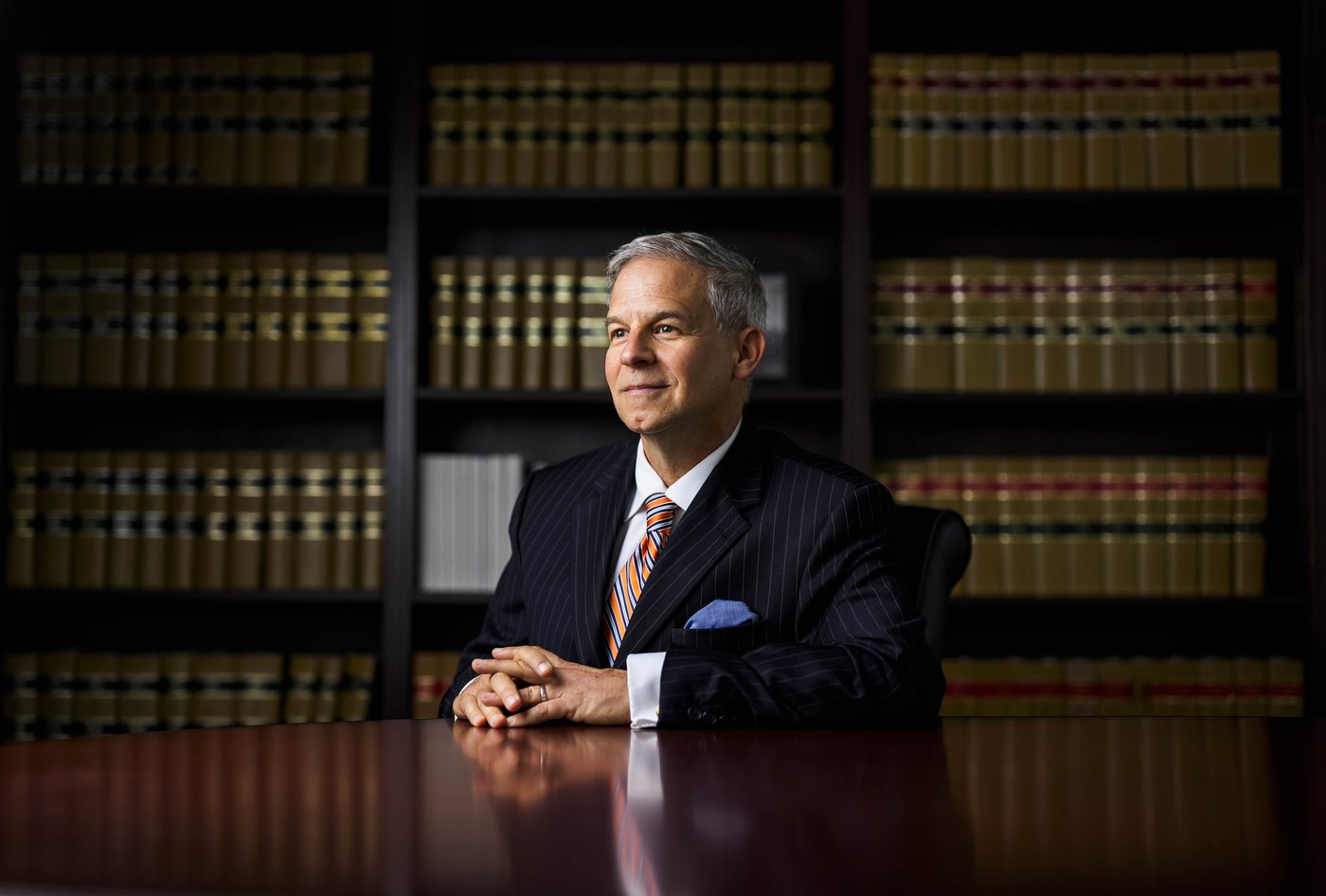
Mayoral election rivals Brad Bradford and Olivia Chow both pitched themselves Thursday as Toronto businesses’ best shield from Trump’s punishing tariffs — while exposing the limits of mayoral might.
Bradford, the Beaches-East York councillor angling for a promotion, and Chow, seeking re-election as mayor, held duelling news conferences at the same time at different North York businesses.
Each sought to reassure local firms hit by U.S. President Donald Trump’s economic warfare on Canada — boosting earlier imposed tariffs on Canadian goods to 50 per cent — that they have their backs.
What can a Toronto mayor actually do about tariffs?
Acknowledging they can’t impose counter-tariffs like Prime Minister Mark Carney, or threaten to cut off electricity supplies like Premier Doug Ford, they said a mayor can help fight Trump in other ways.
“I have an understanding and command of the issue — we haven’t had a continual engagement with small businesses, with manufacturers, with entrepreneurs here in Toronto,” under Chow, Bradford told reporters at Brave Leather, a maker of belts, purses and other products that has suddenly seen its U.S. market — half of its business — erased.
Bradford promised, if elected, such measures as a “concierge” service connecting business to provincial and federal help, and a permanent “tariff-response table,” including manufacturers and workers, to co-ordinate measures.
Toronto under Chow already has a tariff response team made up of business experts, labour leaders and city officials, as well as ongoing initiatives to urge Torontonians to buy local and to ensure city hall’s purchasing power enriches U.S. firms as little as possible. Bradford said he would improve those initiatives.
Competing visions for tax relief
The candidates both say businesses need help through tax relief, but proposed different ways of getting there.
About 10 kilometres away Thursday, at the construction site of a second National Dry Beverages warehouse, Chow pointed to a tax incentive program the city established last year when the trade war first reared its head.
The temporary Economic Development and Growth in Employment (EDGE) program offers property tax grants to support the new construction, expansion and major renovation of buildings in certain sectors, such as manufacturing, to weather the worsening economic storm.
“Donald Trump is attacking us again, and he’s a bully,” Chow said. “In this city, we stand up against bullies and we do it the Toronto way: with heart, with our innovation and creativity.”
Dave Watson, operations vice-president at National Dry Beverages, said the incentive program has helped it double its warehouse footprint, which will allow it to hire more workers and attract new customers from both sides of the border.
“This (program) has really gotten us over the hump of ‘Do we do this or not, and is it the right time to do it?’” Watson said Thursday, adding in a statement to the Star that the firm received $1.3 million in tax incentives over five years through the EDGE program.
Chow said eight projects approved under the EDGE program represent about $220 million in construction investment, 583 projected new jobs and 725 retained jobs across Toronto.
However, city spokesperson Nichole Jankowski said the city isn’t able to calculate the total number of Toronto jobs impacted by the tariffs, “as the situation remains fluid and the effects vary significantly by sector, business and market conditions.”
Chow also told reporters the 2026 budget approved by council included a 20-per-cent property tax cut for small businesses, up from 15 per cent.
Bradford said as mayor he would revive his push to permanently cut property taxes on 3,500 industrial properties and small businesses by 25 per cent, calling it “real tax relief, not deferral.” Council voted down the proposal last year.
Bradford acknowledged, however, that U.S. firms owning local property would also benefit, as would owners of industrial sites rented by businesses.
Chris Alexander, one of the three high-profile candidates running for mayor, said in a statement he would expand the EDGE program, implement “more favourable” commercial property tax rates, and cut costs to various business licences and permits, among other measures.
Alexander’s statement said he would also “maximize” city spending and procurement of Canadian companies.
According to Jankowski, nearly 99 per cent of its spending already goes to Canadian companies, but added the municipality does not collect information on whether these companies operate exclusively in Canada or have international operations.
Tara Vinodrai, a U of T economic geographer, said buy-local and procure-local tools are good ways for mayors to protect local businesses, while property tax relief is a less precise “blunt instrument” with potential long-term downsides.
“The municipality makes a choice to reduce their own revenue, which maybe gives them less ability to do the things they might need to do to protect the city and its neighbourhoods in the longer run,” she said.
Jankowski explained that the partial tax grants are only issued after a project is done and a new property assessment has been generated. Right now, that could mean approximately $18 million in grants over time, “fully funded through the new property tax revenue generated by those investments.”
Torontonians go to the polls Oct. 26. There are 50 other mayoral candidates.
Clarification — Aug. 28, 2026
This article has been updated to clarify a city spokesperson’s comment about the inability of the city to calculate the number of jobs in Toronto impacted by tariffs.