

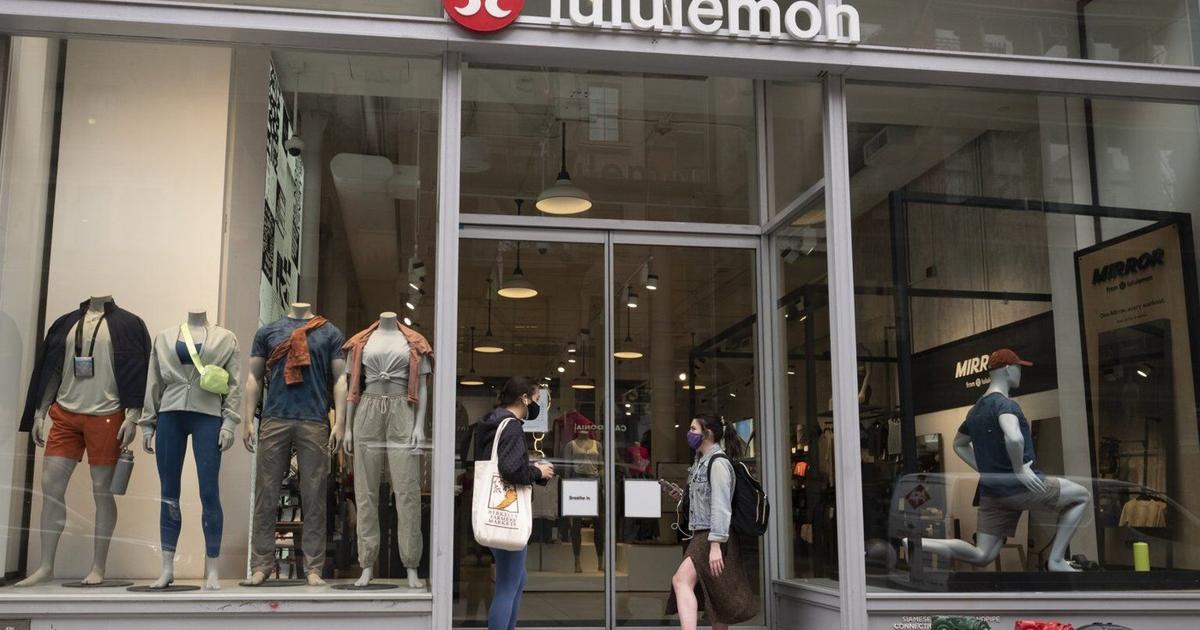
Lululemon Athletica Inc.‘s incoming chief executive will take the helm with new, lower financial expectations to meet.
The Vancouver-based athleisure company announced Thursday — days before former Nike chief executive Heidi O’Neill assumes the top job on Sept. 8 — that it was downgrading its financial outlook for its current fiscal year.
The reduction announcement came the same day as Lululemon revealed its latest quarter had brought a drop in profits, revenue and sales.
Interim co-chief executive and chief financial officer Meghan Frank admitted the company knows it has “significant work ahead of us.”
She posited that O’Neill is ready for that challenge.
“We expect she will take a deep dive into the business, evaluating our strategy and current action plan and we look forward to the fresh perspective she will bring to define the path forward for Lululemon’s next chapter,” Frank said on a call with analysts Thursday.
Lululemon has spent this year struggling to address several public challenges that have threatened to degrade the once-beloved brand’s reputation.
The drama began last December, around the time chief executive Calvin McDonald announced he would step down in January. Estranged Lululemon founder Chip Wilson, fed up with the retailer’s lagging stock and alleged inability to keep up with trendy competitors Alo and Vuori, treated the departure as his window to advocate for change.
He took out full-page newspaper ads and ran trucks by Lululemon locations pushing to get some of his picks added to the company’s board.
Lululemon rebuffed his requests, alleging Wilson wasn’t making nominees available and wasn’t co-operating with their board appointment processes.
In May, after O’Neill was announced as McDonald’s successor, Lululemon and Wilson reached a détente. Wilson agreed to stop the attacks for 18 months in exchange for three board picks and a quarterly check-in with O’Neill.
But Wilson was just one of Lululemon’s problems. Over the last year, it has encountered increasing competition, cutbacks in consumer spending and a tariff war. It has also had to temporarily remove a leggings line that was too see-through and faced criticism in China, where it used a Japanese drum at a yoga festival.
André Maestrini, interim co-chief executive and chief commercial officer, said Thursday that several issues, including the festival incident, had been weighing on Lululemon’s traffic and sales, particularly in China.
“We’ve experienced rapid growth in China mainland over the last several years, but while we are disappointed with the current performance in the region, we are focused across both product and brand efforts to drive inflection,” he said.
To rebound, the company is also working to streamline its merchandise and has decreased the number of products in stores by 15 per cent to give shops a less crammed presentation.
It is refocusing on full-price products in hopes of weaning customers off markdowns and aggressively reordered styles, like less fitting pants, that seem to be resonating with customers.
But shoppers aren’t loving everything the brand is releasing. Core categories like leggings are seeing a greater-than-expected slowdown, Frank said.
“The overall response to our product launches remains inconsistent, and we’ve continued to see pressure on the brand in both of our largest markets,” Frank said.
Meanwhile, the company has been cost-cutting where it can and scrutinizing its footprint. Lululemon will now open 35 net new stores this year, down from the 40 it had been planning for last quarter, Frank said.
It has also reduced the number of pop-ups on the calendar from 65 at the end of last year to about 40 by the end of 2026.
But perhaps the biggest thing Lululemon is paring back is its expectations. It downgraded its outlook for 2026, saying it now expects net revenue for the full year to be in the range of US$10.35 billion to US$10.50 billion, and diluted earnings per share to be between US$9.48 and US$9.73.
In June, it had anticipated net revenue for the full year to be in the range of US$11 billion to US$11.15 billion, and diluted earnings per share to be between US$10.95 and US$11.15.
The guidance cut dovetailed with Lululemon, which keeps its books in U.S. dollars, reporting net income of US$329.2 million in its second quarter, compared with US$370.9 million a year earlier.
The result for the period ended Aug. 2 amounted to earnings per diluted share of US$2.92, down from US$3.10 a year earlier.
Its net revenue was US$2.4 billion, down about four per cent from its prior second quarter.
Comparable sales decreased nine per cent overall but 12 per cent in the Americas — a region that includes its home market Canada — and three per cent in its international division.
This report by The Canadian Press was first published Sept. 3, 2026.

