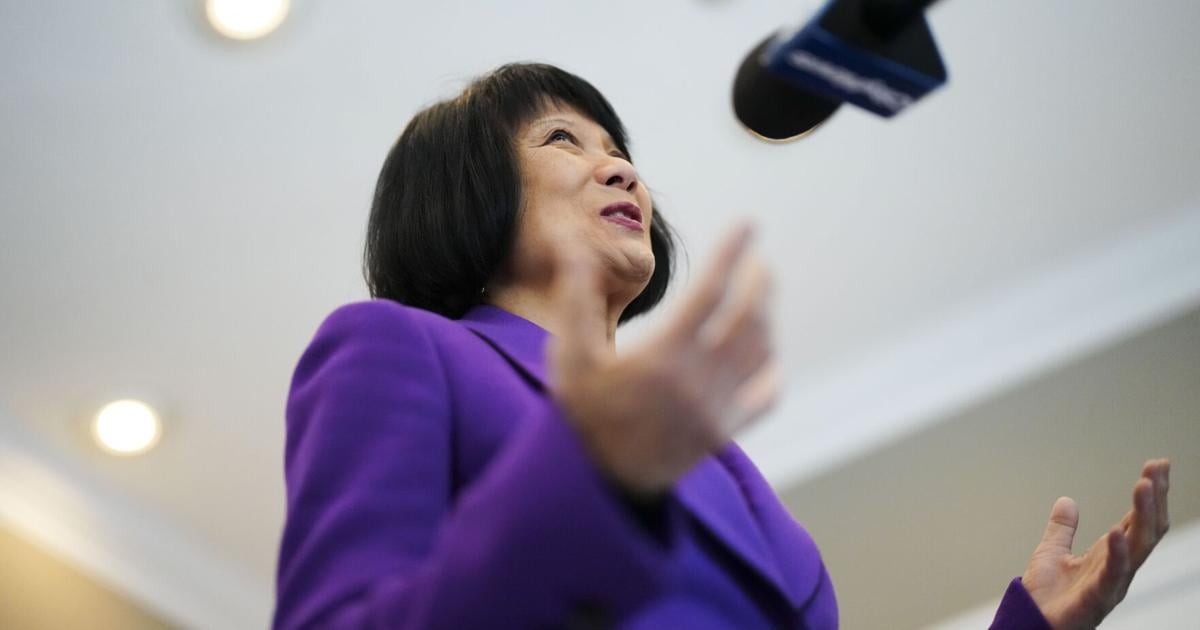
Olivia Chow says she will keep property tax rates “at or around” inflation every year, should Torontonians re-elect her next month.
In a statement to the Star on Thursday, Chow’s campaign team said a second term would come with a much lower figure than her first years in office, which included a record 9.5 per cent in 2024 and 6.9 per cent in 2025.
The campaign pledge would keep future rates in line with this year’s 2.2 per cent, which was slightly below inflation.
Chow’s highest-profile challenger, Brad Bradford, has repeatedly criticized her overall tax rate since she took office, at times citing how she promised a “modest” increase in her first campaign. Meanwhile, challenger Chris Alexander is promising not to raise property taxes his first year in office.
“Olivia Chow didn’t create (Toronto’s) financial crisis but took responsibility to fix it,” said a statement to the Star from Chow’s campaign spokesperson Shirven Rezvany.
“Torontonians helped get the city’s finances back on track, and after three years of work fixing the city budget, the city is now in a more sustainable financial position.
“Mayor Chow’s plan is to hold the line at or around inflation.”
The move appears to be in line with the progressive mayor’s shift toward the centre and in keeping with other decisions such as enlisting a prominent Liberal adviser, who helped Prime Minister Mark Carney get elected, to help run her campaign.
Municipalities have few fiscal tools
The property tax rate is an often fraught debate at city hall.
Ontario municipalities are limited in their revenue tools — as they can’t create new taxes and only receive about 10 cents of every tax dollar, with the rest going to the federal and provincial governments. But cities legally cannot run deficits either, unlike other levels of government, which means they need to balance their budget every year with various strategies.
Toronto’s property tax is arguably among every municipal politician’s biggest obstacles — it’s the municipality’s largest revenue source, it funds basic city services every year such as road repairs and keeping libraries open, but it hits residents’ pocketbooks directly.
“Municipal politicians have it in mind that among the most dangerous things they could do, in hopes of getting elected, is to have a high-tax reputation,” said Myer Siemiatycki, professor emeritus of politics and public administration at Toronto Metropolitan University.
Siemiatycki explained that because of the city’s revenue restraints, there is “absolutely a built-in tension” between raising property taxes while upsetting residents and recognizing there may not be enough money to sustain a viable city.
Bradford has targeted Chow tax rates
Bradford has often criticized Chow’s tax hikes, arguing the first couple were too high or far above the rate of inflation and would only make life in the city less affordable, and that this year’s low rate was achieved through “raiding” reserve funds. He’s indicated he would commit to a much lower overall rate compared to the 18.6 per cent the city’s seen in the past few years.
“NDP Mayor Olivia Chow looked residents in the eye and promised ‘modest’ tax increases last election,” said Bradford’s campaign spokesperson Laryssa Waler on Friday. “Voters have every reason not to take her word for it this time either.”
Bradford has announced several campaign pledges since last year, including TTC refunds for delayed trips, cops at every subway station, hiring 1,000 more front-line police officers and a larger tax cut for small businesses. He has said there will be a funding plan later in his campaign.
Alexander called Chow’s tax pledge “performative” and “an admission of failure” after her successive hikes have left residents feeling they’re shouldering an unfair financial burden.
At a press conference Friday, he pledged that if elected he wouldn’t raise taxes in his first year, and would increase them at a rate lower than inflation in his second. The promise differed from comments reported last week by CP24, in which Alexander proposed two years of tax freezes. He said Friday that raising the rate in the second year could still be considered a freeze because it would be less than the inflation rate.
The city’s costs go up each year due to inflation, population growth and other factors, so a freeze in tax revenue is often interpreted as an effective budget cut. Alexander said he wouldn’t have to reduce city services to keep his promise however, pledging to work with the provincial and federal governments to secure new sources of revenue, and find savings in the budget. He also said, “there would still be growth in other fees.” He has previously pledged to lower municipal licensing fees and eliminate permit charges for street events and farmer’s markets.
Besides promises of a reduced TTC fare cap, Chow has yet to make further campaign pledges and has said she plans to start campaigning more forcefully after Labour Day.
“I think they recognize affordability is a real issue,” Siemiatycki said of the platforms so far. “But we can’t have candidates running around for the next two months making all kinds of promises without identifying what does it cost … and how are you going to pay for it.”
Chow’s track record
Chow, who signalled in the 2023 mayoral byelection that years of low property taxes were hurting city services, took office that July for an abbreviated term when the municipality’s finances were still recovering from the pandemic and had a budget pressure — the inflation- and growth-related costs just to maintain existing services — of $1.9 billion.
Chow’s campaign spokesperson Rezvany said the low property tax pledge is because the municipality’s finances are on a path back to being “stable” and “sustainable.”
“Mayor Chow has spent considerable time repairing the city’s budget and financial outlook,” Rezvany said, pointing to the city’s reduced operating budget pressure, which was $1.3 billion this year.
He also pointed to several financial milestones including Chow’s historic $9-billion deal with the province that uploaded city highways, boosting taxes on the sale of “luxury” homes and funding from Ottawa for refugee shelter costs, housing, new subway cars and the Waterfront LRT.
In total over three years, Rezvany said Chow secured $15 billion from other levels of government.
All of these fiscal moves to “safeguard our finances,” plus the property tax increases, has meant the city’s credit rating improved to AA+ for the first time in 23 years, Rezvany said.
However, Siemiatycki said continued provincial funding — if Chow can secure another deal — may be key to keeping promises of a low property tax throughout a full term.
“If the province removed its current level of enhanced funding, that could be a real problem,” he said.
With files from Ben Spurr.