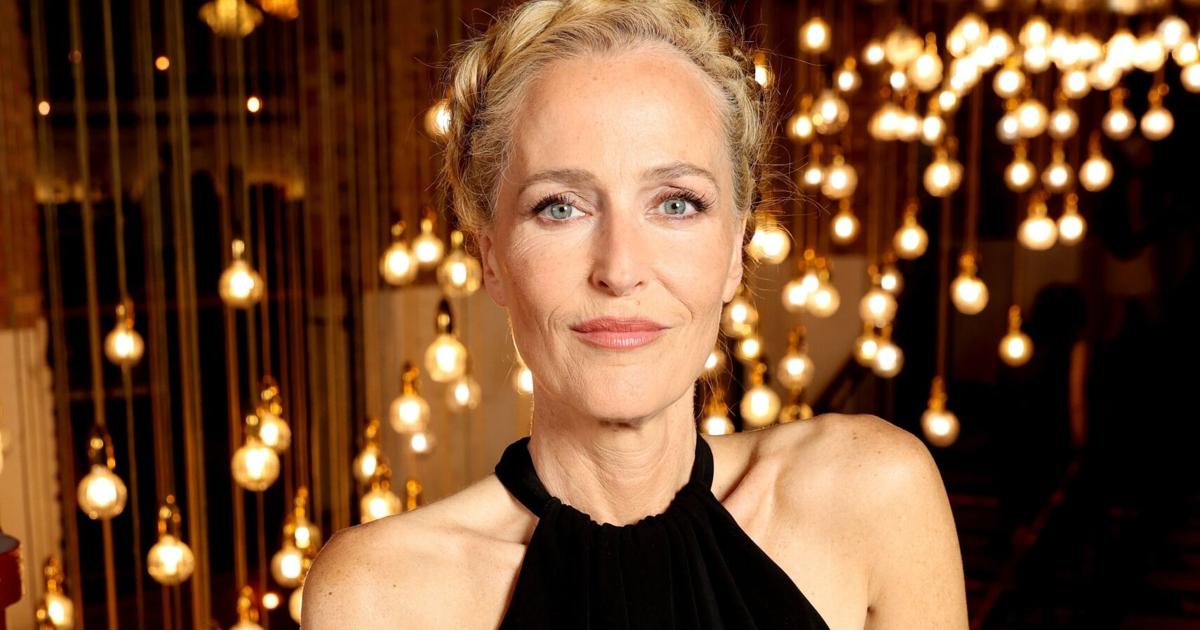
“What’s hanging in the background there, behind you?” asks Gillian Anderson as our Zoom interview begins. Mortified, I realize she’s noticed some of my freshly washed bras air-drying on a hanger in the distance. “Fantastic — your smalls,” she says, using British slang for underwear. We both start laughing and I feel it necessary to apologize. “No, that’s totally cool,” she says. “I was like, ‘How appropriate’!”
If any celebrity is going to be cool with seeing your ‘smalls,’ it’s Anderson. In the past few years, the actor who shot to fame in the ’90s sci-fi series “The X-Files” has evolved into a bona fide sex-positive activist, in part due to her role as a sex therapist on the popular Netflix show “Sex Education.”
Anderson’s comfort level with the topic meant that she was soon fielding requests to write a book on the subject. What she chose to do was highlight a range of women’s desires in 2024’s “Want,” a collection of sexual fantasies submitted anonymously by women around the world; she contributed one of hers, too. Now, she’s launching a followup, aptly titled “More.” And yes, it includes another of her own fantasies. “I felt like it was only fair that if women are laying it all out there that I should do the same,” she says. “It feels like I’m jumping in the deep end with them.”
Many of the letters in “More” are from women beginning to discover their sexual potential. “A lot of women who I talk to, and certainly women who responded to the first book, felt like they were just starting to properly embrace and lean into their sexuality, their sensuality, their desire for intimacy.” But there are some choice missives from women in their 40s, 50s and beyond who are embracing a forthright approach to sex that can come with experience.
At 58, Anderson has become a refreshingly frank feminist role model, speaking out against ageism and showing that life neither slows down nor stops for women past a certain age — not in Hollywood and not in the bedroom. I asked her how she became so at ease with speaking her mind.
Have you always been comfortable talking about sex? Or is it something that came with age, or your role in “Sex Education”?
It’s interesting because I would have said, yes, that I’ve always been open. But then when I sat down to write my own fantasies, I realized that there was something uncomfortable about it. There was something that I struggled with, which surprised me, which then made me think, Gosh, have I been as comfortable as I thought? It’s never been something I’ve shied away from. I’ve always been quite a sexual being, and I have quite a dirty mouth and a dirty sense of humour. Regardless of all that, I would not have guessed that this would be such a big part of my life. It never would have come to me had I not been in “Sex Education.” And for the sake of the books and the wider message around the books, I have, decidedly, put whatever concerns, fears and prudishness aside in order to be an effective, non-judgmental, compassionate voice.
Many of the letters from women over 40 mention wanting to be seen. I wanted to talk about this idea of becoming invisible as we get older. Even in your most recent L’Oréal ad you say, “F—- off, I’m not going to disappear.”
One of the most profound aspects of what the statement is about is the degree to which younger women participate in the ageism that is alive and well when we think of and judge older women. Young women are going to be here where we are someday. You will blink and you will be here. And it’s partly your responsibility to help change the narrative around how we are perceived by people. And yes, we can talk until the cows come home about being invisible to men. But because of the striving towards not having wrinkles, not aging, all the longevity stuff, and the alterations that women are starting to make from a very young age in fending off aging — all of that contributes to a narrative about it being something to run from, something to be ashamed of. And so it does feel like a multi-pronged exercise, or something that is going to have to come from all sides, if it’s ever going to be changed. I don’t honestly know whether it’s possible. It feels like such a fundamental cultural shift that would need to take place.
Three of the letters from women over 40 were very open about their penis size preferences. Do you think this is something we should be talking about more, since men are constantly judging our bodies?
I mean, I think it’s perfectly fair for women to be able to express that, considering what we hear from men all the time, judging and rating. Women being able to rate penises based on size like men rate women’s breasts? I mean, why the f—- not? I think that there shouldn’t be any rules, is what I think.
One 59-year-old woman said she erased herself during her marriage. She got divorced, joined Tinder and started a new chapter of sexual experiences. It’s exciting because it shows younger women that there’s still so much left to experience.
There have been times in doing press for L’Oréal where I’ve been asked, is it still possible for women to have a life and be professional and successful in their 60s and beyond? The fact that that’s even a question is part of the problem. What we hear from women in these books, in conversations around the books, is that women of a certain age, whether they are still with their long-term partners, or no longer with partners, and kids are out of the house, they’re starting to realize that they have sexual appetites. Not only are they not dead, but they are thriving, and they’re excited to explore. They can’t believe that there’s a world where there are more 30-year-olds sliding into their apps than men their own age.
It’s great — we need to make sure these stories are being told.
I think it’s fantastic, and I think it’s really important that women continue to talk about it, particularly women who are having that experience, talking about it and sharing what their life is like, because I think it’s important for women to have hope, particularly as marriages are ending. Women often don’t end marriages that are miserable because they’re afraid of being alone. And there are so many options out there.
So much of what “Want” and this book is about is: Do we dare to ask for more than we have? And realizing the degree to which we participate in not getting what it is that we say we want, both in the bedroom and in the boardroom. Even when you just start to ask the question — what we can do in our own lives to make small or big changes so that we feel like we have more agency — that then follows to where we can have more agency in terms of what we want from sexual partners and for ourselves, within our sex lives, whether we’re with long-term partners or starting to date again. No matter what age we are.
This interview has been edited for length and clarity.
Error! Sorry, there was an error processing your request.
There was a problem with the recaptcha. Please try again.
You may unsubscribe at any time. By signing up, you agree to our terms of use and privacy policy. This site is protected by reCAPTCHA and the Google privacy policy and terms of service apply.
Want more of the latest from us? Sign up for more at our newsletter page.