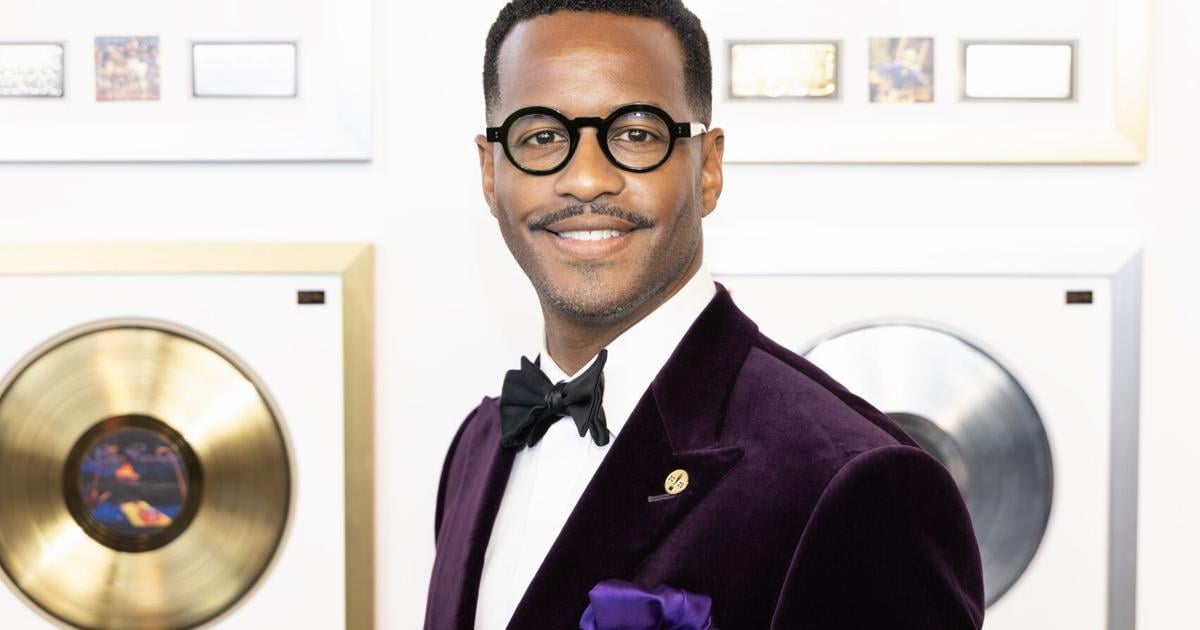
Since joining The Toronto Symphony Orchestra (TSO) in 2022, CEO Mark Williams says the institution has been meeting Torontonians where they are — literally.
Whether through collaborations with Drake or the Blue Jays, performances in suburbs, live film scores or showcases from international artists, the TSO’s reach now stretches well beyond the downtown doors of Roy Thomson Hall.
“If you want to be Toronto’s Symphony Orchestra — which is not just an orchestra that happens to be in Toronto, but an orchestra that can only be in Toronto — serving broad and diverse communities needs to be at the core of everything you’re doing,” Williams says.
The strategy appears to be working.
Last year the TSO sold 230,000 tickets, 22 per cent of those to new customers.
Its education programs, meanwhile, served another 35,000 kids. In 2026 the TSO continued its decades-long run of non-pandemic surpluses.
Williams says he always had a passion for music, but couldn’t imagine it as a career when he picked up a clarinet in the fourth grade in Cincinnati, Ohio.
After graduating from the Cleveland Institute of Music Williams began managing artists in New York, before joining the San Francisco Symphony in 2009. Three years later he joined one of the world’s most renowned orchestras in Cleveland before getting a call from the TSO in 2021.
Since then, Williams has been seeking to bring more Torontonians to the TSO and bring more of the TSO to Torontonians. With ticket sales, fundraising and attendance numbers all trending upwards, Williams says the institution has only scratched the surface of what’s possible.
The Star spoke to Williams from the TSO’s head office across from Roy Thomson Hall about recent changes, how it’s becoming more accessible and what those who have never seen a performance are missing.
When did your passion for music begin?
Music has been part of my life forever.
My grandmother was Southern Baptist, so even though this was Cincinnati in the ‘80s, her church had a southern tradition. That’s where I first heard the Hammond organ and piano together. It’s a sound that still makes the hairs on the back of my neck stand up. It was probably in that church that I fell in love with music.
When did you discover classical music?
I don’t like to define music by genre. Louis Armstrong said there’s only two kinds of music: good and bad.
I think the moment where quote-unquote “classical” music became important for me was while playing clarinet in eighth grade band. We were playing this piece called New World Symphony by Dvořák. I couldn’t even pronounce his name, I had no idea who he was, I didn’t know what a symphony was, but we started playing the fourth movement — which was the inspiration for the Jaws theme song — and I made it my mission to find that work.
I convinced my parents to take me to the record store to buy this blue cassette tape made by an eastern European orchestra, and it wasn’t at all what I expected. I listened for 45 minutes and was hooked.
Is that what inspired your degree in music?
That was the basis for my love of the music, I played music because in grade eight a band director asked if I could play French horn. I played clarinet, but there’s never enough French horn players, so he showed me how to do it, and I went home that day lugging a French horn.
Music helped me find myself — and a community. At that time, as a young kid not yet out to myself as a gay man, it helped me communicate some of the things that needed to be communicated.
It felt logical to make music part of my future, even though my parents thought I was insane. They could not put together why their son wanted to play French horn in an orchestra. Like are there any black people doing that? Is there a path for you? They had lots of questions and concerns, all of which made sense. I just didn’t care.
Why did you stop playing?
I moved to New York and studied at NYU with a member of the Metropolitan Opera Orchestra and met these people for whom playing music was the only thing that mattered and realized I wasn’t one of those people.
I enjoyed playing, but more than that was just being around music. That’s when I got the opportunity to work at an artist management agency, IMG, where I found what I think is my real purpose: helping great artists make art.
Is that what brought you to San Francisco?
The San Francisco Symphony was looking for someone to do programming. The person who was running the programming department was an old hand, and I knew I could learn a lot from him, and boy did I.
I had also felt divorced from the product in New York, managing artists performing all over the world, without getting to be there. So, the idea of getting to see what I was helping to create was exciting.
Why did you return to Ohio in 2013?
It wasn’t out of homesickness.
When you do what I do, when the Cleveland Orchestra calls, you answer. It’s considered one of the greatest in the world. Second only to this role, it was the most meaningful and fulfilling job I’ve ever had.
What inspired you to leave for Toronto in 2022?
After COVID I just felt exhausted. At first, I thought there was no way I’m moving to another country, even though I had an affection for Toronto.
The driver was that I would get to live in a city where I believe its best days are still ahead. The TSO has maintained its incredible reputation for more than 100 years, but there was still room to grow.
It was also my first CEO role, and I thought about what it would mean to be a black man, a gay man, in a community where I truly felt supported.
How’s it going?
It’s been extraordinary.
One of the things that I noticed first is how small and tight-knit the community is, and how people here are socially generous. I got the impression that everyone is rooting for me, and the TSO.
Certainly, with everything that’s happening now, I feel even more honoured to be here and to have this leadership role in a major cultural institution in Canada, and I’ve been working with people who are game to try new things to reach more people.
Like what?
Three years ago, we started going to Brampton in partnership with the Rose Theatre.
We had been around for over 100 years, and we had never played in this city next door. We learned that they had a large Afro-Caribbean community, so we built a show around reggae. And we learned they had a youth orchestra, so we built a program where our musicians and conductors coach them and then bring them to Roy Thomson Hall to perform.
We’ve been having these cultural exchanges for years, and those learnings helped us develop the Symphony Where You Are program further, in partnership with 407 ETR.”
Next is Markham, then Scarborough, and in the coming years folks should expect to see the TSO closer to where they are.
How do you cater to an audience as diverse as Toronto?
If you want to be Toronto’s Symphony Orchestra — which is not just an orchestra that happens to be in Toronto, but an orchestra that can only be in Toronto — then serving broad and diverse communities needs to be at the core of everything you’re doing.
We’re finding all these ways to engage with different audiences through different artistic products while expanding our thinking around what counts as classical music. We think Anoushka Shankar playing a sitar concerto belongs on the classical music series. So does South African cellist and vocalist Abel Selaocoe.
What do you say to those who are against public assistance for the arts?
I don’t view it as public assistance; I view it as public investment.
When you think about the amount of money that arts organizations inspire in the community, the number of people they employ, there is a very strong return. According to the Canadian Chamber of Commerce, each dollar invested generates $29 in economic activity.
How did the TSO’s collaborations with Drake and the Blue Jays materialize?
They called us.
The thing I loved about working with Drake was that it was incredibly pure. He just wanted an amazing orchestra to play the overture of Giuseppe Verdi’s La forza del destino, and it wasn’t changed or diluted.
With the Blue Jays, that was so much fun, because during the World Series we had the eyes of North America on Toronto. To have the team ask us to provide a soundtrack for that said so much to me about the role the TSO can play.
Any others in the works?
No, but our phone lines are open.
What’s your pitch to those who have never experienced the TSO?
If you like music, there is a place for you here. We play a wide variety of music at a very high level.
The trope about it being for certain people from certain places that look a certain way is not true. No matter who you are, you will see people here who look like you.
You don’t need to wear a tuxedo. It’s not a formal environment. We have tickets starting at $30, or $20 day-of, discounts for those under 35, and a free open house once a year.
Update – Sept. 14, 2026
This article was edited from a previous version to update the recollection about which grade classical music became important.