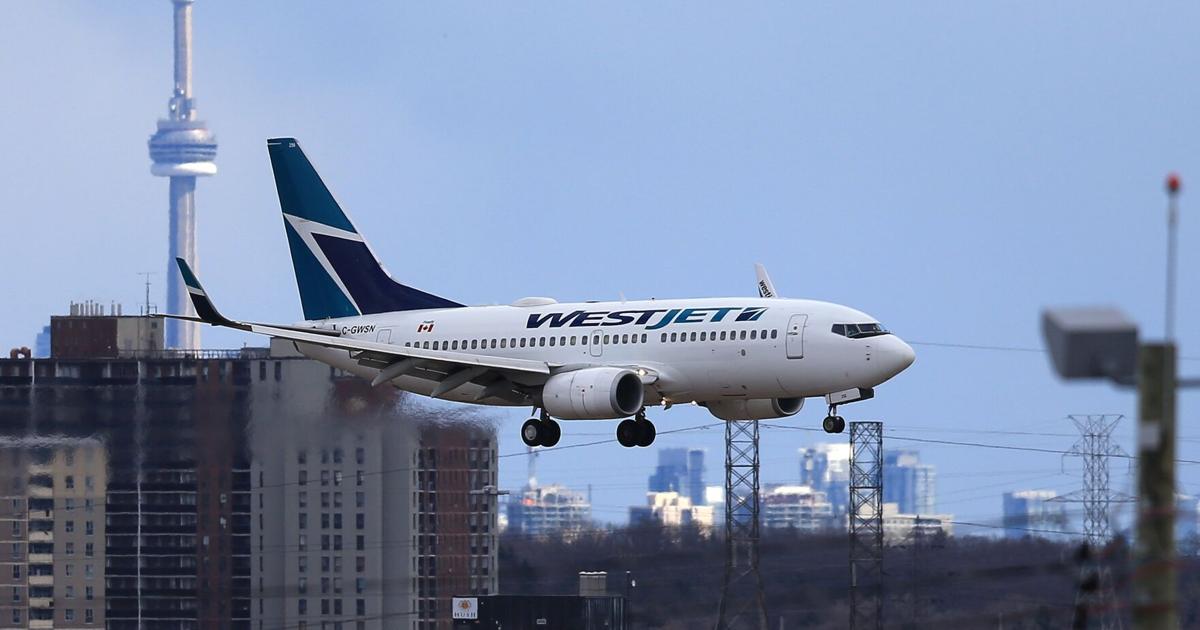
If Mark Carney comes to regret anything out of his landmark foreign-investment summit, it’ll be using his keynote speech to announce his airport privatization plans.
That news probably didn’t come as a shock to many of the elite folks in the room, since there was advance chatter that he’d signal next steps for taking that infrastructure out of public hands.
But it nevertheless distracted from the main message at the prime minister’s signature gathering. And it invites backlash, within Canada, that his pitch to the world wouldn’t otherwise warrant.
For the most part, this has been an event that should set to rest concerns of selling out, and get Canadians excited about how their country could grow in the years ahead. That’s because almost the entire thing has been about attracting investment to build new things, rather than ceding control of what we already have.
You could see that in the prospectus distributed in advance to attendees. All 167 projects that it pitches, from mines to pipelines to nuclear generators to AI infrastructure, involve either creating new assets or expanding existing ones. And they mostly have Canadian proponents, with the idea being to attract equity stakes or other forms of financing to help make them real.
Carney’s other big announcement during his Tuesday morning address — a sweeping expansion of tax write-offs for capital spending, touted as getting the marginal effective tax rate lower than in any other major advanced economy — hit that theme as well.
So, too, did investment announcements that his government lined up in advance and rolled out at the summit to show momentum — among them a $50-billion infrastructure fund jointly launched by the Canada Pension Plan and Brookfield Asset Management, a TD Bank commitment to provide $150-billion in financing for key strategic sectors, and similar pledges of $100-billion by Scotiabank and $70-billion by BMO.
There are reasonable concerns about even this stuff, including the mix of projects being promoted. Anyone concerned about Carney’s continued teardown of domestic climate policy and commitment to exporting fossil fuels when most of the world is transitioning to other energy sources, for instance, won’t be thrilled that oil-and-gas infrastructure is both a prominent component of the pitchbook and a big beneficiary of the tax changes.
But it’s tough to argue with the overarching premise that, trying to reduce economic reliance on the United States both by becoming more self-reliant and by exporting more goods to the rest of the world, Canada needs to build at a much faster pace than it has previously.
And while we won’t know for months (or years) if relationships initiated during the summit lead to actual foreign investments in that build-out, this week’s pageantry has at least created some momentum. If nothing else, the interest in nation-building infrastructure from all the visiting wealth — from Middle Eastern sovereign funds to American private-equity giants — seems to have galvanized Canadian banks and institutional investors to up their previously sluggish domestic commitments.
So it’s a bit vexing that, with all this already adding up to a pretty successful event, Carney felt the need to throw a more contentious type of investment into the mix.
Never mind that the scheme he laid out for the country’s four largest airports (including Toronto’s Pearson) would see the government retain ownership of the land and the buildings, while selling operational control to private interests.
It’s still what Carney himself described as asset recycling, which is very different from asset creation. The main motivation isn’t expansion or service improvement either — it’s to get billions of dollars upfront from the investors, instead of annual revenues the airports provide now.
There are mixed views on that financial equation, and whether public coffers will ultimately come out ahead. But that’s not really what makes its inclusion in the summit questionable.
The biggest practical concern, for consumers, will be that private operators’ version of maximizing the assets will involve squeezing them for more fees, making air travel even more expensive than it already is. That makes it the one form of investment touted this week that raises plausible fears of making Canadians’ lives worse, rather than better.
The broader worry is around sovereignty.
If Carney really wants privatization’s cash infusion, to reinvest in things like smaller airports as he suggested Tuesday, he shouldn’t have too much trouble getting it from domestic sources. This is one type of investment that Canadian pension giants have long clamoured to have opened up to them.
Showcasing that opportunity to global investors, as well, suggests a broader “open for business” pitch than in the prospectus or most of the summit’s speeches and panels.
In the more expansive pitch, any foreign investment is good foreign investment — even if it might mean rent-seeking, not building.
Hopefully there wasn’t much more being discussed in that vein, whether privatization of government assets or scooping up Canadian businesses through mergers and acquisitions, in the meeting rooms and corridors of a conference mostly kept from public view.
But it’s harder to have full confidence in that, after the airport announcement, than if Carney hadn’t strayed so far from the summit’s main script.