Student representatives want the Ontario government to set “clear, province-wide criteria” for when they can miss class and not be docked marks — and that the rules be applied consistently in every high school.
Their request comes as the Ontario Principals’ Council and the Toronto District School Board both said Tuesday they expect situations such as family vacations to fall under “excused absences” and students not to be penalized, following some initial confusion given that some administrators had signalled they did not consider such trips a valid reason to miss classes.
This fall, under changes brought in by Education Minister Paul Calandra, attendance and participation now count for 15 per cent of a final grade in all classes in grades 9 and 10, and 10 per cent in grades 11 and 12, as part of a bid to curb soaring absenteeism.
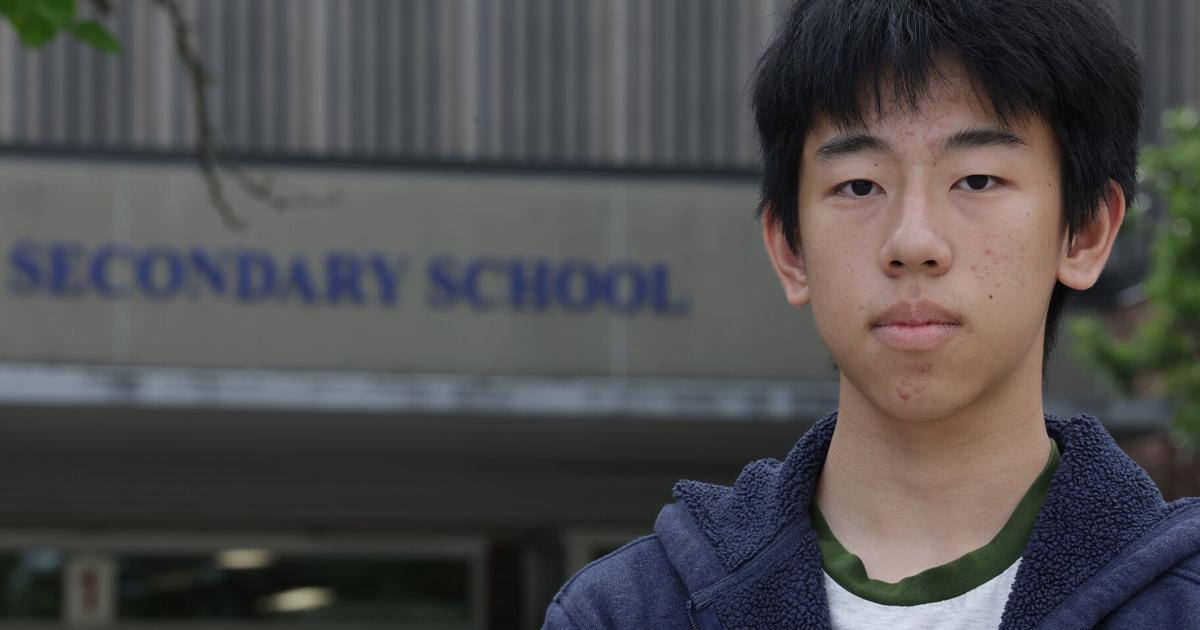
Now that grades can be affected, the Ontario Student Trustees’ Association wants “clear, province-wide criteria for excused absences, clear communication of those criteria to students, families, educators and school leaders, and consistent guidance on how they should be applied,” president Jay Xu said in a recent interview.
The Oakville high school student heads the organization that represents student leaders who sit as non-voting members on school boards.
Principals still have the authority to decide whether to excuse certain absences, but since marks are in play, students “would appreciate greater clarity around how excused absences are classified and assessed, so they can understand how absences under different circumstances may affect their marks,” Xu also said.
A “clear provincial baseline would not remove the role of principals or school boards,” Xu said. “It would give them a consistent framework to work within while still allowing appropriate consideration of individual circumstances.”
Calandra made the changes amid mounting concerns over absenteeism, which teachers had told him is a huge concern given the longer-term impact on student achievement, graduation rates and physical and mental health.
Before the COVID-19 pandemic, about 59.7 per cent of teens attended class at least 90 per cent of the time in 2017-18, which was considered low at the time — and it has since dropped even further. In 2024-25, just 40.2 per cent of high schoolers met that standard, which one educational researcher called “shocking.”
Some have said the government would be better off addressing the causes of absenteeism, while others lauded it as a good start given the chronic problem.
Authorized absences include those for illness, religious holidays or school extracurriculars, and Calandra has said non-school sports or extended family vacations can be excused — meaning no marks lost — but parents need to inform the principal, who still makes the final call, as is their right under provincial regulations.
Xu said student trustees appreciate that clarification, but “further clarity around absences pertaining to other extracurriculars or activities would address the questions students and educators continue to have … Students should be able to expect similar reasons for reporting an absence to be considered consistently, regardless of where they attend school in Ontario.”
At school information sessions, parents’ questions have been focused on attendance and participation marks and how they will be handled.
Teachers who have contacted the Star have noted a number of different practices. In some cases, attendance and participation each count for half of the 10 or 15 per cent, while other schools want to lump the two categories together. Others have said their schools want participation marks to reflect a student’s behaviour in class, and that teens don’t necessarily have to put up their hand and participate to get the grade.
The Ontario Principals’ Council met Calandra last week after saying they, too, needed some clarity around the changes, given they weren’t consulted about it ahead of time.
Calandra confirmed their “authority to excuse absences at the request of parents or guardians, and established processes for reporting absences have not changed from the ministry perspective. There should only be an impact on student grades for unexcused absences,” the principals said in a statement to members.
In an interview, president Amy Johnson said the council will keep tabs on the issue, and especially how implementation goes around the midterm reporting period in late October and early November.
“We have been using professional judgment on what absences are excused up to this point,” and will continue that, she said.
“What also was helpful in the meeting with the minister is that he did say, several times, that this is not intended to be punitive; it’s intended to be a supportive measure to encourage students to come to school.”
That means “we can continue to support students who need it the most, particularly students who are from a marginalized or disadvantaged background and may be missing school for reasons outside of their control,” she added.
She said the council will keep in touch with members and “if there are concerns that we need to bring forward” they will be meeting Calandra again.
Johnson said she is also in contact with the student trustee group and has heard its concerns.
Xu said student trustees would also welcome a meeting with Calandra to discuss the changes.
Error! Sorry, there was an error processing your request.
There was a problem with the recaptcha. Please try again.
You may unsubscribe at any time. By signing up, you agree to our terms of use and privacy policy. This site is protected by reCAPTCHA and the Google privacy policy and terms of service apply.
Want more of the latest from us? Sign up for more at our newsletter page.