In recent years, it’s certainly felt like the jukebox musical has hit a lifeless, evolutionary dead end. The species that traces its ancestry back to Rodgers and Hammerstein, Kander and Ebb, Lerner and Loewe has somehow devolved into an empty dumping ground for pop stars who see Broadway as a la-di-da Shangri-La to park their song catalogues and pad their post-retirement coffers. The result is that so many bio-musicals over the past 10 seasons have looked and sounded identical.
But anyone who feels hopeless about the current state of the jukebox musical should pay a visit to the CAA Ed Mirvish Theatre, where Alicia Keys’ “Hell’s Kitchen” opened last Thursday night, proving that the art form still has a pulse, and a bounding one at that. This new musical, which premiered on Broadway in 2024, is a kaleidoscopic, genre-defying undertaking. And even when it falters, as it occasionally does, it still demonstrates a sincere desire to achieve what the best musicals do: to use music not as an end in itself (as most bio-musicals do), but as a means to explore the inner turmoil of its central protagonist when words simply fail.
That “Hell’s Kitchen” works as well as it does is testament to its hyper-specificity. Whereas most bio-musicals try to cram an artist’s entire life story into two hours and some change, Keys’ semi-autobiographical work takes what, in those musicals, would be a single scene early in Act 1 and expands it into a full-fledged show — one that’s equal parts a coming-of-age family drama and also an interrogation of one musician’s artistic awakening.
In doing this, Keys and book writer Kristoffer Diaz have offered themselves space to explore. And it’s telling: “Hell’s Kitchen” is marked not so much by its superficial breadth, as is the case with most cookie-cutter bio-musicals, but by its impressive depth.
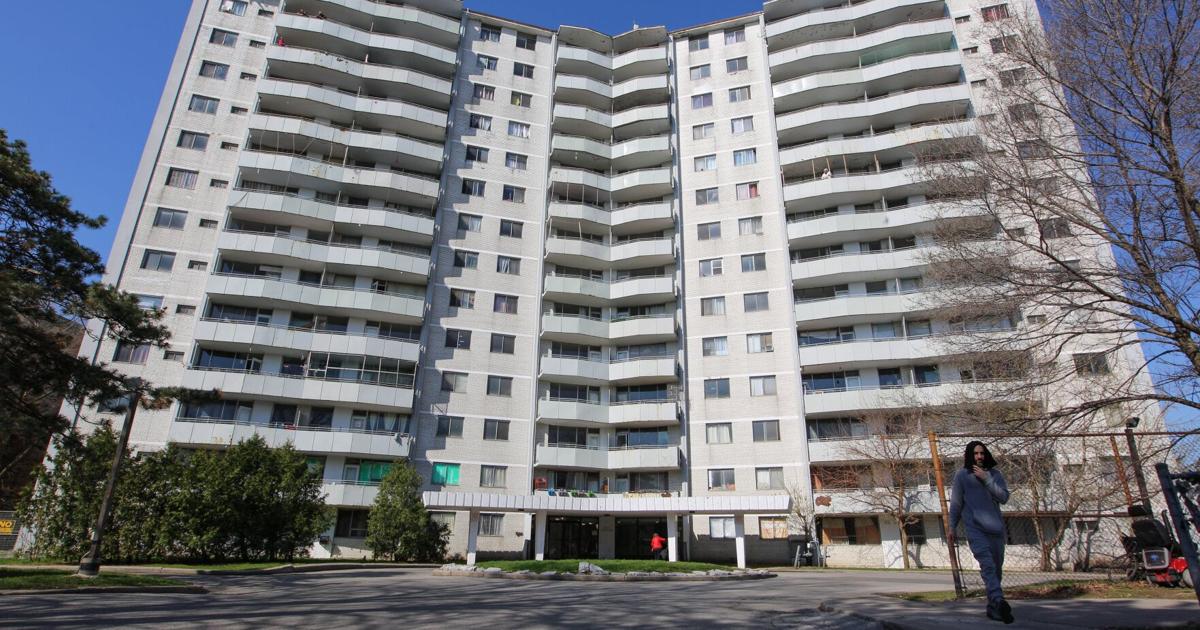
Keys’ proxy here is 17-year-old Ali. True to the singer-songwriter’s own upbringing, Ali lives in the Manhattan neighbourhood of Hell’s Kitchen, on the 42nd floor of Manhattan Plaza, a publicly subsidized residential complex mostly home to working artists. The central relationship in the show is that between Ali and her single mom, Jersey (Kennedy Caughell). And the narrative complications are almost entirely domestic in nature.
Ali, on the cusp of adulthood, yearns for more independence. She wants to spend her evenings jamming with the bohemians and street musicians outside her apartment. She wants to flirt with guys, and even has her eyes set on one guy in particular, a construction worker and bucket drummer named Knuck (JonAvery Worrell). But Ali’s mom wants nothing of the sort. Jersey wants her daughter to focus on her studies and be back in their apartment by dinner each evening.
But Diaz doesn’t exclusively focus on Ali and Jersey’s fraught relationship. He intersperses scenes of this mother-daughter conflict with a secondary narrative exploring how Ali falls in love with music. In between fiery confrontations between Ali and Jersey, the rebellious teen seeks refuge in her apartment building’s ground-floor common room. And it’s here, in Manhattan Plaza’s Ellington Room, with its stately grand piano, where Ali meets Miss Liza Jane (Roz White), a no-nonsense fellow resident who introduces Ali to music.
One of Diaz and Keys’ wisest decisions is to portray Ali as a pianist, not a singer. (Keys herself is both a classically trained pianist and a singer-songwriter.) The result is that most of the songs in “Hell’s Kitchen” are non-diegetic, meaning they exist outside the world of the musical, and primarily help express a character’s innermost thoughts and desires. “Hell’s Kitchen,” therefore, really shares more in common with traditional musicals than with a typical bio-musical, where characters mostly sing their songs within the world of the show. (Think of how many bio-musicals feature concert scenes within them.)
For many pop artists, turning their songbooks into a jukebox musical serves as the ultimate test for the quality of their music. Most fail on account of their bland lyrics, which can’t support the narrative weight of a full story. Bob Dylan is an exception. And so too is Keys.
Her lyrics are probing and poetic, helping to set entire scenes with just a few impactful words. “I’m alone in a corner of a one-room apartment / Dirty windows let the light in through my fingers / And make patterns on the carpet,” Ali sings in her enrapturing, first solo, “The River.” Even when Keys’ lyrics very occasionally traffic in bland clichés (like in “Girl on Fire” and “Empire State of Mind,” her biggest hits), at least those songs are saved by her knockout melodies. (New musical arrangements by Keys and Adam Blackstone help these well-worn chart-toppers sound new.)
And then there are the performances. Kennedy Caughell, as Jersey, offers an explosive supporting turn filled with vocal pyrotechnics. But as big and expressive as her performance is, Caughell also knows when to dial it back, and she makes you see how Jersey feels as if she’s carrying the weight of Manhattan Plaza on her slight shoulders.
Maya Drake, who, shockingly, is just a teenager, pours everything into Ali’s many musical numbers. Her vocals are flawless. Her acting is superb. And her dance skills are among the strongest in this talented ensemble. It’s a star-making turn in every regard.
Not everything, however, entirely works in the show. A tertiary storyline involving Ali’s dad, Davis (Desmond Sean Ellington), an itinerant musician who floats in and out of his daughter’s life, doesn’t feel fully fleshed out. Similarly, another narrative thread involving police brutality, leading into a stunning rendition of “Perfect Way to Die,” sung by White’s Miss Liza Jane, comes across as rushed and hastily tacked on to the end of Act 1. But even in these moments when “Hell’s Kitchen” stumbles, I appreciate Diaz’s desire to build and expand the horizons of Ali’s world.
Director Michael Greif also does a fine job of constructing this world. Robert Brill’s scaffolded sets feature metal towers that slide on and off the stage, recalling Manhattan’s iconic fire escapes. Dede Ayite’s period costumes instantly drop us into the ‘90s. Camille A. Brown’s hip-hop choreography looks and feels like what you could find spontaneously popping up at a public park in NYC on a balmy summer evening.
One of Greif’s most arresting directorial flourishes comes right at the top of the show, in what’s called the “Elevator Prologue.” Ali, our narrator, offers us a tour of Manhattan Plaza, the elevator stopping at various floors and opening to reveal the sounds of the tower’s various residents — opera singers, musicians, dancers — all at work. (Peter Nigrini’s video designs make us feel as if we’re zooming up and down in an actual elevator.)
This elevator motif returns throughout “Hell’s Kitchen.” And I think it perfectly captures the essence of “Hell’s Kitchen” — a beautifully told story about community, family (both biological and chosen) and the cost of artistic creation.
Error! Sorry, there was an error processing your request.
There was a problem with the recaptcha. Please try again.
You may unsubscribe at any time. By signing up, you agree to our terms of use and privacy policy. This site is protected by reCAPTCHA and the Google privacy policy and terms of service apply.
Want more of the latest from us? Sign up for more at our newsletter page.