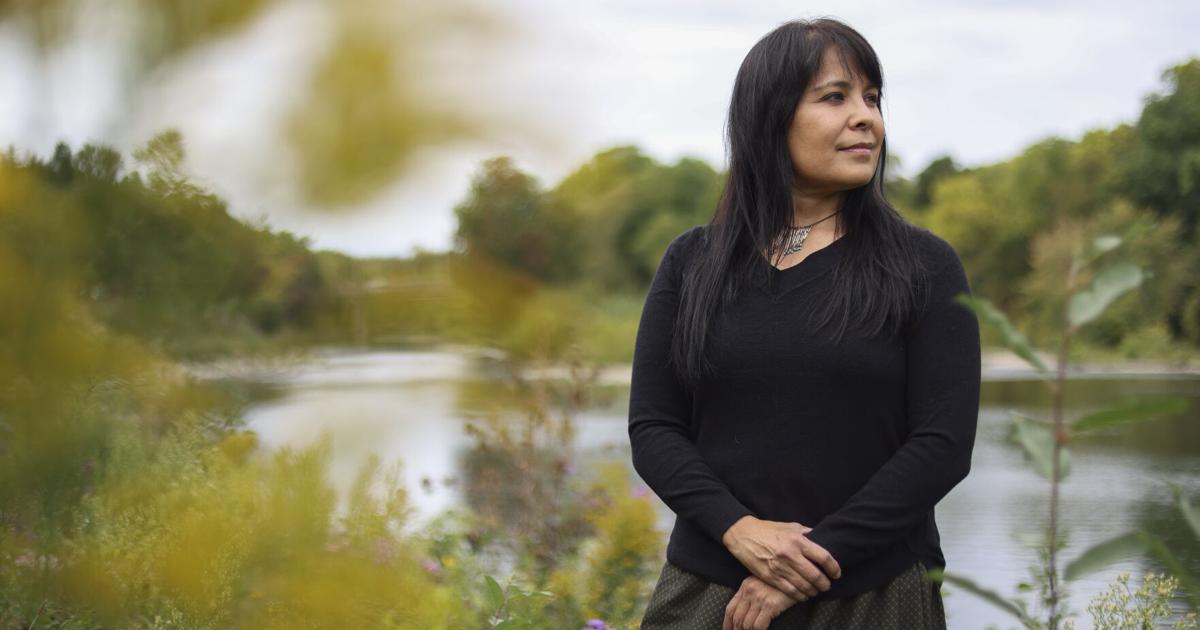
Early in her career, Brandy George sat with an Elder in Six Nations of the Grand River, who asked her what she could tell him about his people and traditional territory.
George was meeting the Elder with other archeologists, but was the only one who was Indigenous. She was a visitor to the community and hadn’t yet established her reputation in the field. She told the Elder she didn’t have any answers yet. He replied, “I thought you’re supposed to be the expert?”
“I said actually no, I consider you to be the experts because they’re your people, your ancestors and it’s your territory,” George recalled.
The Elder smiled.
“You know how many years I’ve been waiting for quote unquote professionals to come in and tell me what you just told me?” he said. “We’ve been waiting for you.”
It was a defining moment for George and cemented her commitment to working directly with First Nations to help them find, reclaim and learn more about the sacred artifacts, belongings and remains of ancestors that were stolen from them. She’s now working on the Help Us Bring Our Ancestors Home project with the Chiefs of Ontario, who are calling on the Ontario government, institutions and individuals to bring sacred artifacts and ancestors home.
Many are on display in museums, universities and the homes of private collectors, which Ontario Regional Chief Abram Benedict, with the Chiefs of Ontario, said has caused lasting harms by robbing these communities of the stories and histories that define them, and in some cases, the actual remains of ancestors who have been deprived of a dignified burial in their home community.
“We have stories of companies just going in, excavating, finding items … that’s hurtful to our people,” Benedict said.
The repatriation project is a crucial part of reconciliation, he added, and Ontarians and institutions have a role to play. But most importantly, it’s about giving healing and closure to the First Nations who have had sacred artifacts and ancestors taken, relocated and disconnected from their families, compounding the intergenerational trauma caused by the Canadian Indian Residential School system.
“It’s just the right thing to do,” Benedict said.
How one Indigenous archeologist made this her life’s work
George, who is Anishinaabe from Kettle & Stony Point First Nation, said she was enamoured with the Indiana Jones movies as a child, and later dreamed of working as an archeologist in places like the Middle East and South America. But as she started in Ontario about 20 years ago, she realized she was the only Indigenous archeologist doing this work.
“It didn’t make sense to go to other parts of the world when we needed that here,” she said.
She said she had to fight to have her expertise and knowledge respected and sometimes felt like a “token figure” when working with non-Indigenous institutions. She described feeling like she was “walking on a knife’s edge” to balance her dual identities as an archeologist and Indigenous person.
Working directly with First Nations has been more fulfilling but is also a way for her to honour her own ancestors.
“I don’t want to say that I do these things to feel good,” George said. “I do the things that I do because they need to be done, but it’s also about respecting where you come from.”
George stressed that they are not trying to assign blame, as many people inherited artifacts or remains from grandparents and didn’t understand their significance.
She said it’s impossible to estimate how many sacred artifacts are out there, if one considers that Indigenous Peoples are believed to have lived in Canada for at least 10,000 years. George could not name specific artifacts, because of their sanctity, and she would need permission from the First Nations connected to them. But she said some examples could be a ceremonial pipe, a medicine bundle, regalia or other items used in ceremonies.
According to the 2019 Government of Canada Survey of Heritage Institutions, about a quarter of Canadian heritage institutions have collections that include Indigenous sacred artifacts and ancestral remains — equating to roughly more than 6.7 million artifacts and about 2,500 full or partial remains.
“We’re talking about items that could have been thousands of years old,” George said. “They’ve had a life and they carry those stories … they can’t do what they need to do if they’re being kept in plastic bags or cardboard boxes in somebody’s basement.”
In a statement, Ontario’s Ministry of Citizenship and Multiculturalism said it’s working closely with Chiefs of Ontario, First Nations and others to support the respectful return of remains and culturally significant items.
Why return of sacred items, ancestors is important
Knowledge Keeper Pat Oakes sometimes looks across the border from where she lives, right by the St. Lawrence River, and thinks of her relatives and ancestors on the other side. Oakes, who is Mohawk, is part of the Haudenosaunee Confederacy, whose traditional lands are split among Ontario, Quebec and the United States.
She explained how sacred artifacts are not merely “objects” — in their spiritual teachings, it’s believed they hold stories and life, and are attached to spirits.
She said it’s difficult visiting museums and seeing, for example, traditional headdresses on display, knowing of their spiritual and cultural significance.
“They’re held in high respect and here they are sitting in some glass place,” Oakes said. “We believe that they need to be let out because they have a spiritual connection.”
She said it’s particularly hurtful knowing the remains of ancestors are displayed in institutions and people’s homes.
Oakes has been involved in repatriation efforts for decades and shared how back in the 1960s her community traced the burial places of relatives who were taken from their community. While they were successful, their discovery only brought more pain.
“When other (non-Indigenous) communities had these beautiful cemeteries made for their people, our ancestors sadly sat in boxes, in crates, in the basement of the University of Toronto,” Oakes said.
Speaking of the ancestors who have yet to return home, she said: “They’re never going to have their final rest until they are home and buried in a proper way.”
People who have information about sacred items, burial materials or other culturally significant items are encouraged to email [email protected].