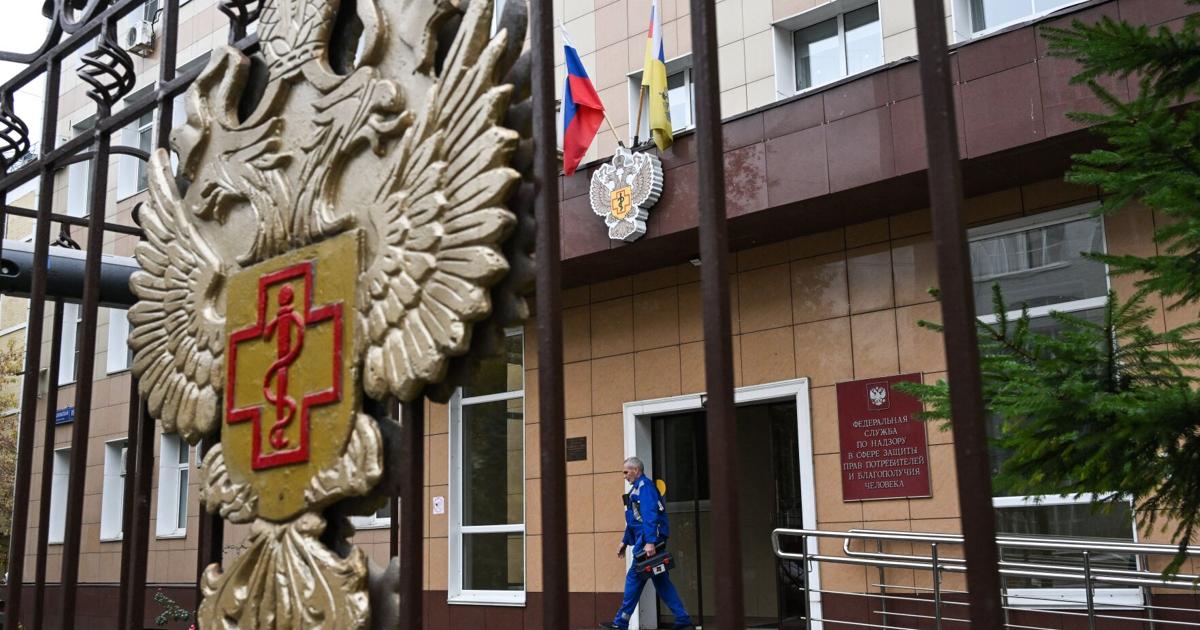
Just when you think the news is too scary, “pneumonic plague” enters the feed.
Here’s what we know for sure: Not much. But stories this week all conjured the cinematic start of “Outbreak” or “Contagion.” A 28-year-old Russian woman who worked in a Siberian lab, died from a “pneumonia of an unknown etiology.”
Unconfirmed reports say the woman, identified as Darya Shipilova, got ill after accidentally breaking a test tube in the Irkutsk lab. There were reports of regional quarantines, hospital closures and strict contact tracing.
If true, this is alarming.
But since we are dealing with Russia, the world leader in obfuscation and disinformation, who knows what fresh hell is heating up Siberia. As Marco Rubio, U.S. Secretary of State, told the media: “I think it’s incumbent upon Russia to obviously share more information with the world.”
That would be helpful. But any info catapulting out of the Kremlin is about as trustworthy as the blood results on a Theranos Edison Machine. Vladimir Putin acts in accordance with treacherous impulses. That’s it.
The world is right to pay attention to dangerous pathogens, especially when officials use the words “unknown origin.” But did we learn nothing from COVID-19? China was not forthcoming in the first days of that outbreak. And countries around the world didn’t have a pandemic playbook.
They still don’t. That’s more frightening than “Russian plague.”
This is the paradox in this week’s mysterious story: COVID turned us into experts at worrying about pandemics and amateurs at dealing with them.
I was visiting family in Niagara Falls this weekend and couldn’t stop thinking about a possible new plague. I blame Laurie Garrett and Annie Jacobsen for infecting my brain with books full of nightmare fuel.
Do I go home and fill my medicine cabinet with streptomycin or ciprofloxacin? Are those even the best antibiotics to treat pneumonic plague? Do I search for hazmat suits on eBay? Do I build an underground bunker with a chemical shower and negative-pressure HVAC? Do I rummage around drawers in search of expired rapid antigen tests and bottles of Purell?
The word “plague” was once a time machine to the distant past. You pictured rats and 14th-century European villagers moaning on makeshift gurneys. Now “plague” in a headline sets off a social media panic because: 1. it is entirely believable and 2. we still don’t know what to do about it.
Russia isn’t going to be transparent. Russia believes it is already in World War III and an infectious microbe is the least of it. COVID was not a sci-fi apocalypse. It was a dress rehearsal and we still haven’t memorized our lines for the sequel, no matter where it originates.
There is no N95 mask to protect against confirmation bias.
The bigger problem is the relentless existential threats that are triggering learned helplessness at scale. Climate change will make Planet Earth uninhabitable. We don’t have the resources to sustain 8 billion people and counting.
Get in line, Russian plague, we are already stressed out.
On Monday night, “The Daily Show” was devoted entirely to AI and the possibility it will kill us all. Nuclear war is back on the bingo card. The so-called Doomsday Clock is currently set to 85 seconds to midnight, the closest it has ever been to predicting catastrophe.
We can all click on the WHO website and read: “Pneumonic plague, or lung-based plague, is the most virulent form of plague. Incubation can be as short as 24 hours. Any person with pneumonic plague may transmit the disease via respiratory particles to other humans.”
But then what? We still have PTSD from COVID. We recall the disorientating haze of competing advice. Save the masks for health care workers. No, actually, wear a mask. Bleach your delivery boxes before opening. Get vaccinated. Just don’t get the one from Johnson & Johnson. Bathe in cow urine. See if an EDM roadie can smuggle a UV strobe from backstage, cut open your rib cage and blast the light into your lungs.
Or maybe suck on a Werther’s Original while doing jumping jacks?
I have friends who believe the world overreacted to the coronavirus. They scoff at the memory of bandana masks and social distancing. They vowed to never get a COVID booster. I also know someone who died from the virus and others who suffer from symptoms of long COVID.
These divergent bookends pose a danger for the next pandemic.
The terminology changes depending on the microbe. Zoonotic. Incubation. Aerosolized. The invisible forces pushing us apart are now fiercely constant. Hopefully, this “Russian plague” is contained and at low risk of spreading, as a WHO spokesperson said on Tuesday.
But it’s only a matter of time until the next pandemic is upon us.
COVID heightened our alarm to emerging viral threats.
It just didn’t give us the wisdom to prevent them.