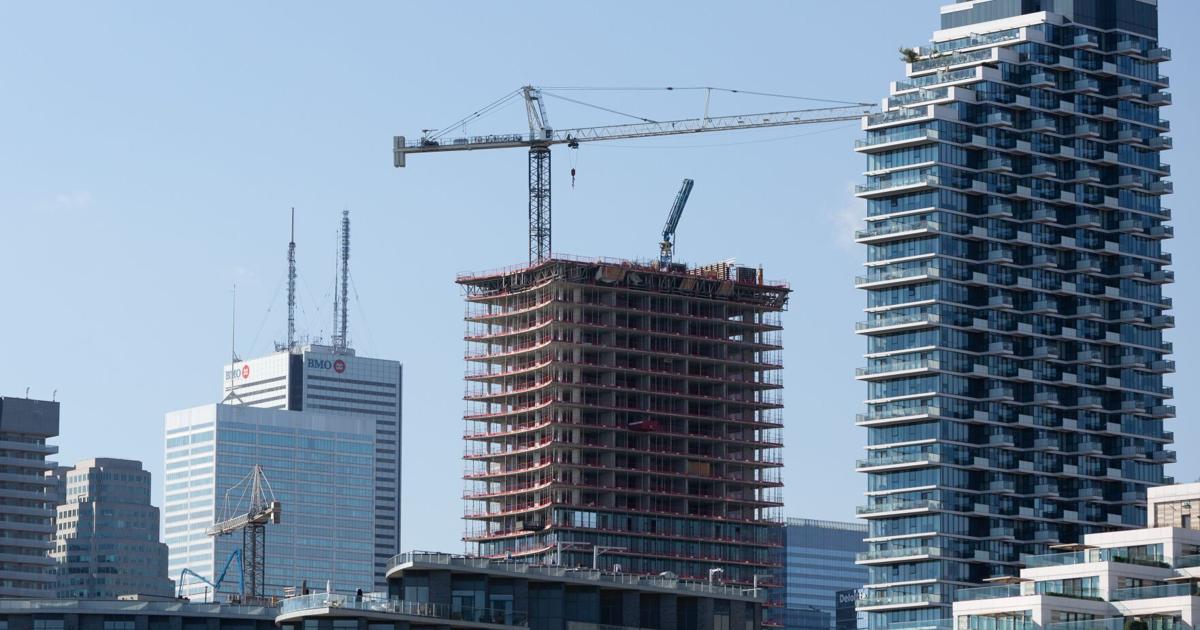
Bulk purchases of new condos by investment groups accounted for 45 per cent of new condominium sales in the Greater Toronto and Hamilton Area in the third quarter of 2026, according to new data from real estate consulting firm Urbanation.
Bulk buying has grown rapidly compared to the second quarter, when the transactions accounted for 26 per cent of sales. The average discount widened from 36 per cent during those months to 40 per cent in the third quarter.
The figures highlight how investment groups are increasingly stepping into a market that has struggled to find buyers, leaving developers with thousands of unsold completed units. However, these discounts are often privately negotiated, and can be difficult for individual buyers to access.
“Having this big glut of unsold units sitting around unoccupied is a bad thing,” said Nick Michael, a partner at NBLC, a firm specializing in the financial feasibility of residential developments.
“Clearing it is going to set the stage for this new market recovery and allow new projects to come forward that are better aligned and positioned with current demand.”
Investment groups bought 339 units in bulk transactions between July and September, helping push new condo sales to 760 units — double the number sold a year earlier. It was the second consecutive quarter of annual growth, as bulk purchases and the federal and provincial government’s HST relief on new homes helped lift sales from the 35-year lows recorded at the start of the year. Still, sales remained 78 per cent below the 10-year average for third quarters.
The bulk condos sold at an average of $763 per square foot, a discount of 40 per cent from the units’ original selling prices in the same buildings, Urbanation reported. By comparison, new condo units excluding bulk and luxury transactions sold for an average of $1,045 per square foot.
“Some developers holding a record level of completed, unsold inventory are under pressure to sell and are willing to accept lower prices to clear units in bulk,” said Urbanation president Shaun Hildebrand.
“At the same time, institutional investors are now committing significant capital to the market at prices they view as attractive for long-term rental income.”
But the discounts do not necessarily mean investors are buying condos for 40 per cent less than their current market value. Hildebrand said most of the units were originally sold in 2021 and 2022, near the market peak, and that resale condo prices have since fallen close to 30 per cent.
“Much of the discount reflects the broader market correction,” he said, adding that the prices also represent a point at which buying units to hold as rentals makes financial sense for investors.
The transactions helped push sales in completed buildings to a record 648 units, or 85 per cent of all new condo sales in the quarter. Completed and unsold inventory fell seven per cent in the third quarter, its first quarterly decline in four years.
The transactions are not necessarily a sign that the broader condo market is recovering.
“We’re moving away from an overheated and investor-driven condo market to one that’s characterized by a lack of investors due to a lack of price appreciation,” Michael said.
“These transactions help the market shift toward a more sustainable balance between supply and demand, but I don’t think they should be interpreted as recovery in condominium demand, particularly when a lot of this activity is being driven by institutional purchasers rather than individual homebuyers.”
Meanwhile, the market for condos that have yet to be built remains weak. Pre-construction sales fell 61 per cent year over year to 60 units in the third quarter, the 12th consecutive quarter of annual declines.
Construction is also slowing sharply. Developers started 381 condo units in the third quarter, bringing starts for the first nine months of 2026 to almost 2,700 — 82 per cent below the 10-year average for the same period.
Ari Zadegan, a real estate agent and partner at the Zadegan Group, warned that the slowdown in construction could leave buyers with fewer options later this decade.
“If developers wanted to launch a project today, it’s going to take another five years before that project comes to occupancy,” he said. “So in 2029, 2030, we are going to have a severe shortage of inventory for consumers to buy.”
Error! Sorry, there was an error processing your request.
There was a problem with the recaptcha. Please try again.
You may unsubscribe at any time. By signing up, you agree to our terms of use and privacy policy. This site is protected by reCAPTCHA and the Google privacy policy and terms of service apply.
Want more of the latest from us? Sign up for more at our newsletter page.