OTTAWA—The federal and Ontario governments said the U.S. does not share the same “objectives” for major economic sectors and rolled out a $9 billion aid package for the beleaguered Ontario steel and auto industries and pledged to accelerate development of the long-promised “Ring of Fire” critical minerals region.
As first reported by the Star, Prime Minister Mark Carney and Premier Doug Ford announced Ottawa and the province will share the cost of what they are calling a new “action plan” to buffer the effects of U.S. tariffs on the steel and auto sectors, and also to inject money to advance development of the critical minerals sector.
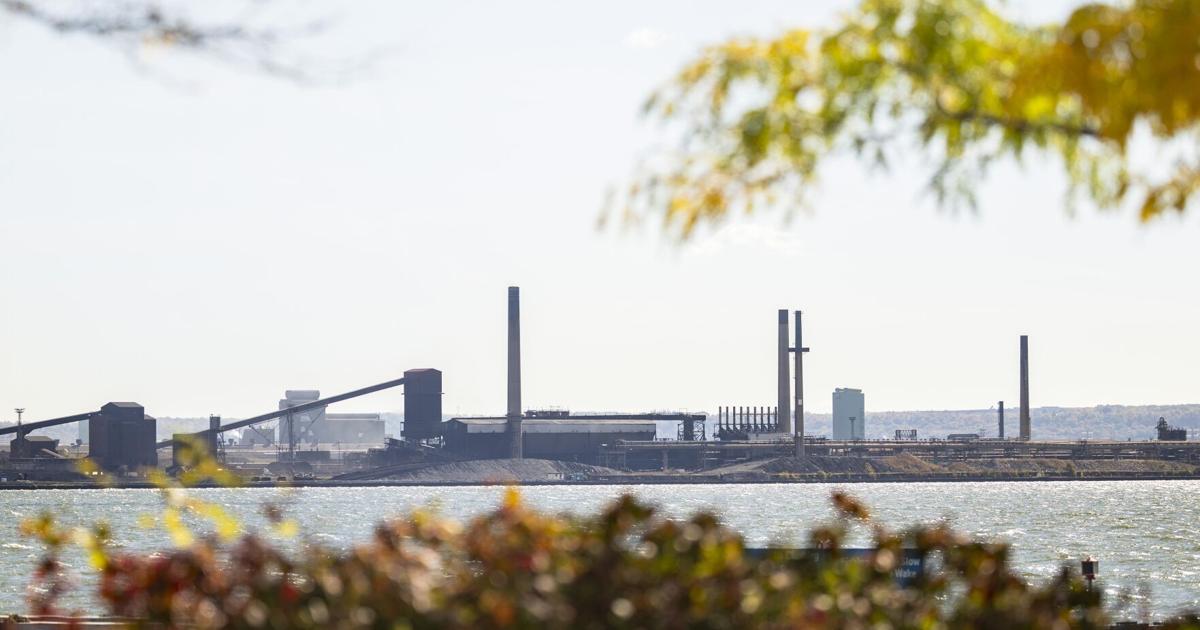
The prime minister detailed a $9 billion “partnership” that allocates most of it — more than $5 billion in a “joint steel action fund” — to help steel mills in Ontario reeling from Trump’s 50-per-cent tariffs on foreign imports.
Recently Stelco’s U.S.-based owner announced it is laying off nearly 500 workers, but Carney said the package is aimed at helping steelworkers in Hamilton and Sault Ste. Marie continue to make “what Canada — and the world — needs” and protect more than 100,000 jobs. The money will go to help mills upgrade machinery and “manufacture more products Canada needs and expand to meet demand in non-U.S. markets,” said Carney, who added he will bolster federal enforcement against foreign steel dumping.
Another $2.5 billion is pegged to support assembly-line jobs in auto plants and build “the vehicles of the future and, Carney said, protect more than 120,000 direct jobs in our auto sector.
Finally, the two leaders agreed Ottawa would provide $1 billion to match Ontario’s $1 billion investment in road construction to “unlock the critical minerals supply chain” in northern Ontario’s Ring of Fire region, which Carney’s prepared remarks called “essential for our strategic autonomy” and which will advance the creation of 70,000 jobs.
In addition, Ottawa and Ontario will create a dedicated working group to engage Indigenous communities on the “opportunities for economic development, conservation and Indigenous protected areas.”
As they met in Carney’s office beforehand, Ford said he thinks “this is going to be a transformational announcement today to make sure that we protect workers, protect companies, protect communities — and this is what happens when we work collaboratively together.”
According to a pool note, Ford said their number one focus is going to be protecting manufacturing, whether that’s steel, autos, advanced manufacturing or critical minerals.
Carney pledged his government’s bill to ensure one project, one review, within one year — known as Bill C-39 — will move things along.
“Historically, it has taken over 15 years to open a mine in Ontario,” Carney said, according to a text of his remarks. “We’re changing that. Canada will always be a country of high standards, but high standards do not mean decisions have to be slow.”
On mining, Carney said Canada and Ontario will co-ordinate their permitting processes.
The prime minister said it’s a matter of protecting Canada’s strategic autonomy, noting Ontario is rich in nickel, lithium, cobalt and other minerals critical for electric vehicle manufacturing and other industries like defence.
“The Ring of Fire has the potential to add over $22 billion to our GDP. We can secure a sovereign supply chain and bolster Canada’s position as a critical minerals leader,” Carney said.
“U.S. tariffs have upended a trade bargain that has existed for decades. They have raised costs for American families, while putting Ontario workers and businesses at a disadvantage and under a cloud of uncertainty,” Carney said in his prepared remarks.
He said as a result, Canada’s auto exports to the U.S. have declined by more than 10 per cent, while U.S. exports to Canada have fallen by over 20 per cent “even though Canada is still the United States’ largest customer.”
“Nobody wins from this. Tariffs make both our industries weaker and reduce choice for families. That’s why Canada remains ready to negotiate a fair deal when the U.S. is ready to sit down in good faith,” Carney said, insisting that an integrated continental auto sector makes most sense.
“But we recognize these are not the objectives of the current U.S. administration. Their approach has changed, and so must ours,” Carney said.
Carney reinforced his belief, as outlined in the government’s auto strategy unveiled earlier this year, that the future is in electric vehicles, and Canada must pivot to increase its competitiveness.
This is a developing story.
Error! Sorry, there was an error processing your request.
There was a problem with the recaptcha. Please try again.
You may unsubscribe at any time. By signing up, you agree to our terms of use and privacy policy. This site is protected by reCAPTCHA and the Google privacy policy and terms of service apply.
Want more of the latest from us? Sign up for more at our newsletter page.