OTTAWA — U.S. President Donald Trump plans to lift 50 per cent import taxes on a host of Canadian goods and impose them on a longer list of new products — changes that prompted a Republican senator in Maine to take credit for duty relief in a key battleground state ahead of American midterm elections.
Presenting the changes as a refinement of the tariffs that Trump slapped on Canada this summer, the White House said the changes would “ensure these measures continue to effectively offset the burden or disadvantage to U.S. commerce from Canada’s discriminatory measures” — an echo of the president’s long-standing claims that Ottawa’s own trade policies unfairly harm U.S. businesses.
Trump’s 50 per cent tariffs are now set to be lifted from 22 classes of Canadian goods as of Oct. 30, according to the White House. These include seaweeds, corrugated paper, plastic boxes, plastic packing bags, refrigeration equipment, and cleaning and grading equipment. Tariffs will also be removed from labelling machinery, packing machinery, non-adhesive plates and other paper and wood products.
New tariffs on Canadian goods
At the same time, Trump plans to impose 50 per cent tariffs on a range of roughly 100 new Canadian products, from cocoa powder to paints and varnishes, soap and shampoo, several types of flooring, carpets, canoes, boat parts, freezers, archery equipment, wood coffins and more.
The White House fact sheet also underscores that Canada and China are the only two countries that “have chosen to retaliate” against Trump’s tariffs “rather than negotiate a deal with the United States.”
It was not immediately clear if the value of the newly tariffed goods was larger than those receiving the relief.
In a statement to the Star, Eve Loignon-Giroux, a spokesperson for Canada-U.S. Trade Minister Dominic LeBlanc, said the federal government “takes note” of Friday’s tariff changes and is now assessing their impact.
“Canada stands ready to work constructively and in good faith towards a mutually beneficial trading relationship that respects Canada’s interests,” she said.
Tariff relief ahead of U.S. midterms
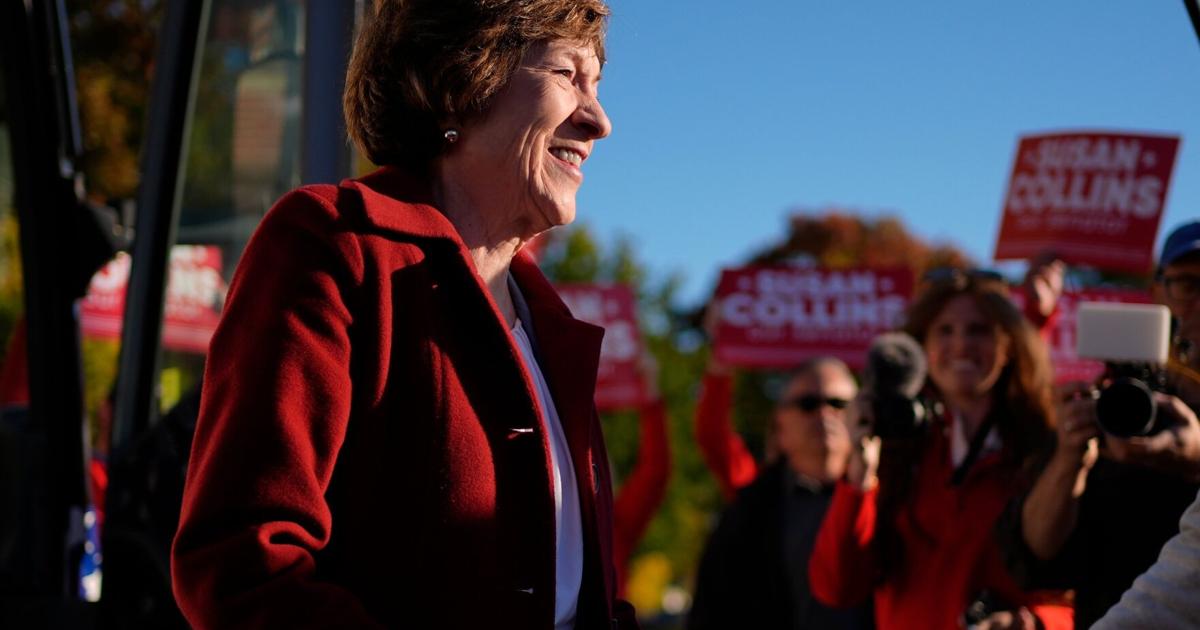
But U.S. Sen. Susan Collins was quick to take credit for the change she said would benefit her state of Maine, where she is vying to keep her seat from a Democratic challenger in a race that could help decide which party controls the U.S. Congress after the Nov. 3 midterm elections. In statements Friday, Collins — a moderate Republican in the state that borders Quebec and New Brunswick — said she has “secured” tariff exemptions for nine Canadian products that are crucial for Maine agricultural producers.
“Many of our farmers and growers rely on specialized equipment, packaging materials, and other products from Canada that are either unavailable from American suppliers or cannot be replaced without incurring significant expense,” Collins said in a post on social media Friday.
Collins added that she had “repeated conversations” about tariffs with U.S. Trade Representative Jamieson Greer and Commerce Secretary Howard Lutnick about getting tariffs lifted, and that she will keep pushing for more relief.
“I will continue working directly with Administration officials to seek additional relief and encourage a broader trade agreement with Canada, our neighbour, ally, and largest trading partner,” she said.
Canada still waiting for trade deal
Speaking to reporters earlier in Istanbul, Prime Minister Mark Carney gave no indication he expected U.S. tariff relief, and even signalled that a broader trade deal might have to wait until Trump leaves office in 2029.
“We don’t care about the timing of that,” said Carney, stating Canada is ready to sit down with the U.S. if the Americans want to talk in good faith.
“We could sign it this afternoon if the U.S. were there. If it has to be months from now or longer than that, or another administration before a proper deal comes into place, we will do that,” he said.
Arguing the U.S. has been a victim of unfair trade practices, Trump started imposing tariffs on Canada shortly after he returned to office last year. But the trade war intensified over the summer, when the Trump administration hit a broad range of Canadian goods with 50 per cent tariffs, beyond the so-called “national security” tariffs that have impacted Canada’s steel, autos, and aluminum sectors.
The new wave of import taxes prompted Ottawa to respond with tariffs of up to 50 per cent on billions of dollars worth of U.S. imports, while Trump followed with a ban on Canadian alcohol and dairy products.
The president has also threatened to increase auto tariffs from 25 per cent to 50 per cent on Jan. 1.
The situation has sparked objections from U.S. politicians in some areas, with declarations that the tariffs are making life more expensive and harming local industries. Collins has pushed back against tariffs as she vies to keep her seat.
Responding to the announcement of tariff relief Friday, the Maine Democratic Party said in a statement that the move shows Trump knows the Collins campaign “is in trouble.”
The Democrats accused Collins of “unyielding support for (Trump’s) disastrous agenda that has made life harder and more expensive for Mainers,” and said Trump is “playing politics with our trade policy when Maine businesses and families are already reeling from the chaos of his trade wars.”
U.S. accuses Canada of interference
The tensions over trade have also seen American officials accuse Canadians of meddling in U.S. politics through efforts – including Premier Doug Ford’s anti-tariff commercials that aired in the U.S. – to sway the American public and officials against Trump’s trade agenda.
In Türkiye Friday, Carney rejected those claims and said he is “disappointed” in U.S. Ambassador to Canada Pete Hoekstra for advancing them.
Asked whether those concerns were laying the groundwork to blame Canada if Trump’s Republicans lose out in the midterms, Carney said he didn’t expect that to happen, but noted the U.S. has used a “very broad range of justification” for tariffs on Canada so far.
“It’s up to the United States,” Carney added, when asked if a trade deal could happen before the Nov. 3 vote in the U.S.
“They’re a little hard to predict.”
Error! Sorry, there was an error processing your request.
There was a problem with the recaptcha. Please try again.
You may unsubscribe at any time. By signing up, you agree to our terms of use and privacy policy. This site is protected by reCAPTCHA and the Google privacy policy and terms of service apply.
Want more of the latest from us? Sign up for more at our newsletter page.