
A tax break for seniors or fuel for intergenerational warfare?
In a municipal election where affordability and rising property taxes are a top concern, a proposal from Mississauga mayoral candidate Alvin Tedjo to permanently “freeze” property tax increases for seniors has opponents claiming working families struggling under hefty mortgages will have to pick up the tab to keep city services running.
A more expansive B.C. program cited as inspiration by Tedjo has come under fire for benefiting seniors who don’t need the assistance, with reforms becoming a provincial election issue.
Tedjo has said that his program would find the right balance to help cash-poor seniors stay in their homes and not burden young property taxpayers, noting that he has a young family himself.
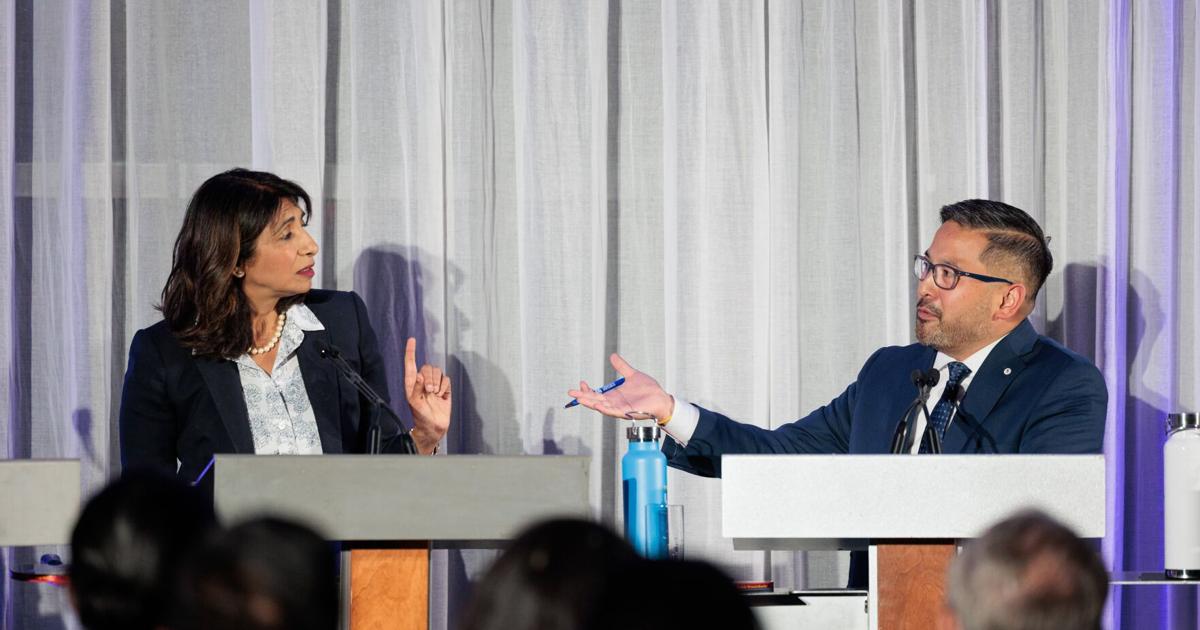
One of his mayoral race opponents, Dipika Damerla said Tedjo’s proposal is misleading and could contribute to “intergenerational unfairness” if the program isn’t targeted specifically to low-income seniors.
Harry Kitchen, a longtime municipal finance expert at Trent University, was blunt in his assessment.
There is no justification for giving seniors a tax break that isn’t available to other age groups, he said.
“This is from an 84-year-old senior who is fed up with the arguments that seniors have to be given special perks that are not available to the younger generation,” he said, referring to himself.
What exactly is being proposed in Mississauga
Tedjo has promised all Mississauga residents a two-year property tax freeze on the city’s portion of their tax bill. After that, he said, he would bring in a new program that would let eligible seniors defer future property tax increases, with the full amount due when the property is sold or transferred.
“As long as they live in their home, there won’t be any more property tax increases,” Tedjo explained in a recent video.
His campaign has not said what, if any, interest rate would apply to the deferred amount.
The program would only apply to the city’s portion of the property tax bill, not the Peel Region portion. In the past four years, about two-thirds of the property tax bill increases have been due to hikes at the region — in part due to a rapidly rising Peel police budget.
Who is eligible?
Tedjo has said the program would be open to seniors older than 65 who have owned their home for more than 20 years.
Similar programs across the GTA specifically target low-income seniors and people with disabilities, with an income threshold set by the municipality.
Tedjo said setting an income limit is a possibility, and that the specific eligibility criteria would be worked out with staff and council as the program is developed.
“Absolutely, I’m open to means-testing,” he said. “We’re going to find a balance to help the people who actually need it the most.”
What do other cities and provinces do?
Municipal finance expert Almos Tassonyi, currently based out of the University of Calgary, said municipalities are required to offer relief to low-income residents struggling with their bills. Some do it through rebates, others through property tax increase deferment or cancellation.
Mississauga currently offers a property tax rebate for seniors over 65 who are recipients of the Guaranteed Income Supplement, a federal benefit available to low-income seniors. The rebate goes up to $600 and was approved for 2,387 households last year, according to the city of Mississauga.
Toronto, Markham and Halton Region all allow low-income seniors and residents with disabilities to defer their property tax increases without interest. In Halton Region, the qualifying household income threshold is $69,500. In Toronto, it is $62,000. In Markham, the program is limited to recipients of the Guaranteed Income Supplement.
Last year in Markham, only 119 properties participated in their program, deferring a total of $5,320.59.
In Toronto, which also offers a tax increase cancellation program, 472 households were approved for a tax increase deferral for a total of $458,839. (Toronto approved 10,714 applications to cancel property tax increases last year, amounting to $9,671,416.)
What is in the fine print?
Halton warns that deferred property taxes will become a lien on the property and urges seeking financial advice before applying.
One of Tedjo’s mayoral race rivals, current councillor Dipika Damerla, argues that if this is the case in a Mississauga version of the program, it should be more clearly communicated, since it can affect inheritance and estate planning. Essentially, she said, it’s like a “reverse mortgage.”
Former mayor and current mayoral hopeful Bonnie Crombie said she is concerned that seniors won’t realize that under Tedjo’s proposed program the full property tax bill will have to be paid eventually and possibly with interest — which is why she is calling it a “senior’s scam” and “too good to be true.” Crombie would instead increase the property tax rebate limit to $1,000.
Incumbent mayor Carolyn Parrish has dismissed Tedjo’s tax plan as unrealistic.
Good policy or generational warfare?
Municipal finance expert Tassonyi urged caution because allowing too many seniors to avoid paying property tax increases could leave younger generations to make up the difference — something Tedjo has said is not the intention of the program.
Municipalities typically set a high bar for these programs because they are “leery of putting their tax base in jeopardy,” Tassonyi said.
“It’s not clear to me that there should be a broad brush property tax grant or deferral to those who don’t really need that assistance.”