A clampdown on international students. No new partnerships with public colleges. Then, no access to Ontario Student Assistance Program aid grants. And, for now, no access to OSAP loans.
Private colleges have been dealt a number of blows by both the federal and Ontario governments — but it’s the most recent move by the province that could lead to the demise of a number of these mainly for-profit businesses.
Such schools offer quick credentials, typically serving non-traditional students and often in niche programs, but with a much higher tuition price tag, so they rely on student aid funds to keep up enrolment.
Without it, “we are expecting more program pauses and potentially school closures if the OSAP freeze continues,” said Taylor Buck, the administration and communications assistant at Career Colleges Ontario.
The government implemented the ban on OSAP for all private colleges amid concerns about fraud at a handful, but says it plans to reinstate it under a stringent new process come January. Online programs, however, will remain ineligible.
With at least one private college already suspending programs amid financial uncertainty, the organization that oversees almost 300 such schools worries that’s just the start.
“We can’t comment on individual institutions or situations not yet made public, but colleges cannot operate indefinitely without the tuition funding their students rely on, and students cannot wait until the new year for certainty,” Buck also said in a statement to the Star.
“There needs to be a path forward now for students at compliant institutions.”
Eight colleges are now being inspected and targeted by the province amid concerns of misuse — with some allegations already referred to the OPP.
Effects of stopping OSAP
Career colleges sometimes offer programs not easily available elsewhere — trucking or flight schools, for example — and their shorter duration appeals to mature students, lower-income students, those already in the workforce as well as newcomers looking to boost credentials. (International students don’t qualify for OSAP.)
About one-third of Ontario’s roughly 600 private colleges qualify to receive OSAP funds.
The Canadian Press has reported that in 2024-5, seven private colleges received $385 million in OSAP — the same amount that students in all of the province’s public colleges received that same year.
Laurel Schollen, a higher education expert at the University of Toronto’s Ontario Institute for Studies in Education, said that without OSAP, students would need to afford such programs; “it will put some into desperate straits.”
While the quality of some has come under fire, critics have blamed the government for poor oversight despite repeated warnings — from provincial auditors, and even Career Colleges Ontario itself.
“It’s a very dramatic move, and it’s one of those situations where I think most of the evidence suggests there’s a small number of players that may be problematic,” said Glen Jones, a higher education expert at OISE, who believes the government doesn’t “have the data to make a distinction” so shut down student aid to all.
Career colleges are regulated by legislation, he noted, but “one of the challenges is the ability of the government to monitor whether all of those regulations are being fulfilled. There are supposed to be regular inspections, and the last study we did, one of the issues that arose was how frequently the government (inspected) institutions.”
Just last week, Colleges and Universities Minister Nolan Quinn said a sector-wide, third-party audit that recently flagged concerns around misuse continues, and that ministry “investigators began in-person inspections at eight private career colleges,” an investigation that “extends to the sector as a whole.”
He has promised that private college students stuck in limbo will have access to third-party loans, but provided no details.
“To protect against irregularities or fraud, OSAP will not resume for private post-secondary institutions until the strengthened validation process is in place” in the new year, he said, and “will include caps on OSAP-funded enrolment, the exclusion of predominantly online-only programs, and strengthened student identification and verification controls.”
In 2025-26, some 242 private colleges were eligible for OSAP, representing 121,000 students.
Jones also noted that private college graduates have the highest default rates when it comes to OSAP repayment, which the government should be paying attention to. In 2023, public universities had a default rate of 1.9 per cent, public colleges 5.5 per cent, and private colleges 7.4 per cent.
Caught up in the ban
Mothercraft, established almost 100 years ago, trains early childhood educators while running daycares and parent support programs. Despite its charitable and non-profit status, it falls under private career college legislation.
The OSAP freeze has created “a lot of anxiety and stress for those students that had been counting on loans,” said executive director Michele Lupa, adding the school has deferred tuition payments for about a dozen students for now until the province works out a plan for third-party loans.
“We’re trying to minimize their stress while they’re in the first semester of a very intense program,” she said. She said she worries about the future of the school’s online programming and if it will be permanently excluded.
About half of Mothercraft’s graduating class of 120 will have learned online, but with the requirement for an in-person placement.
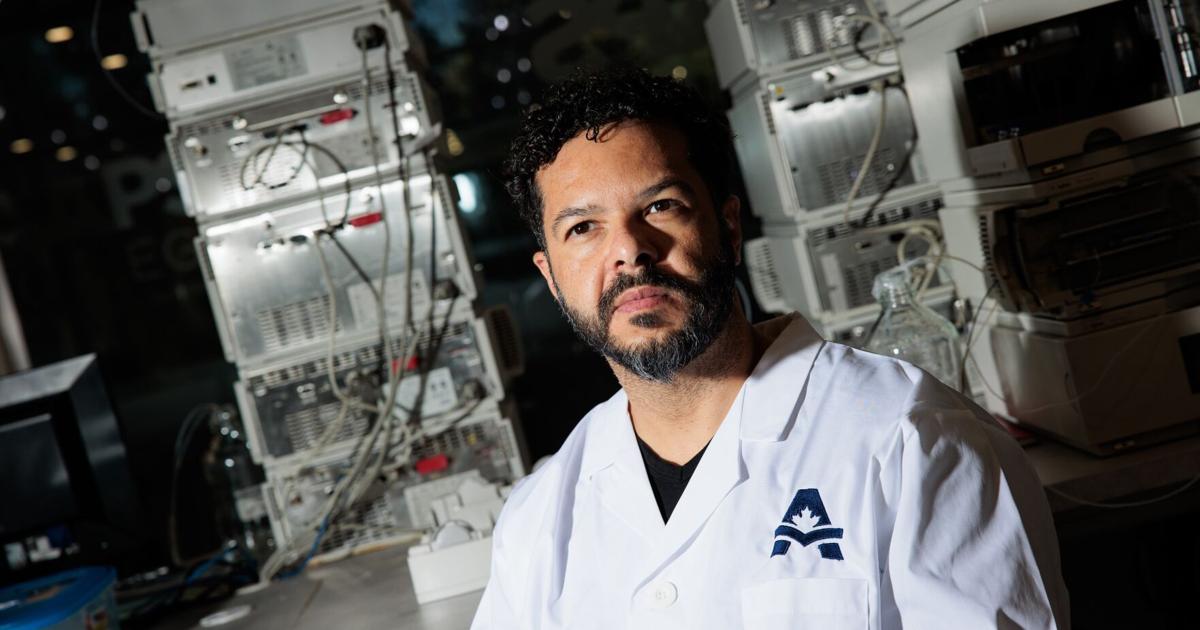
While colleges worry about their future, students do, too. Alisson Almeida, who has a bachelor of science in biology from York University, now attends AAPS College for a diploma in pharmaceutical quality control to help “close the gaps on my resume.”
“I wouldn’t have been able to even start the program if I was not approved for OSAP,” said the 42-year-old who was approved for $18,000 in OSAP this year. The college, he added, “is being very generous to me; they will allow me to complete the program, even though we have no certainty of how this is going to work.”
Some believe this is an opportunity for public colleges, which were also hit hard by the limits to international students — using programs run with private colleges to help boost their budgets — now that some for-profit schools face peril.
What’s needed now is a comprehensive look at the role of the private college sector, says Paul Axelrod, professor emeritus at York University.
“Are students getting their money’s worth? Did they find jobs?” he said, adding while demand is there for shorter courses, the government “will only learn about (effectiveness) if they do a systematic survey of people who have attended them and are attending them, and how have things changed.”
He said the province in the long term should be leaning into public colleges, which have seen programs axed, staff laid off, campuses closed and even school mergers because of budget issues.
Axelrod noted the government’s recent changes to OSAP overall, moving to a loan-heavy system instead of nonrepayable grants, was prompted by ballooning costs in the private college sector.
Most experts agree, however, that this latest move by the government has tainted all private career colleges when so far a small number remain under suspicion.
“There’s a difference between treating the entire sector as corrupt rather than taking ownership for the fact that there wasn’t a lot of oversight,” said Elizabeth Buckner of OISE, who has studied the private sector in higher education.
“It allowed certain institutions to take advantage, and that those institutions need to be investigated and punished and closed down. But a niche mom-and-pop school that’s providing (education in a) field for 40 years is not the same.”