

It was an emotional day in court Friday for those who had been close to the young mother who was stabbed to death in broad daylight at an Ottawa park two years ago.
After eight weeks of evidentiary hearings in Ontario Superior Court, the jury on the high-profile trial of the 2024 “femicide” heard closing arguments from both the Crown and the defence.
During closing statements, a tissue box made its way to the courtroom’s second row. Tears were shed as Eritrean translators relayed the defence lawyer’s address to the jury.
Fsha Tekhle, a Montreal man accused of first-degree murder , sat in the courtroom’s glass box, facing the judge and jury.
The bearded Tekhle wore a white shirt underneath a thick plaid jacket. He did not speak during the day-long proceedings and sat with an earpiece to hear a translation of the closing statements.
Defence lawyer Alan Brass said his client did not understand English and spoke Tigrinya, the language widely spoken in Eritrea, where he was from.
“This has not been an easy trial,” Brass said as jurors prepared to enter their ninth week in the trial starting Nov. 2. “We recognize that a horrible human tragedy has taken place.”
Tekhle has admitted to committing the unlawful act of taking another person’s life. The defence has argued that the Oct. 24, 2024, killing of Brkti Berhe, a 36-year-old mother of four, was manslaughter: an unlawful act that caused a death without the specific intent to kill or cause death.
In his closing statement, Brass told the jury that the Crown had not proven beyond a reasonable doubt that Tekhle had intended and planned to kill Berhe that day. He argued that Tekhle did not have a full appreciation of his actions, saying the killing was “sudden, impulsive and tragic,” and not planned and deliberate.
The Crown asked the jury to return a guilty verdict to first-degree murder, the most serious offence under Canada’s Criminal Code .
If that happens, Tekhle would face a mandatory life sentence with no eligibility to apply for parole for 25 years.
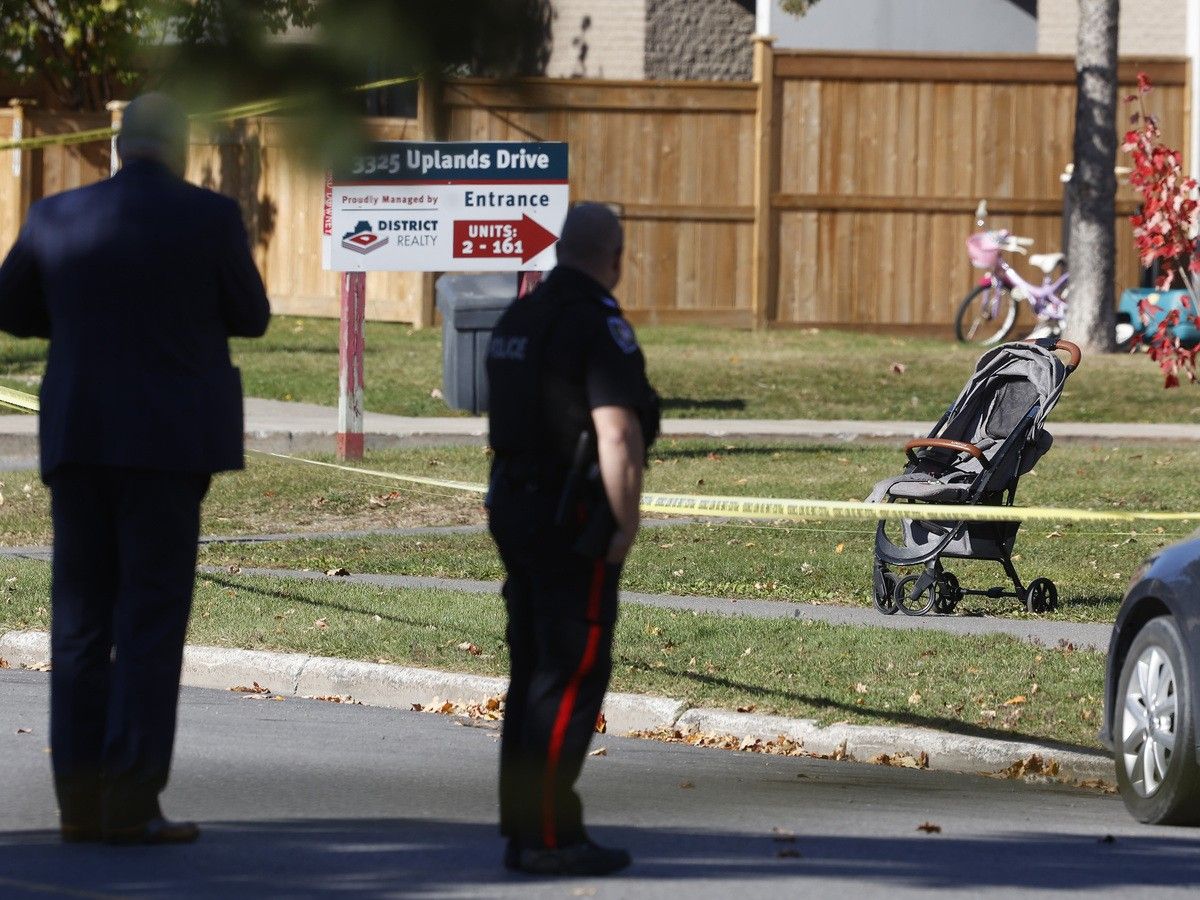
According to court documents, Berhe was at Paul Landry Park on Uplands Drive in Ottawa’s south end with two of her four children when she was attacked by Tekhle.
“Brkti Berhe faced the knife with only her bare hands,” deputy Crown attorney François Dulude said.
“Her only defence was her voice: ‘No, No, No.’ She never stood a chance against the man whom she had spent weeks protecting Ngisti,” Dulude added, referring to Ngisti Berhe, a relative of the victim who had been in a domestic relationship with Tekhle.
According to the Crown, Ngisti had been “afraid for her life” and had fled the Montreal home she shared with Tekhle on Oct. 7, 2024, to seek refuge with Brkti Berhe in Ottawa.
“In Montreal, (Tekhle) refused to accept that his relationship with Ngisti had ended. He did not accept what he perceived as defeat or the unravelling of the life he believed he was entitled to,” Dulude said.
He argued that Tekhle was seeking revenge for those who came between him and Ngisti Berhe.
“Brkti, who had helped Ngisti, protected her, and stood between her and Mr. Tekhle, would ultimately pay the highest price,” he said.
According to evidence presented in court, Tekhle rented a black Chevrolet Spark car in Lasalle, Que., on Oct. 23, 2024, and drove to Ottawa.
The defence argued that Tekhle drove to Ottawa to return Ngisti’s belongings and did not plan and intend to commit murder. The murder weapon, a butcher knife, was among the belongings he brought from Montreal to return to Ngisti.
He was seen approaching Brkti Berhe from behind, concealing the weapon with a traditional clothing item he had brought with him from Montreal, according to the Crown.
Witnesses in the trial described the victim’s reaction to the stabbings as “terror screams,” according to the Crown, adding there was a “rapid succession of blows directed to the victim’s upper body, chest, neck and head,” with an estimated eight to 12 strikes.
The young mother died at the scene, two of her children nearby. Two others were in school at the time.
The Ottawa Police Service characterized her death as a “femicide,” using the term that suggests the killing was related to the victim’s gender.

In its closing argument, the Crown also pointed to a pattern of increasing hostility, saying that six days before the murder the accused sent Ngisti Berhe 35 Facebook messages and called her five times.
The defence spoke about a history of trauma, loss and displacement that Tekhle endured while living in a small village near the border between Eritrea and Ethiopia.
Tekhle, who testified in court, was born in a small farming village near that border. His father died when he was two years old.
The defence referenced the testimony by Tekhle that, in 2008, he attempted to flee Eritrea.
“He said soldiers fired toward him,” Brass said. “He testified that he was captured and imprisoned … He described physical assaults … and verbal humiliation, like being called “Agame.”
The term refers to the Agame province in Tigray, a federal state located in Ethiopia, but often it can be used by some Eritreans as a derogatory slur directed at Tigrayans.
“Agame” was especially pertinent to this case, Brass said, because Tekhle associated that insult with the lowest moment in his life.
“When Brkti Berhe said that word to Fsha Tekhle at Paul Landry Park on October 24th, she did not merely insult him. She reached into the deepest wound of his existence and tore it open,” Brass said.
“Now imagine that word being directed at Fsha Tekhle — a man who heard it shouted at him while he was beaten in detention, a man who heard it used to strip him of his humanity during the darkest period of his life.”
That did not excuse Tekhle’s actions in Ottawa in October 2024, Brass said, but it helped to explain “the sudden, explosive, uncontrolled reaction” that followed.
“It gives context to why a man with a history of torture abandoned by his wife and with no plan — lost control of himself in that moment,” he said. “And that distinction — between a planned, deliberate killing and a sudden, uncontrolled reaction — is a critical distinction between first- and second-degree murder and manslaughter.”
The Crown argued that the concentration of stabbings in Brkti Berhe’s upper body suggested that the accused had intent to kill.
“A man swinging wildly strikes everywhere,” Dulude said. “A man who strikes the heart, the lungs, the liver and the throat, over and over, and leaves the legs untouched, is aiming at the places that kill.”
The 12-person jury, comprising six men and six women, will return Monday to hear instructions from Justice Ian Carter before beginning deliberations.

