

Imagine you’ve hired a contractor to build you a house. He says it’ll cost around $280,000.
A few years later, before he’s even started building the house — or, worse, perhaps, he has, but only the garage — he announces that the estimate has gone up. It’ll now cost you somewhere north of a million dollars. He can’t say exactly how much.
You ask him what changed. “Supply chain and COVID,” he says, shrugging, because that’s always the easy answer. “And there were some extra development fees.”
A moment later he adds: “Oh, and I also made some changes to the plans.”
“What changes?” you ask.
“I’ll have to get back to you on that,” he says.
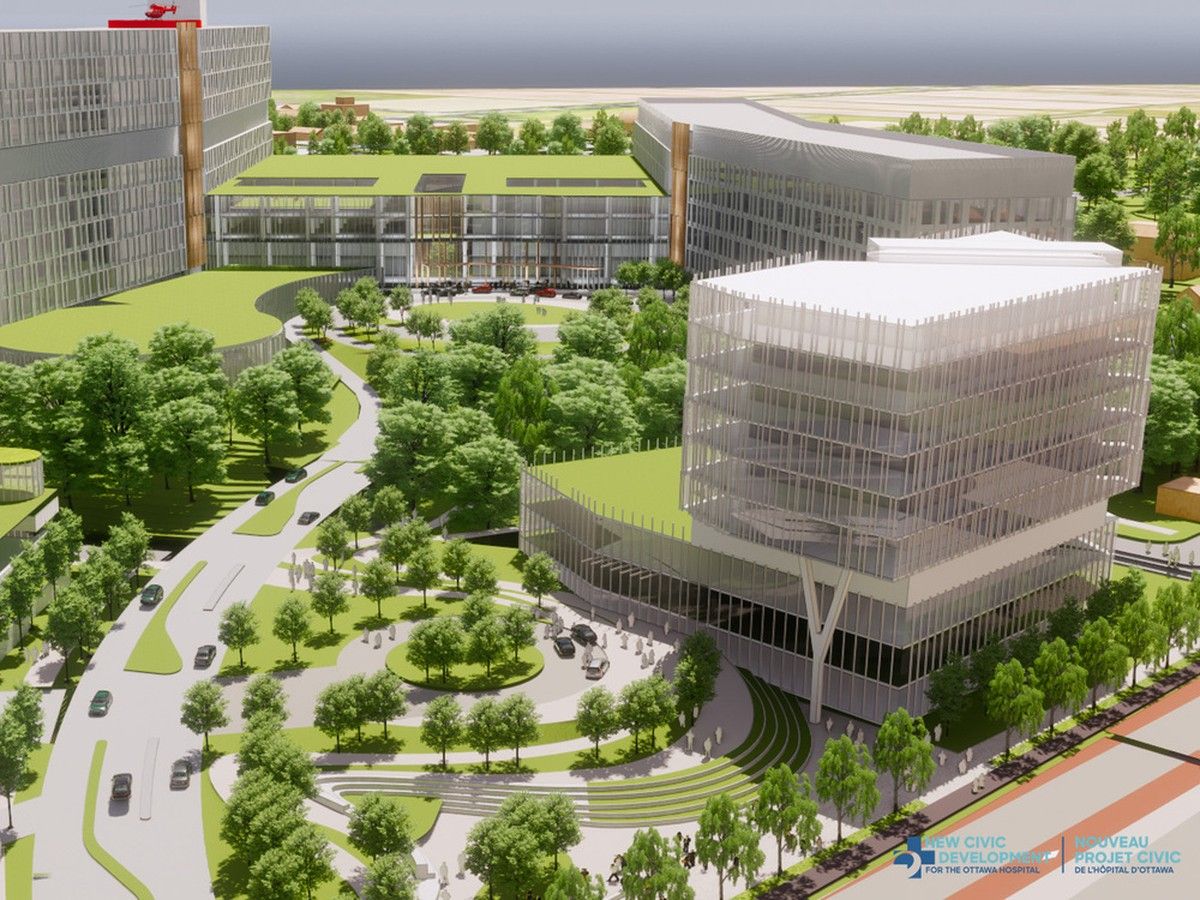
Welcome to the Wonderland economics of The Ottawa Hospital’s new Civic campus, where a project once expected to cost $2.8 billion now apparently requires a provincial contribution approaching $10 billion and where the province is providing all the clarity of a kindergartener explaining why there are no cookies left.
As colleague Sabrina Bedford reported recently , Infrastructure Minister David Piccini blamed supply-chain problems and municipal fees, including development charges, for the increase.
The Ministry of Health, meanwhile, says the project’s scope has changed.
Changed how? Are we getting more hospital? Will every patient get a private room? Does it now include a salt-water aquarium? Will our LRT include mobile medical cars?
Probably not, but here’s the thing: We don’t know.
Orléans Liberal MPP Stephen Blais perfectly described the province’s flailing explanations: “Once the right hand started talking to the far-right hand in the government, they came up with the line about geopolitical realities and COVID, etc.,” he said.
Blais also took Piccini’s remarks to task. “When I asked him what was driving the cost increase, he basically said municipal timelines and development charges. But there’s no city development charge that’s collecting billions of dollars. Otherwise, the city wouldn’t have a financial problem.”
Certainly, construction costs have risen. But the tender process began in 2022, when the pandemic’s effects on supply chains were pretty well known.
Meanwhile, the newly reported $10-billion figure isn’t even the hospital’s total cost. That’s just the province’s share — almost five times the $2.1 billion initially projected. If you were to estimate an overall cost based on what the province says it now expects to ante up and the portion it expected to cover of the initial $2.8 billion — that is, if you do the math — you might expect the new hospital to cost more than $13 billion.
But, again, we don’t know.
To be fair, building a hospital is much more complicated than building a house, and that original $2.8-billion estimate wasn’t a fixed-price bid.
The province put the project to tender in 2022 and only one bidder — a consortium of PCL and EllisDon construction companies — came forward by the October 2023 deadline. Under what’s known as progressive procurement, the specific details of the job, including cost, are worked out later. The goal of the progressive model is to bring in private-sector partners during the design phase and have both sides work together on the project requirements, design, pricing and risk before entering into a final agreement. A contractor might, for example, identify design problems before construction begins, and suggest cheaper alternatives.
All well and good, I suppose. But surely there’s a limit to how much taxpayers should be expected to swallow without an explanation.
Should we be concerned that the government is now negotiating the details of this enormous project with a single consortium, with no competing bidder offering an alternative? And, if the scope of the project has changed so much that the cost has nearly quintupled, wouldn’t it be reasonable to at least ask if it should be put out to tender again?
I imagine it’s too late to stuff that genie back in the bottle — the garage is already built, after all — but the lack of competition, coupled with this extraordinary cost increase, hardly inspires confidence.
What is does inspire is skepticism. I’m skeptical of the Project Labour Agreement that restricts which otherwise qualified labourers and tradespeople can work on the project, a restriction that the Montreal Economic Institute said would increase costs.
The agreement also requires participating unions to make charitable donations to the hospital each December. So even the construction workers are expected to help fund the hospital they’re building? Is Tony Soprano the hospital’s Secret Santa?
Meanwhile, there’s the hospital’s $700-million share of the costs. That’s the figure that was tossed about when the province was kicking in $2.1 billion. So does that figure also increase five-fold? If so, that would put the hospital’s share closer to $3.3 billion.
Again, we don’t know.
Back then, TOH had asked the city for $150 million, which council has yet to approve. A report on the matter by city staff was expected to be delivered in 2023. It has not yet surfaced. Will that figure be expected to rise?
Mayor Mark Sutcliffe has indicated that he’s not in favour of ponying up more money, and good for him. Health care is a provincial responsibility; even the current model under which the province pays 90 per cent of the bricks-and-mortar costs and none of the hospital’s equipment or furnishings is ridiculous. As a 2022 report from Ottawa’s then-CFO and treasurer, Wendy Stephanson, noted, “Health care is a provincial responsibility and there is no legislative basis for the municipal share component.”
The new Civic campus needs to be built. But that doesn’t mean taxpayers should sign a blank cheque without someone explaining the invoice. The new plans, along with a breakdown of the costs, need to be made public.
When the original Civic hospital was built a century ago, the city asked the province for permission to raise $1.5 million in debentures to finance it, a figure that grew to $2.75 million, plus an additional $750,000 for equipment. Many people criticized the hospital’s location, then on the outskirts of the city, and the hospital eventually gained the nickname Fisher’s Folly , after Ottawa mayor Harold Fisher, who championed its construction.
Lucky for Fisher, the hospital became an indispensable part of Ottawa.
Hopefully, this one will, too, and won’t one day be known as Ford’s Folly.
Until then, I’ll be in the garage, waiting for answers.
Related
- Soaring Civic hospital campus price reflects new project scope, health ministry says
- Provincial share of new Civic hospital campus cost skyrockets to $10 billion
Take control of your search results. Make the Ottawa Citizen a preferred source on Google and see verified local reporting first.

