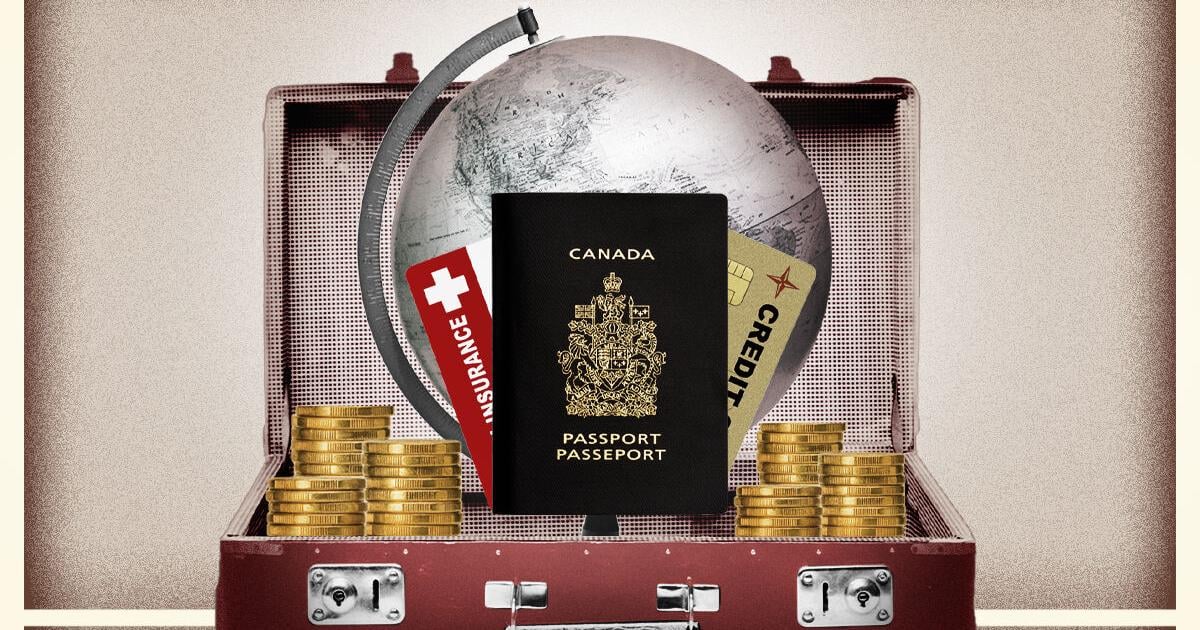
Cameron Smears doesn’t leave anything to chance when planning his family’s vacations. To keep his holidays within budget, the married stay-at-home father of two and part-time day trader in North York uses travel credit cards to buy his flights and book his hotel rooms, saving him money and giving the family special perks.
“We did a cost-benefit analysis of whether we should get these cards, which can be expensive with their annual fees,” Smears says. “We had to ask ourselves how often we travel, if these perks make sense for us. For us, that’s a yes.”
The perks range from access to exclusive airport lounges to annual dining credits to comprehensive medical insurance coverage.
Smears begins the year setting a budget for his family’s anticipated annual travel. Each trip is assigned its own budget, and Smears factors in costs like food and fees for things like skiing passes during winter holidays.
“Typically when we go away on vacation, we will buy some things in advance in case there are promotions offered early on. We bought ski passes for Whistler in the summer, their off-season, for our vacation this December and we got some heavy discounts,” Smears says.
Janet Radley, a travel agent at Toronto’s St. Clair Travel Agency, says that if you have a solid itinerary and book excursions ahead, you can save a lot of money. For example, she says, “places like the Alhambra palace in Spain should be booked early because the rates will get higher and higher.”
Before heading on vacation, frequent travellers and travel agents suggest ticking a few items off a financial checklist to help you save, among them exchanging currency in advance, planning your cellphone coverage to avoid high fees, and researching local etiquette.
Credit cards over currency — with a caveat
Using credit cards overseas requires some forethought; while they’re often the easiest option for paying for most items while travelling, be mindful of high transaction fees charged by your card issuer. The average international transaction fee is 2.5 per cent, added after the currency conversion. Many travel cards have no foreign transaction fees.
Smears leans heavily toward his travel credit cards while on vacation. “I want the rewards, the points, to (help pay for flights and hotels), and I’ll only use cash for things like tipping or walking into a store to grab snacks or a bottle of water,” he says.
Christopher Mitchell, a Toronto-based travel content creator and non-stop traveller, also prefers to use one of his travel credit cards that feature much lower (or even zero) transaction fees.
If he wants to exchange to the right currency, long before his trips he’ll use a service on currency converting site Xe.com, notifying him when the Canadian or U.S. dollar is rising and the pound is plummeting, for example. He’ll exchange his currency on that day to take advantage of the rates.
“That’s one of my top hacks when it comes to currency exchanges, and you’ll want to avoid exchanging while you’re there at the destination because you never know what the rate will be then,” he adds.
Mitchell says travelling with U.S. cash in Europe or South America is more advisable than Canadian currency, as the U.S. dollar is easier to exchange or use for purchases.
He also points to one underrecognized upside of bringing cash on vacation. “When you pay a local business with cash, you’re helping them because they don’t have to pay any transaction fees on their end,” he says.
In addition, some local businesses, such as booths at art fairs and markets, may only take cash.
Consider contacting your bank to notify them of your travel plans so they don’t freeze your account should they notice unusual transactions. And know the PIN for your credit card by heart, as some destinations won’t have tap technology and will require the PIN for every transaction.
Don’t skip the medical insurance
Natalya Gurevich, a manager at TD Insurance, won’t even consider travelling without medical insurance when she and her partner go on holiday; she’s heard too many horror stories of travellers hurting themselves while outside of Canada and paying out of pocket.
Her partner’s brother once fell off his bike in Croatia and would have been facing steep hospital bills if not for his pre-arranged emergency medical insurance.
When she travelled to Portugal for two weeks, Gurevich spent $130 on out-of-country medical insurance, and credits it for giving her peace of mind. “I want one less thing to worry about when I vacation, and I realize anything can happen on a trip,” she says.
Many travel credit cards also offer medical insurance protections, says Mitchell. “Going to the U.S. is definitely a place where I want to have that auxiliary insurance,” he stresses, adding that he owns a card that, despite its pricey annual fee, offers $5 million of medical insurance.
Read the fine print before you go, Mitchell adds. Some policies reject claims based on pre-existing medical conditions, and will define a period during which a condition must have been stable and exhibit no new symptoms or change in medication.
Plan your cellphone usage
As someone who travels almost monthly, Mitchell says he’s long avoided international cellphone roaming fees by purchasing an eSIM, which allows you to activate a cell plan without having to insert a physical SIM card. These plans connect you to a local mobile network, helping prevent unexpected data-overage fees. Typically you buy one online, get a QR code or activate it through an app, then follow the steps on your phone to install.
If you’re tech averse, check with your local cell provider before travelling to see what they offer. “Telecoms have been much more competitive in the ‘roam like home’ packages they offer, where I’ve seen it as low as $70 for a 14-day trip,” says Mitchell.
Smears says when he goes on resort vacations, he won’t invest in an international roaming plan or eSIM. “If I’m mainly staying in one place for the majority of the vacation, and I’m not out and about, I’ll barely use any data since I’ll be connected to the hotel Wi-Fi and won’t be making any calls,” he says.
Research tipping etiquette
When Gurevich plans a vacation, she researches everything she can about her destination, including tipping protocol. “Before I went to Spain, I learned how tips aren’t as frequent as in Canada, and in most places in Europe, you don’t tip a buck for a pint of beer like we do here,” she says.
Radley agrees with Gurevich and stresses how it’s simple to look up your destination online and find out their tipping etiquette. In some countries, tips are included in menu prices. In others it’s not customary to tip.
Rounding up is common for taxi rides in Europe, too, making additional tipping unnecessary.
“But if you’re still in doubt, you can always get the latest update from the concierge in your hotel,” Radley says. “That’s their job, after all.”
Beyond financial considerations, be sure to take a photocopy or digital copy of your passport and any other important travel documents with you in the event of loss or theft — leaving copies at home with a family member or friend is also a good idea. Not only can it be stressful to lose these things, but replacement costs can quickly add up.