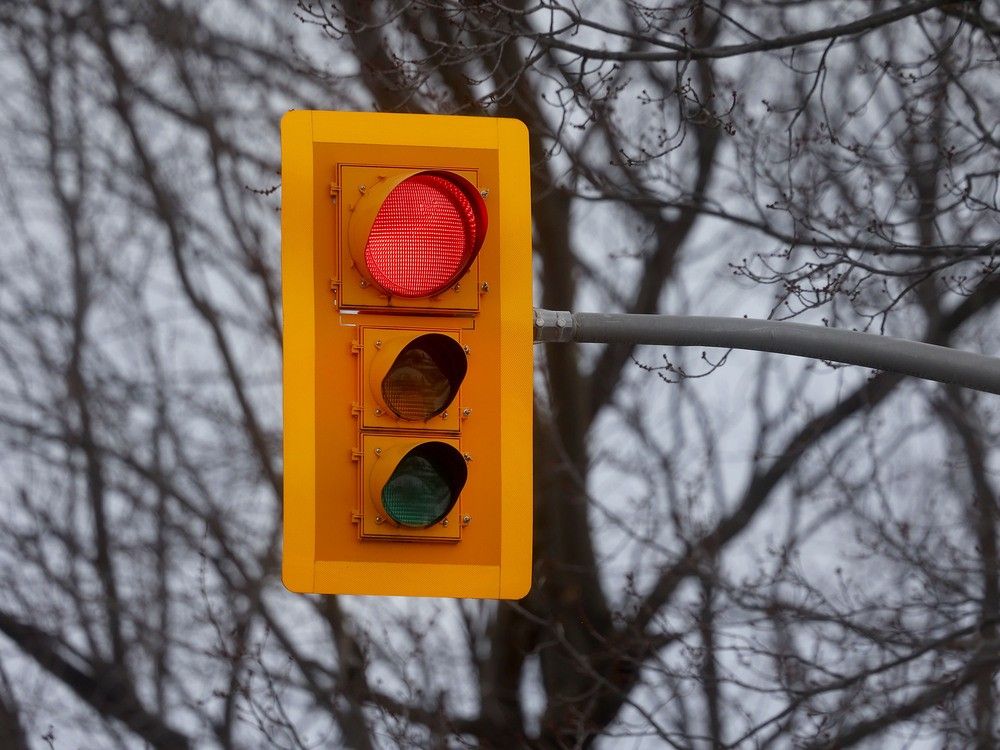
A ban on right-hand turns on red lights could create additional “safety impacts,” increased traffic congestion and challenges with enforcement and compliance, according to a City of Ottawa staff report.
Somerset Coun. Ariel Troster asked city staff to analyze collision data involving pedestrians and cyclists and
called for increased restrictions on right turns at red lights at downtown intersections
after witnessing a “traumatic” collision near City Hall in July 2025.
A 27-year-old woman was
struck and killed blocks away from the crash site
at Elgin Street and Laurier Avenue about three weeks earlier, on July 8, prompting Troster to call for a
“Vision Zero” policy
that would ban vehicles from turning right on red lights in Ottawa’s downtown core.
Public works general manager Alain Gonthier prepared a response to the inquiry and stated the red light restrictions were not implemented citywide due to “potential safety impacts, concerns and increased traffic congestion,” along with compliance and enforcement challenges.
“While right turn on red restrictions can reduce risks at one crosswalk, it may create new conflicts at another within the same intersection,” Gonthier stated in the report, which is set for presentation to the public works and infrastructure committee next week.
“When right turn on red is prohibited, drivers wait for a green light, eliminating conflicts with pedestrians and cyclists crossing directly in front of them. However, once the light turns green, drivers must watch for pedestrians and cyclists on the street they are turning onto.”
There would be increased delays at intersections with heavy right-turn volume, Gonthier said.
“This often leads to aggressive driver behaviour such as speeding or reduced attention to vulnerable road users, raising the risk of collisions at the other crosswalk,” he said.
Restrictions on right turns at intersections with bike lanes can increase the risk of “right hook” collisions, Gonthier said. “This happens because more drivers turning right during the green light phase will move through the same space as cyclists who are going straight through the intersection at the same time. These situations are especially risky because cyclists may be in a driver’s right-side blind spot, making them harder to see.”
Red light restrictions can also increase vehicle queuing and block intersections, Gonthier said, which could introduce other safety issues for pedestrians and cyclists.
The restrictions could also increase the risk of a collision if drivers choose to ignore the no-right signage, particularly at intersections with low volumes of pedestrians and cyclists.
Vulnerable road users might assume drivers will comply with the restriction and step into crosswalks without looking for turning vehicles.
“This may increase the risk of collisions, especially if drivers are distracted or behave aggressively by turning quickly or failing to pay attention to people in their path,” Gonthier said.
Gonthier said city staff reviewed collision data annually to identify detailed characteristics of collisions involving pedestrians and cyclists. He said the review found that most fatal collisions and those that caused major injuries did not involve vehicles making turning movements.
“Of the collisions that do involve turning vehicles, only a small proportion are related to right-turn movements,” Gonthier said, accounting for 20 per cent of cyclist collisions and four per cent of pedestrian collisions.
Collisions involving left turns and other vehicle manoeuvres are more common, Gonthier said. Increased restrictions on right turns on red lights, therefore, “would not address the majority (approximately 90 per cent) of fatal and major injury collisions involving vulnerable road users.”
Staff analyzed collision data collected between 2019 and 2022 and found 59 fatal and major-injury collisions involving cyclists and 121 involving pedestrians.
About 29 per cent of serious collisions with cyclists involved left-turning vehicles, while 51 per cent did not involve a turning movement.
Only 12 of the 59 serious collisions with cyclists involved right turns, and a further analysis of that data found that “none were related directly to right-turn on red vehicle movements.”
Three of the collisions involved cyclists riding illegally on sidewalks or through crosswalks and colliding with right-turning vehicles, Gonthier said.
Of the 121 serious collision involving pedestrians, 23 (19 per cent) involved left-turning vehicles, 93 (77 per cent) involved vehicles that were not turning and only five (about four per cent) involved right-turning vehicles.
Staff conducted a similar review of the right-turn collisions involving pedestrians and found that only one of those was directly related to a vehicle turning right on a red light.
Gonthier said staff would continue to evaluate intersections for pedestrian and cyclist volumes, sightlines, intersection design, collision history and operational impacts.
“This evidence-based approach ensures flexibility and that measures are implemented only where they may provide potential safety benefits without introducing new risks,” Gonthier said.
Related
Our website is your destination for up-to-the-minute news, so make sure to bookmark our homepage and sign up for our newsletters so we can keep you informed.