

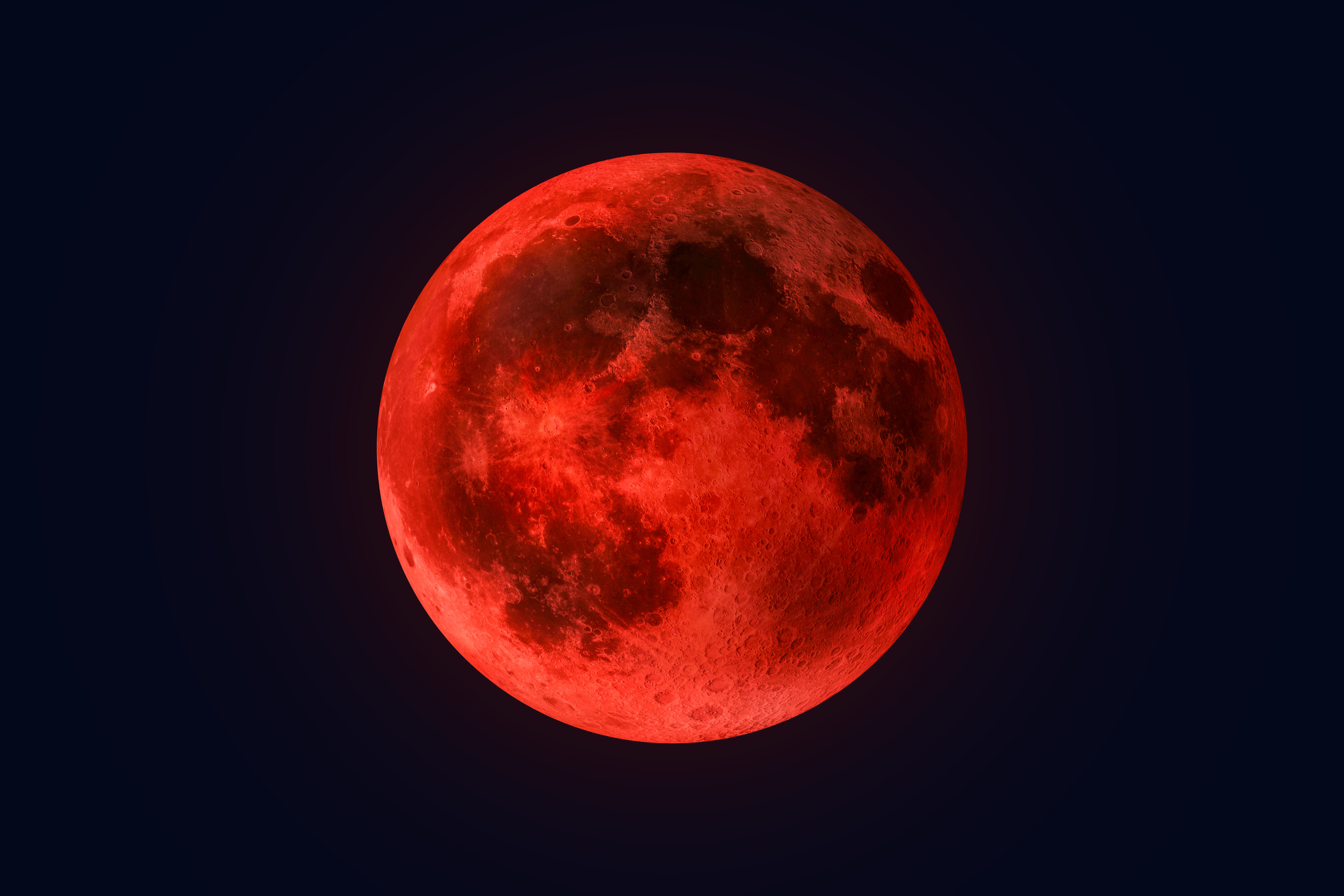
Canadians willing to wake up early on Tuesday morning will be treated to a rare celestial show as a total lunar eclipse turns the Moon a coppery red.
The phenomenon—popularly known as a “blood Moon”—will be visible across much of North America, including Canada, during the pre‑dawn hours.
According to NASA, unlike solar eclipses, lunar eclipses require no special eye protection. As long as the skies are clear, anyone with an unobstructed view of the Moon will be able to watch Earth’s shadow gradually sweep across its surface.
The eclipse begins subtly when the Moon enters Earth’s outer shadow, known as the penumbra, early Tuesday morning. While the initial dimming is faint, the event becomes unmistakable as the Moon slides deeper into the planet’s central shadow.
When Canadians can look up
Here are the key moments for Eastern Time (ET), with Canadian viewers from coast to coast adjusting accordingly:
- 3:44 a.m. ET — Penumbral eclipse begins: Slight dimming starts; difficult to notice.
- 4:50 a.m. ET — Partial eclipse begins: A dark “bite” appears on the Moon as Earth’s umbra takes hold.
- 6:04 a.m. ET — Totality begins: The Moon is fully engulfed in shadow, glowing red.
- 7:03 a.m. ET — Totality ends: The reddish tint fades as the Moon moves out of the umbra.
- 8:17 a.m. ET — Partial eclipse ends
- 9:23 a.m. ET — Eclipse ends completely
For many Canadians—especially in the eastern half of the country—totality will occur fairly close to moonset, making a clear horizon especially helpful.
Why the Moon turns red
The “blood Moon” effect results from sunlight filtering through Earth’s atmosphere. While the planet blocks direct sunlight from reaching the Moon, some light bends around Earth, scattering shorter blue wavelengths and allowing longer red and orange tones to bathe the lunar surface.
The result resembles the colours seen during sunrises and sunsets—only projected onto the Moon hundreds of thousands of kilometres away.
With the Moon dimmed during the eclipse, stargazers may notice more stars and constellations than are typically visible during a full Moon. NASA says the eclipse will unfold while the Moon sits in the constellation Leo, near the lion’s hind paws.
And the night sky has more in store: on Sunday, March 8, a few days after the eclipse, Venus and Saturn will appear in a close conjunction, offering another striking sight just before dawn.
NASA says strophotographers hoping to capture the eclipse should use a tripod and exposures lasting several seconds during totality, when the Moon is at its dimmest.

