


Every year, the celebration of Mardi Gras reaches its peak on “Fat Tuesday,” the day before Ash Wednesday and the start of Lent. This year, the festivities fell on Feb. 17. While the parades, beads, and elaborate floats capture much of the public attention, there is another powerful tradition that has long existed alongside the mainstream celebrations, one created by people who were once excluded from them. These celebrants are known as the Mardi Gras Indians, also known as the Black Masking Indians.
The history of the Mardi Gras Indians (The Black Masking Indians).
The Mardi Gras Indians are a community whose traditions are deeply rooted in the African American neighborhoods of New Orleans. Although their parades and gatherings have taken place for well over a century, they remain among the least widely recognized traditions associated with Mardi Gras.
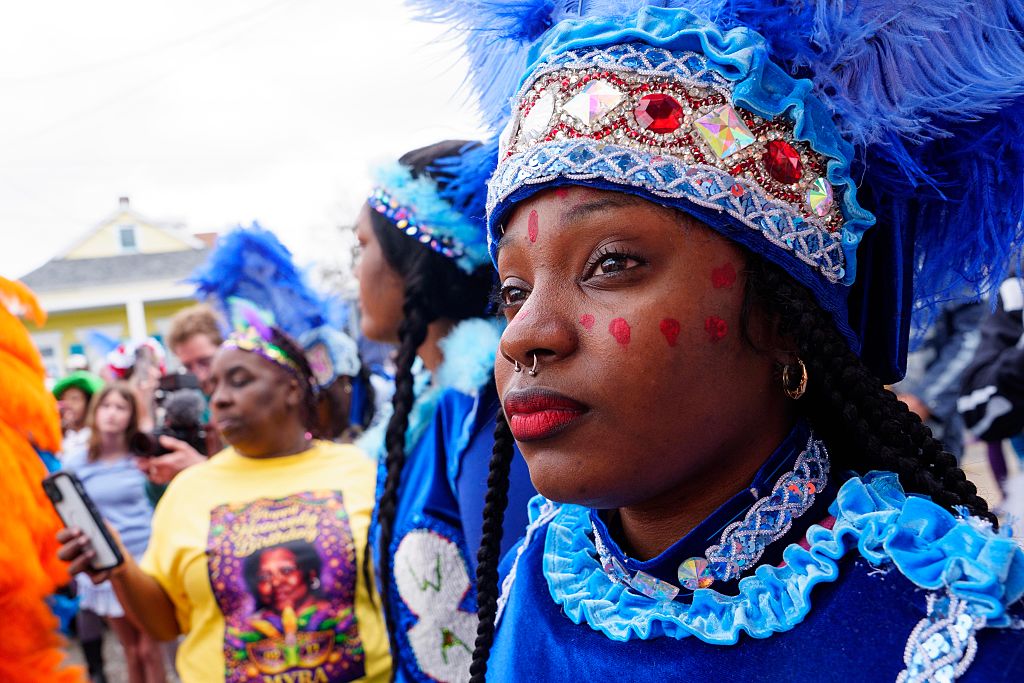
According to New Orleans.com, the Mardi Gras Indians and their traditions date back to the 1800s, when “Native Americans provided safe refuge and a sense of community for runaway slaves. Black Masking Indian culture is influenced by both ancestral enslaved Africans and the friendship forged with Native Americans.”
The history behind the name is equally meaningful. As noted by Mardi Gras New Orleans, Mardi Gras Indian tribes named themselves “after native Indians to pay them respect for their assistance in escaping the tyranny of slavery.” The outlet noted that “It was often local Indians who accepted slaves into their society when they made a break for freedom. They have never forgotten this support.”
Despite this shared history, exclusion continued when Black residents attempted to participate in the city’s traditionally white Mardi Gras celebrations. Most parading organizations, known as Mardi Gras krewes, operated with rigid hierarchies and invitation-only membership. These largely white groups often modeled themselves after royalty, with titles such as King, Queen, Duke, Knight, or Captain, and many were closed to African Americans.
They started their own tribes and traditions.
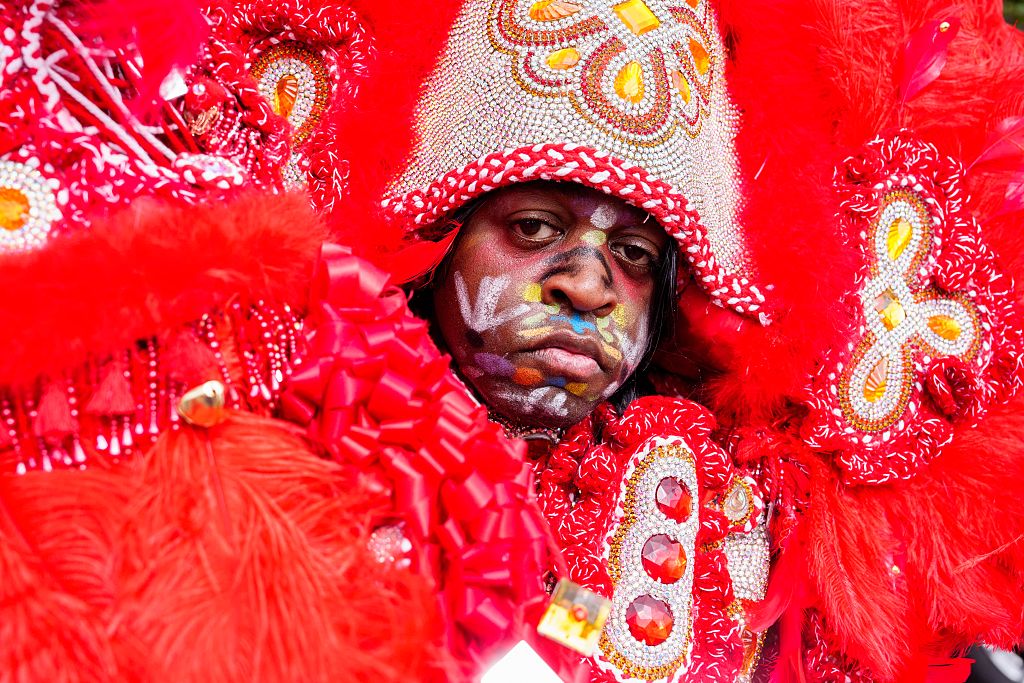
When African Americans were later banned from mainstream Mardi Gras celebrations and krewes, they responded by creating their own neighborhood celebrations. What began as community gatherings eventually evolved into organized tribes of Mardi Gras Indians. Over time, these tribes developed their own structures, traditions, and territories across New Orleans.
Today, more than 40 Mardi Gras Indian tribes exist throughout the city, including groups such as the Wild Magnolias, Young Maasai Hunters, Wild Tchoupitoulas, Bayou Renegades, and Golden Feather Hunters. Each tribe has its own leadership roles, such as Big Chief, Big Queen, Spy Boy, and Flag Boy, each carrying specific responsibilities that help guide the group during parades and gatherings.
Mardi Gras Indian tribe members wear elaborate costumes to celebrate the holiday and the annual Super Sunday celebration.
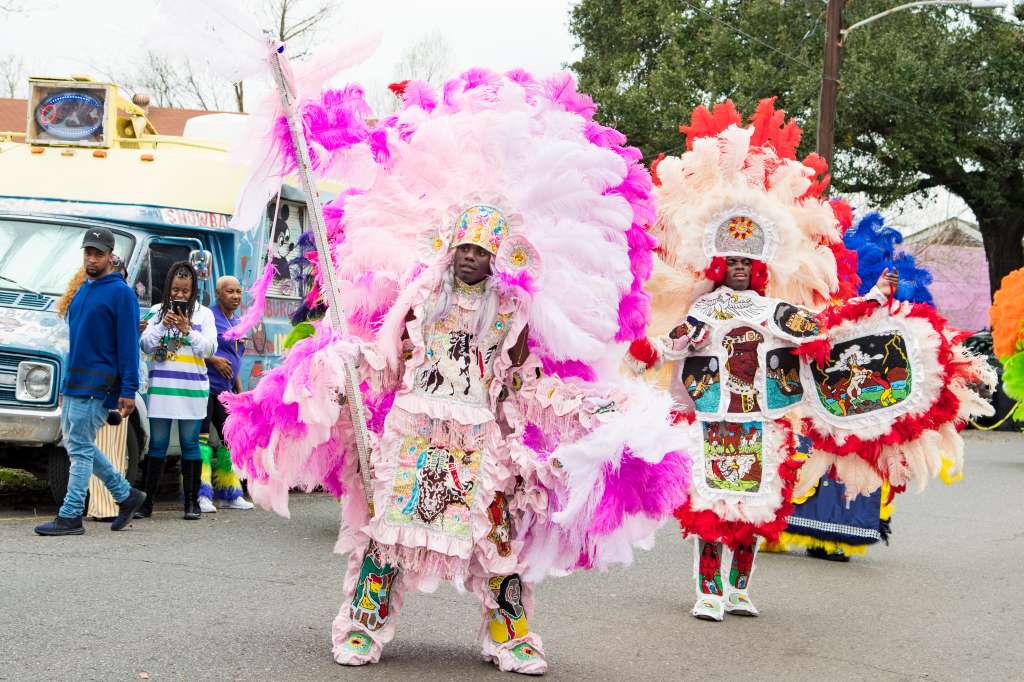
One of the most visually striking aspects of Mardi Gras Indian culture is the elaborate attire worn by its members. To express pride, creativity, and identity, each tribe designs stunning handmade suits filled with symbolic meaning. These outfits, which can take an entire year to complete, are masterpieces of craftsmanship.
Hand-sewn with hundreds of thousands of beads, brightly dyed ostrich feathers, sequins, velvet, and rhinestones, some suits can weigh as much as 150 pounds. The artistry behind them is widely regarded as some of the finest examples of American folk art. According to New Orleans.com, styles often differ depending on the neighborhood: Uptown tribes frequently use flat beadwork designs with heavy rhinestone and feather accents inspired by Native American imagery, while Downtown tribes often incorporate three-dimensional structures and sequins influenced more strongly by African artistic traditions.
Recently, the culture reached an even wider audience when rapper and Mardi Gras Indian member Flagboy Giz appeared on the music platform COLORS on March 14, wearing a striking Black Masking Indian suit, native to his tribe, The Wild Tchoupitoulas. It drew attention and celebration to the artistry of the tradition.
Creating these elaborate suits is a year-long commitment for many participants. Tribes often reveal their newest designs during Mardi Gras and major community gatherings, including the annual Super Sunday festival. Organized by tribe leaders, this event typically takes place on the third Sunday of March near Saint Joseph’s Day.
The festivities take place between Downtown and Uptown New Orleans, where tribes and their families gather in their vibrant suits before parading through the streets to meet other groups in celebration and friendly competition.
For many participants, the tradition is deeply personal: it’s about heritage, respect, and community. As Mardi Gras Indian tribe member Barbe Mandingo explained in an interview with WWL‑TV, during this year’s Super Sunday celebration on March 15.
“My suit is contributed to my chief and me becoming one and having our own tribe. It shows our love. What I love about New Orleans is at the bottom.”
For many, this beautiful tradition starts at a young age.
“I’ve been masking since I was four years old — now I’m 46,” a member of the Fiyaya Warriors told WWL-TV, adding that now, it’s incredible to see the next generation proudly repping their tribe.
“It feels great, man. The thing about it is the culture has to continue. So you need the little ones to keep it going.”
Through resilience, artistry, and remembrance, the Mardi Gras Indians have transformed exclusion into a powerful cultural legacy, one that continues to shape the spirit of Mardi Gras today.
SEE MORE:
Fat Tuesdy: The Black History Of Mardi Gras
Through The Lens Of L. Kasimu Harris
Born From Exclusion: The Powerful History Of The Mardi Gras Indians
was originally published on
newsone.com

