


A new trade association representing Canadian-owned and -controlled defence and technology firms has been created as part of efforts to make sure domestic industry has a voice in how federal funds are spent.
Prime Minister Mark Carney
announced his government’s defence industrial strategy
on Feb. 17, promising to pump billions of dollars into small- and medium-sized Canadian businesses. Carney has also vowed to make sure Canadian firms get the lion’s share of defence contracts let by the federal government.
Carney has complained that currently up to 75 per cent of Canada’s defence capital has been used to purchase U.S.-built equipment.
While Canada’s defence industry is made up of hundreds of companies, many, such as Lockheed Martin Canada, are subsidiaries of giant American corporations.
The new Alliance of Canadian Defence Companies, or ACDC, is an industry-led trade association and lobbying group representing wholly Canadian-owned defence builders and suppliers.
“What this (association) gives is a purely Canadian voice,” said Eliot Pence, founder and CEO of Dominion Dynamics based in Ottawa. Pence is co-chair of the new association along with Paul Ziade, CEO of North Vector Dynamics in Calgary.
Pence said federal government efforts to spend more on defence would be largely irrelevant if they didn’t lead to Canadian-owned and -controlled capabilities.
The new association will provide federal officials with insight into which firms are actually Canadian, he added.
The association noted that it was focused on strengthening co-ordination among Canadian defence firms and providing a unified Canadian industry voice on policy, procurement reform and industrial development. Twenty-three companies have signed on as founding members.
But interest has been extremely high and on Tuesday another 50 companies signed on to the association. Pence said he expected a total of 100 firms to be added to the list by the end of this week. “I see this potentially as a 500-member association,” he added.
The industry is currently primarily represented by the Canadian Association of Defence and Security Industries (CADSI) based in Ottawa. It represents some 900 firms. But CADSI has faced some criticism in the past that it has focused too much on the interests of Canadian subsidiaries of American and European firms. CADSI did not respond to a request for comment.
Pence said the new association was not intended to challenge CADSI. “I see them (the associations) as complimentary,” he said. “I don’t see them as combative.”
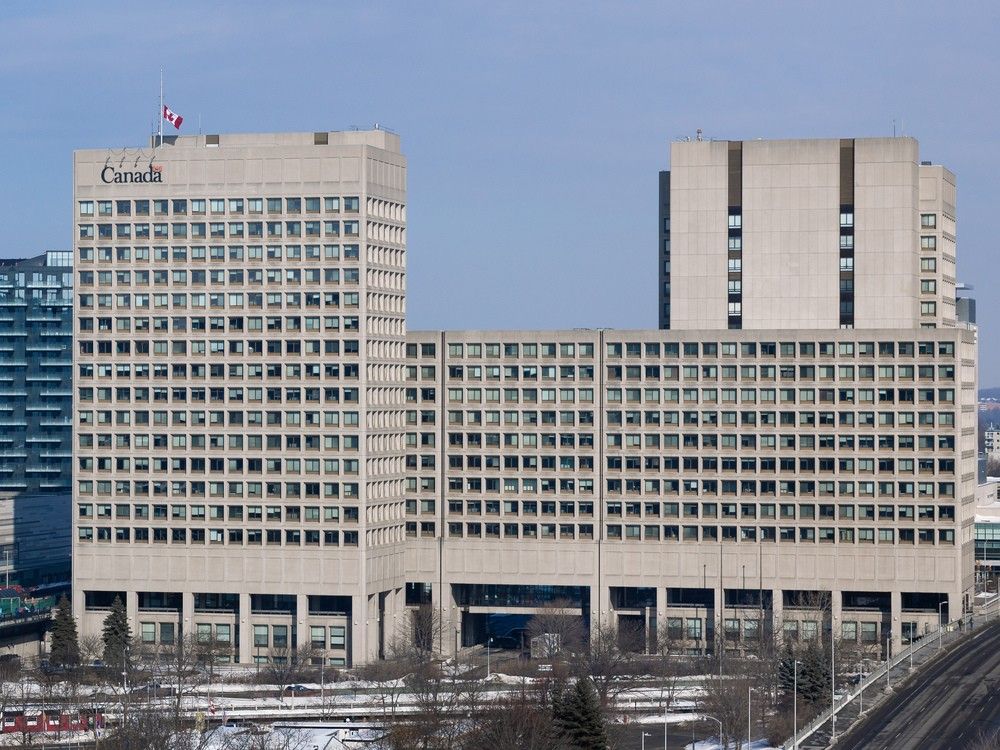
Canada’s spending on defence and security is set to skyrocket in the coming decade.
Over the past several months, Carney has been focused on a promise that Canada would cut back on using defence spending to purchase U.S. military equipment. The U.S. has become increasingly hostile to Canada, with President Donald Trump continuing with economic efforts to punish Canada and pushing for this country to become the 51st state. “We should no longer send three-quarters of our defence capital spending to America,”
Carney said in one of his speeches
, adding that the “transformation of our military capabilities can help with the transformation of our economy.”
But there has been growing frustration among some Canadian defence firms that the Canadian military leadership is ignoring Carney’s call to decrease reliance on U.S. suppliers. Canadian military leaders
are extremely close to their U.S. counterparts
and despite the prime minister’s direction have advocated for increased ties to the Americans and even more U.S.-built equipment.
The Office of the
Parliamentary Budget Officer (PBO) released a report
in early February that projected the Liberal government’s commitment to increase defence spending to at least five per cent of the economy would increase the federal deficit by $63 billion a year over the next decade. That is almost twice what the deficit is currently expected to average over the next few years.
The PBO also highlighted the ongoing secrecy around Department of National Defence spending projections. DND declined to provide the data to the budget watchdog. “Despite indicating in Budget 2025 that accelerating investments will ‘put Canada on a pathway’ to meet the NATO five per cent commitment by 2035, the government has not published supporting projection details,” the PBO report noted.
David Pugliese is an award-winning journalist covering Canadian Forces and military issues in Canada. To support his work, including exclusive content for subscribers only, sign up here: ottawacitizen.com/subscribe

