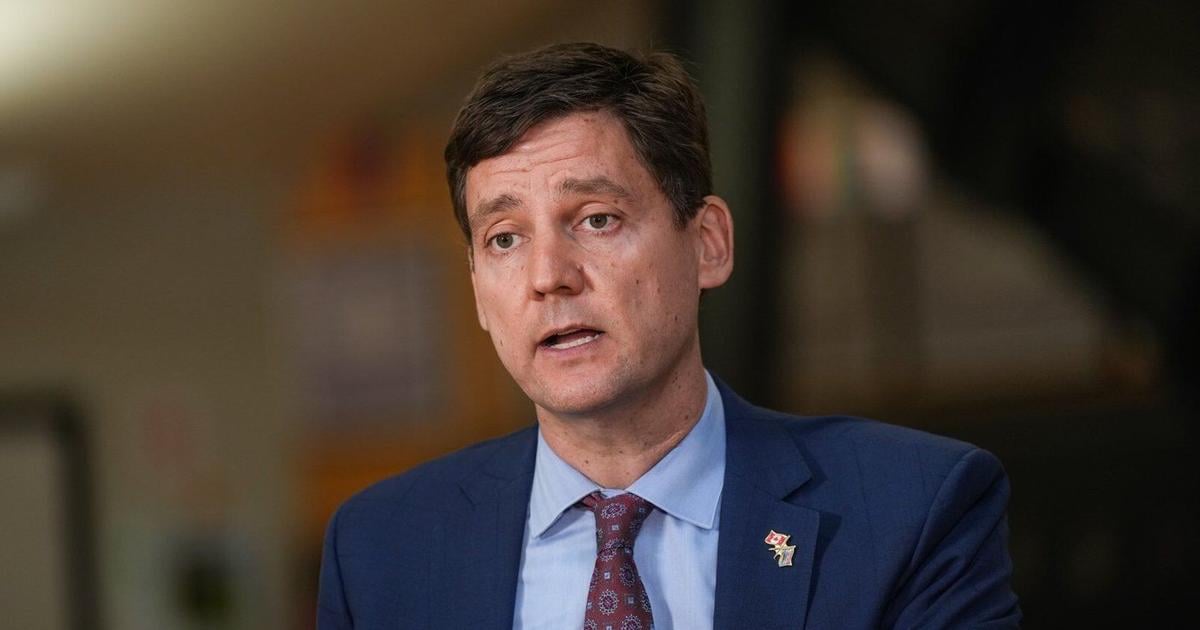
OTTAWA—The Carney government has no concerns about Chinese electric vehicles being used to spy on Canadians, Public Safety Minister Gary Anandasangaree suggested, countering a claim made by Premier Doug Ford in his blitz against Canada’s EV deal with China.
“I will let the premier of Ontario offer his perspective, but from a Canadian safety and security, public safety perspective, we don’t have concerns,” Anandasangaree said in an interview with the Star in Ottawa this week.
“Any vehicles that come in will have to abide by Canadian standards.”
He noted, however, that “the nature of social media and technology as it evolves, whether it’s through AI or through vehicles,” has allowed for increased data collection, which is a general cause for concern.
“The vehicle that I drive at home has significant information gathering capabilities,” he said, before pointing to his iPhone and adding: “This device has significant capabilities to collect data.”
His comments come just days after Prime Minister Mark Carney and Chinese President Xi Jinping reached a deal to ease trade tensions, with Canada reducing its U.S.-aligned 100 per cent tariffs on Chinese EVs in exchange for Beijing reducing tariffs against Canadian canola and seafood.
Under the deal, Canada will initially allow up to 49,000 Chinese EVs into its domestic market, while Chinese manufacturers — which produce EVs far more cheaply than in North America — are expected to invest in auto production in Canada.
Ford, in some of his most critical comments on Carney since the prime minister’s ascent to power, quickly lambasted the deal as “a terrible, terrible, miscalculated decision” that will damage Ontario’s auto sector and open the door to “spy cars” that will collect data for Beijing.
“When you get on your cellphone, it’s the Chinese that are going to be listening to your — and I’m not making this stuff up — they’re going to be listening to your telephone conversation,” he warned on Monday, saying it was “ironic” the prime minister was making a deal while using a burner phone in China.
That Chinese EVs could “vacuum up” data and send it back to Beijing is not out of question, said Stephanie Carvin, an associate professor of international relations at Carleton University’s Norman Paterson School of International Affairs.
At the same time, some experts have warned EV networks are less secure than the ones a cellphone uses, which could make them a bigger cybersecurity risk.
But that shouldn’t be reason to prevent their entry into Canadian markets, Carvin said, because doing so doesn’t necessarily give China an edge when it comes to espionage.
“China does not need electric vehicles to spy on us. They spy on us really well now,” she told the Star. “China’s got enough backdoors. They’re fine.”
Indeed, in its latest annual report, the Canadian Security Intelligence Service described the existing security threat from China in stark terms.
“With one of the world’s largest and most active security intelligence systems, the (People’s Republic of China) poses the greatest counter-intelligence threat to Canada,” CSIS noted.
While Carney also described China as the greatest threat to Canada’s national security during the spring election, he skirted a question about whether he still believed so during last week’s visit.
He also said he did not agree with the Trudeau government’s 2022 Indo-Pacific Strategy, which labelled China “an increasingly disruptive global power,” saying “I wasn’t there,” and “that wasn’t my opinion.”
On Tuesday, following a hard-hitting speech in Davos outlining Canada’s foreign policy, he asserted there are “very clear guardrails” in the Canada-China relationship.
Along with Anandasangaree’s comments, it’s a potential sign that Canadian officials may “downplay” national security concerns related to China as “the price for doing business,” Carvin said.
On that point, Anandasangaree told the Star that “the work of public safety will continue,” even if we “change our economic relations with certain countries.”
“It will continue with the same level of rigour that I think Canadians expect us to have,” said Anandasangaree, who is pushing in Parliament for “lawful access” powers for law enforcement the Liberals argue are crucial because corporations often have more data collection ability than police.
The bigger potential national security risk of the EV deal is to Canada’s already vulnerable auto industry, Carvin said, especially if China doesn’t follow through on its commitment to invest in manufacturing the cars in Canada.
Some experts have cast doubt on the likelihood of Chinese investment in Canada’s auto sector, saying that overcoming American security concerns, which could prevent entry into the stateside market, are an even greater obstacle to them than tariffs.
“A Chinese investment (in Canada) would need that but also the removal of American restrictions on Chinese technology in vehicles,” said Jim Stanford, economist at the Centre for Future Work. “That would be an even tougher nut to crack.”
Error! Sorry, there was an error processing your request.
There was a problem with the recaptcha. Please try again.
You may unsubscribe at any time. By signing up, you agree to our terms of use and privacy policy. This site is protected by reCAPTCHA and the Google privacy policy and terms of service apply.
Want more of the latest from us? Sign up for more at our newsletter page.