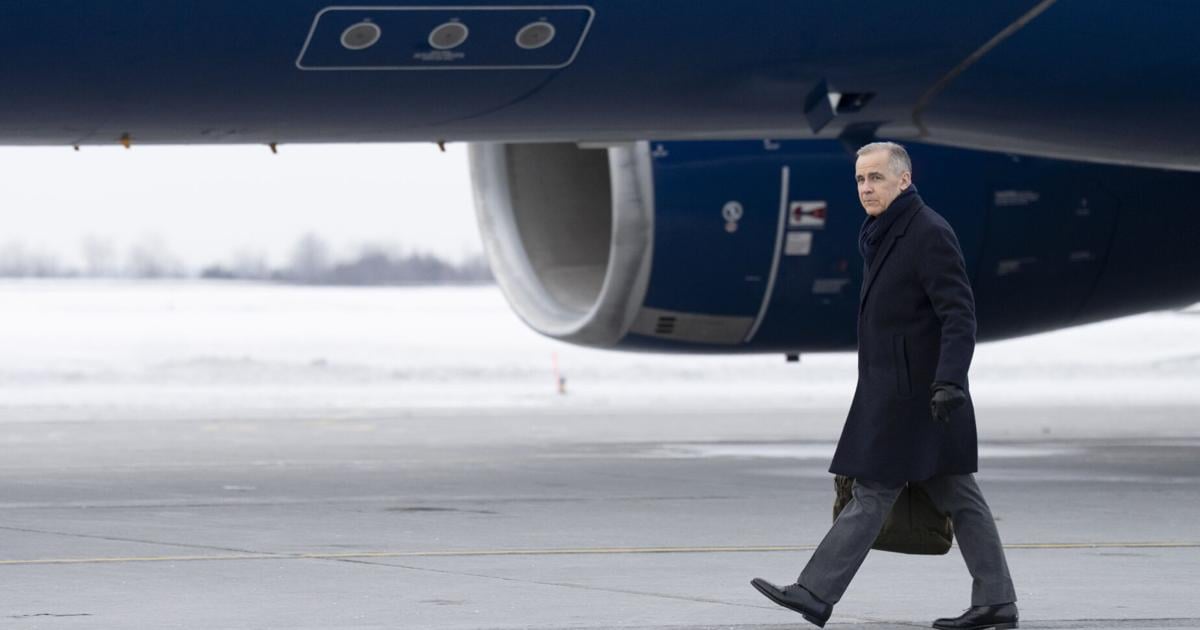
OTTAWA — Canadian negotiators are in “active discussions” with China about lowering or dropping tariffs on Chinese-made electric vehicles in exchange for easing punitive Chinese counter-tariffs on Canadian canola and seafood, but government officials declined to say how it might affect Canada’s trade tensions with a U.S. administration that is hawkish on blocking China’s EVs from North America.
On the eve of Prime Minister Mark Carney’s trip to Beijing, the talks are considered so politically sensitive as the U.S. and Canada navigate the upcoming negotiation to renew the North American free trade pact that Canadian officials would say very little about the tariff dispute that is jamming Ottawa between China and the U.S. and opened a double trade war for this country.
A senior Canadian official, among several who briefed reporters on condition they not be identified in order to discuss the government’s position ahead of Carney’s departure, said there has been a “concerted effort to address trade irritants systematically with the objective of making progress over time.”
They said that after Carney met with Chinese Premier Li Qiang at the United Nations last fall and with President Xi Jinping at the Asia-Pacific summit in Korea, there were extensive discussions between the two governments at ministerial and official levels “to address the irritants on both sides” — talks that were ongoing even as Carney prepares to arrive Wednesday evening in Beijing.
“This visit is really an opportunity to help put in place a much stronger foundation for ongoing co-operation in this regard. This is not our one chance to fix all the irritants … but we do expect to make progress,” they said.
Asked about the potential for the trip to aggravate U.S. President Donald Trump, the official said only that many countries have pursued trade diversification and broader economic relations with China, including the U.S., which has an “enormous commercial relationship” with the Asian economic giant.
”We’re always conscious of the impact of the broader relationship with the U.S.,” they added.
Carney’s two days in the Chinese capital includes meetings with Xi, Li and the chairman of the standing committee of the National People’s Congress, as well as an official dinner hosted by Li.
For months, Canadian automakers have warned against any shift that would signal to the U.S. that Canada is softening on Chinese EVs.
In the fall of 2024, Canada matched U.S. tariffs against Chinese imports, imposing 100 per cent tariffs on Chinese electric vehicles, and 25 per cent tariffs on Chinese steel and aluminum imports. When the tariffs on China were announced at a cabinet retreat, the Trudeau government made clear it was moving in lockstep with the Americans against Chinese “overcapacity.” China responded with counter-tariffs on Canadian canola oil and seafood. Prairie premiers like Saskatchewan’s Scott Moe have demanded that Ottawa try to ease the agricultural tariffs.
But Brian Kingston, head of the Canadian Vehicle Manufacturers’ Association, said dropping EV tariffs would be “incomprehensible” and “dangerous,” and could trigger a backlash from the U.S. at a critical time for the renewal of the Canada-U.S.-Mexico free trade deal.
Mexico matched American and Canadian tariffs on Chinese electric cars “because they realize that this is critical if we’re going to have a protected North American integrated automotive industry,” Kingston said. The economics just aren’t there, he added.
“There is no fair competition with the Chinese automotive industry. They massively subsidized this sector and they are now dumping vehicles around the world. Europe was soft on China. Look at what the outcome has been: 90,000 auto jobs lost last year because they’ve allowed dumped Chinese vehicles into their market,” he said.
“At a time when we’re fighting for this industry in Canada, allowing these vehicles in would be an economic catastrophe,” he added, citing national security considerations as well. The U.S. identified a “real cybersecurity risk associated with Chinese connected and electric vehicles” which led Washington to ban “Chinese-connected vehicle software,” and Canada “would and should have the same concerns,” he said.
Flavio Volpe, head of the Canadian Auto Parts Manufacturers, said any conversation with the Chinese has to be approached with “extreme caution.”
“The world has changed at an incredible pace since we put in those tariffs, and so has the EV world. The two things that haven’t changed is that Chinese players are state-owned and that this industry is built, the Canadian industry, is built to serve the American market, he said.
“Should Canada do its best to move tariffs on agricultural goods? Yes,” said Volpe. “But we need to be careful about how we invite people in, and anytime we invite anybody to assemble here, they absolutely need to try to meet the highest local content standard that we have. Right now it’s the USMCA” standard.
Ottawa should be wary that when Chinese manufacturers make promises to other countries, they work on a “complete knock-down” basis where “you’re essentially assembling the vehicle somewhere and then breaking it down into major components and … sending it somewhere, so that you’ll assemble in Indonesia (for example) but really all the components are from China. That allows them to keep the Chinese cost structure in place”
“So it allows them to have this really cheap bill of materials that they only get in China, and then use that in Canada, or any other market.”
Error! Sorry, there was an error processing your request.
There was a problem with the recaptcha. Please try again.
You may unsubscribe at any time. By signing up, you agree to our terms of use and privacy policy. This site is protected by reCAPTCHA and the Google privacy policy and terms of service apply.
Want more of the latest from us? Sign up for more at our newsletter page.