

When Doug Ford proposed a new “world-class” two-million-square-foot convention centre for Toronto earlier this week, he claimed the city ranks as “one of the worst” in the world for conventions.
According to the Premier, Toronto doesn’t have enough space to host international conventions and is losing those bids to smaller cities.
It’s “unacceptable” that Toronto ranks “one of the worst in the world for conventions — 24th out of 25,” Ford said, pledging that he will bring it from last to first.
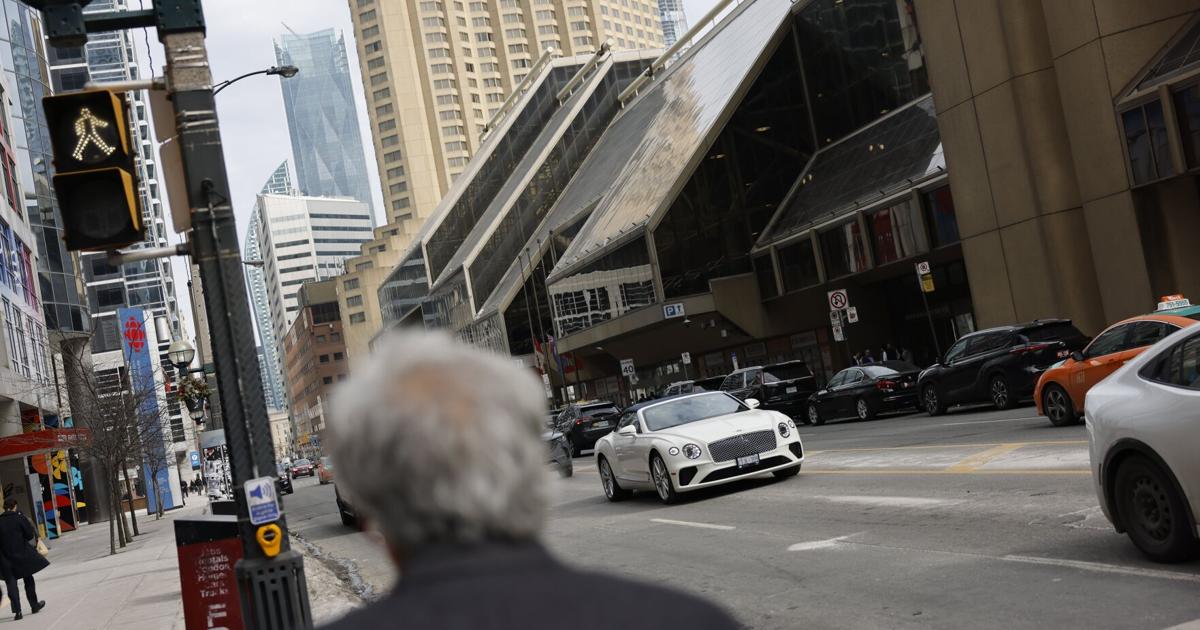
But given that Toronto already has 442,000-square-foot of exhibit space at the Metro Toronto Convention Centre (MTCC) and a one-million-square-foot Enercare Centre, does Toronto really need a new “shock and awe” convention facility that would cost at least hundreds of millions of dollars?
The Star found that the existing Metro Toronto Convention Centre, the city’s primary space for large conventions, is smaller than many comparable venues in other North American cities, and is losing business due to its limited capacity.
Some experts, however, are raising concerns that market demand for conventions, which is diluted by competition from sprawling U.S. convention centres, may not justify the cost of new infrastructure in Toronto.
“The premier and his advisers have simply failed to understand the difference between supply and demand,” said Heywood T. Sanders, professor of public administration at the University of Texas at San Antonio.
“He’s assuming that if you have a bigger convention centre, you will necessarily do more business,” which is not often the case, said Sanders, the author of the book Convention Center Follies.
On Monday, Ford said Ontario will build a “spectacular” convention centre that is “much better than” Chicago’s McCormick Place, the largest convention space in North America.
As previously reported by the Star, according to sources, the province is leaning toward building the new centre at the sprawling 192-acre Exhibition Place, which hosts the 18-day Canadian National Exhibition annually.
Compared to McCormick, which spans 2.6 million square feet of exhibit space with 1.2 million “contiguous” square feet, meaning connected space with no obstructions or gaps, the MTCC covers 442,000 square feet of exhibit space, of which only 259,000 are contiguous.
In 2023, the Auditor General of Ontario found that the MTCC did not have enough contiguous space to host the largest conventions and trade shows that could come to Toronto. The auditor’s report said that from 2001 to 2022, the centre lost 20 international conventions that in previous years had generated $490 million in economic impact before they relocated to other convention spaces.
The auditor said the MTCC ranked 18th out of 21 tier 1 convention centres in North America in terms of the size of its contiguous rentable space, followed by convention centres in Vancouver, Seattle and Montreal.
While it’s true to point out MTCC’s footprint limit, Sanders said building a convention behemoth won’t necessarily bring more events to Toronto.
Despite its expansive size, McCormick Place in Chicago has seen the number of conventions and trade shows decrease from 72 to 45 between 2003 and 2024, and the number of visitors to those events decrease from 1.56 million to 794,000, according to data obtained by Sanders through a freedom of information request.
Sanders said he has seen a similar decline in conventions at large convention centres in other cities, noting that demand has been diluted by the growing number of massive venues.
Some existing events are also getting smaller, added Sanders, such as the National Restaurant Show, held every year at McCormick Place, that has seen attendance shrink from 103,000 attendees in 1996 to 52,800 in 2025.
Sanders said he worries Torontonians “will pay a lot of money, and they’ll get little or nothing in return.”
In 2019, MTCC proposed a redevelopment that would expand its available event space to capture more of the large-scale convention market, as well as building 2,500 to 3,000 hotel rooms connected to the facility.
However, the Auditor General’s report says that up until 2025, the Ontario government did not provide guidance on when it plans to make a decision on the redevelopment.
Frédéric Dimanche, a professor at TMU’s School of Hospitality and Tourism Management, said it’s hard to comment on the premier’s goal to build a new convention centre without seeing any business plan, feasibility studies, or market analysis studies.
“We would like to see (studies) before they make a decision,” Dimanche said. “Because when I hear Premier Ford say we will do this, I’m afraid he’s made the decision already, and that decision will be imposed on the taxpayers.”
Dimanche said the link between increasing the convention centre’s square footage and revenues remains unclear.
While convention travel, which declined during the pandemic, is slowly recovering, it’s questionable whether it has grown enough to justify a strong investment in a convention centre when there are already many other large-scale convention centres in North America, Dimanche said.
Toronto also doesn’t have enough hotel rooms to accommodate large conventions, he added.
Matti Siemiatycki, director of the Infrastructure Institute at the University of Toronto, said he agrees that Toronto is missing out on the space suitable for a city of its size to host large conventions, given that the MTCC’s space is “broken up” and the Enercare Centre at Exhibition Place is large but doesn’t feel like a “premium space” to host critical conventions.
However, Siemiatycki said he doesn’t think it should be the province’s priority to invest billions of dollars in a convention centre.
“It’s a nice to have, not a need to have,” he said. “Planning by shock and awe is rarely a strong, good, long-term strategy.
Siemiatycki added the Premier’s announcement could be an opportunity to collaborate with the city and “supercharge the revitalization of the Exhibition grounds.”

