

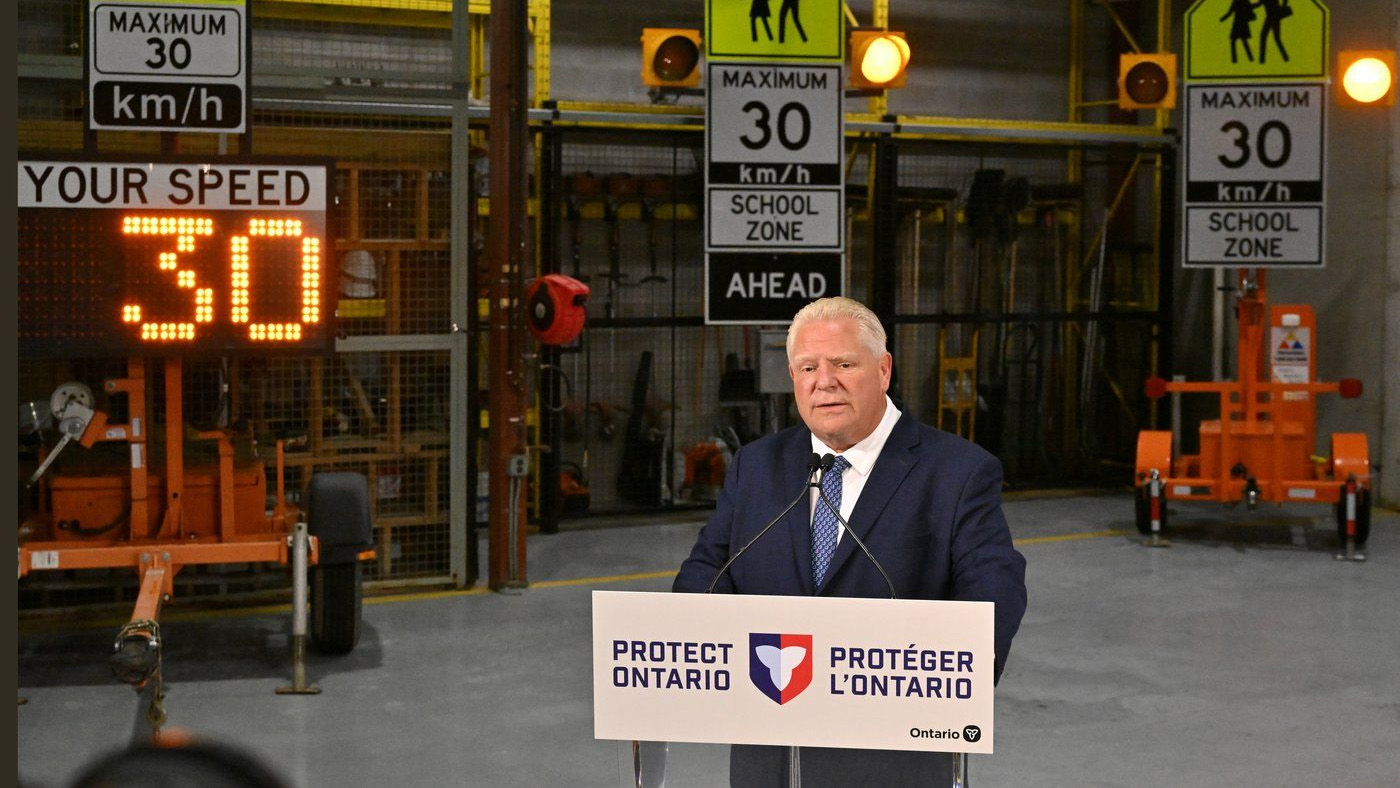
Ontario Premier Doug Ford took issue Thursday with a City of Toronto report that concluded it would take upwards of 13 years and cost $52 million to build speed bumps and other traffic calming measures in school zones.
The recent report came after Ford banned automated speed cameras provincewide in the fall, saying they did not work and were nothing but a cash grab. That was despite evidence from municipalities and researchers at the Hospital for Sick Children that concluded speed cameras do work to slow traffic.
Ford has long said he believes speed bumps, roundabouts and big, flashing signs would calm traffic.
Ford called Toronto’s city council “the most dysfunctional political arena in the entire country” when asked about the report and blamed “radical left” councillors for the city’s problems.
“Hand that over to me, I’ll show you how to do a roundabout in months,” he said, as opposed to 13 years. “I’ll show you how to do a speed bump.”
Toronto had 150 automated speed cameras before the provincial legislation came into force and had plans to add more. It had placed them near schools and other hot spots, and the vast majority of them were movable. It had plans to add more cameras before Ford enacted legislation.
City staff prepared the report for the infrastructure committee.
There are 819 schools in Toronto and about 775 kilometres of road that fall within school zones across the city, the report said.
There are also 244 kilometres of arterial roads in Toronto school zones where traffic calming measures are not allowed, the report noted.
“They’re not going to have them on the big roads. They can’t have a speed hump. They could have a speed camera, but that’s been taken away,” said Coun. Paula Fletcher. “They’ve made decisions that are bad for our kids.”
The city installed “approximately 700 speed humps and speed cushions” in 2025, and with a “moderate” increase in building those, staff estimated it would take 13 years to finish installing them along all the eligible stretches of road near Toronto schools.
Speed bumps or cushions cost about $4,000 each to install, the report said, and a preliminary estimate suggests the new slate would cost about $52 million.
According to the report, crews can only install a limited number of speed bumps each year, meaning some neighbourhoods could be waiting years before changes are made.
Safety advocates for areas of the city where speeding is an ongoing issue, including along Parkside Drive by High Park, say they are disappointed with the changes.
“It seems like the speed camera became a political issue rather than a safety issue,” said Faraz Gholizadeh, Co-Chair of Safe Parkside. “And it’s really disappointing that the safety aspect of it is being lost in a fight over speeding people, paying speed fines. I don’t understand why that’s so controversial.”
Catalina Gillies contributed to this report

