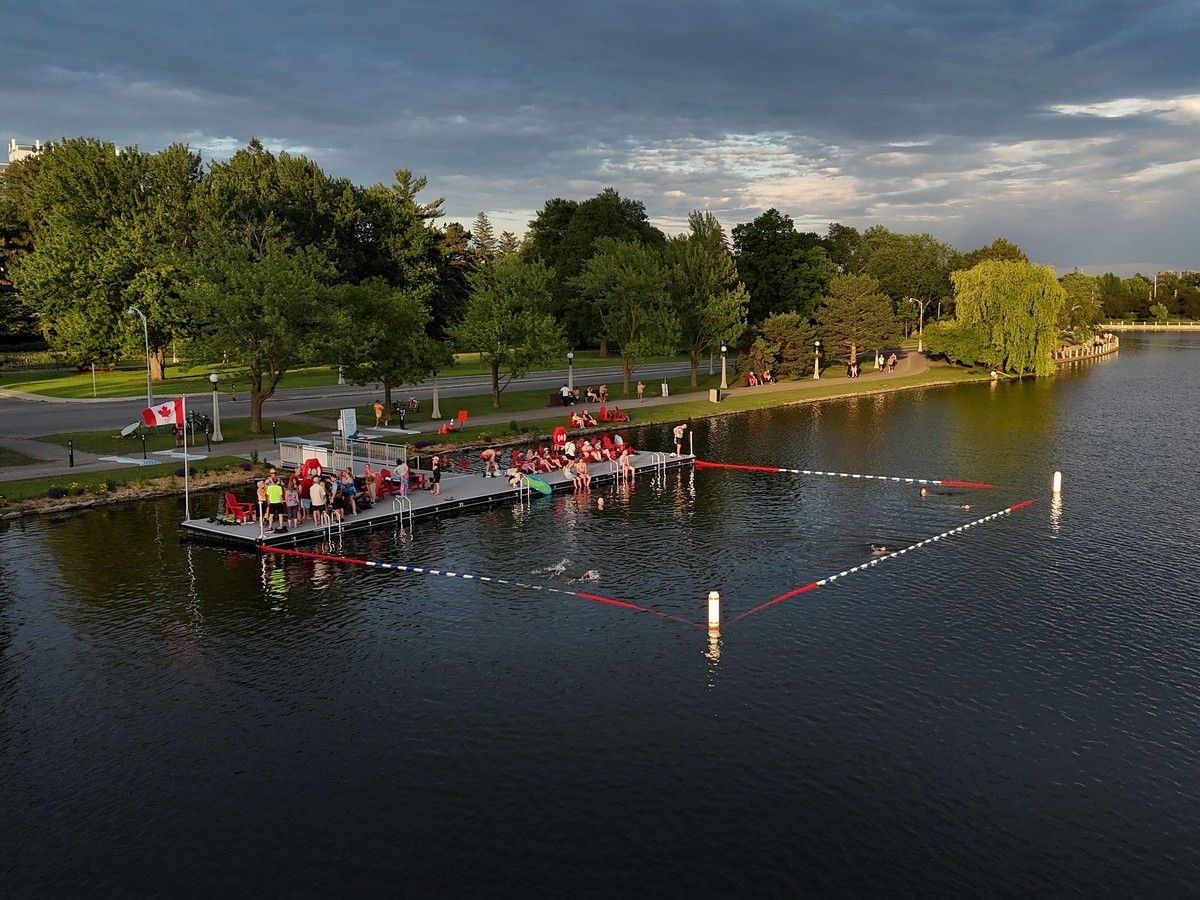
The National Capital Commission made a splash last summer when they invited Ottawa residents to swim in
Dow’s Lake
in June with a
newly installed recreational dock and buoy lines.
In partnership with the NCC, Carleton University launched a survey over the winter to hear thoughts from people who
enjoyed swimming in the lake
or plan to in the future.
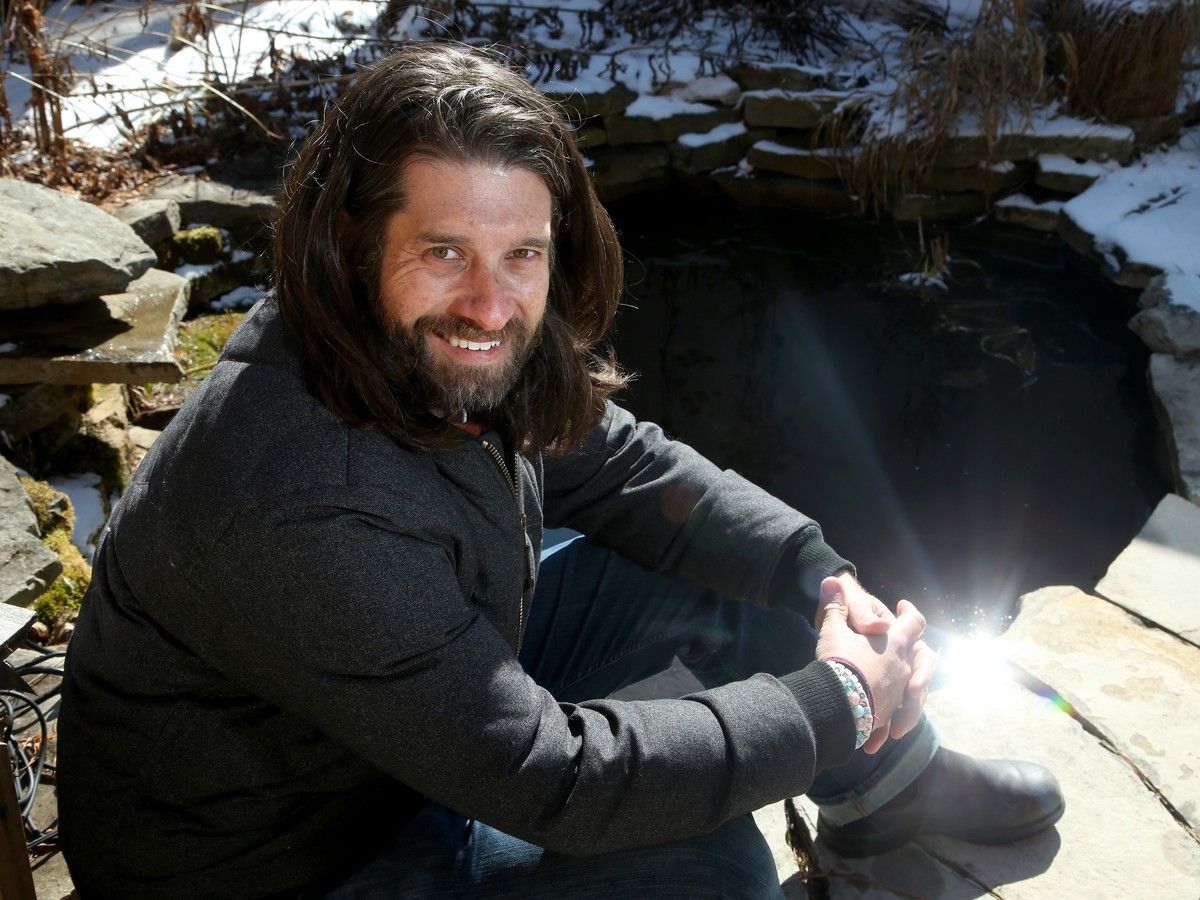
Carleton science professor Sean Landsman worked on the survey and is now looking through the preliminary results.
He said the responses so far highlight a range of attitudes toward the lake, but as a frequent fisher at the lake he said he saw someone in the water “eight times out of 10.”
“[Survey responses] range from ‘I’ve been waiting for this for so long, I’m so excited’ to ‘I wanted to swim in it because I wanted to prove to people that you can swim in Dow’s Lake and be totally fine.’ And that speaks to some hesitation,” Landsman said.
But attitudes online to the new swimming spot, even with the addition of Muskoka chairs and a bright red dock, were not so enthusiastic right away.

When a Reddit user
posted about the new opportunity to swim
in June, top comments from users ranged from ‘I for one will be taking a Dip at Dows!’ to ‘Gross. Stagnant water,’ referring to concerns about the lake’s water quality.
According to the
NCC
, water testing in 2025 confirmed the swim area consistently met or exceeded applicable health and safety guidelines.
“This whole project revolves around this concept of swimmable cities and blue spaces,” Landsman said. “When we think of green spaces, we tend to think of parks and forests. But [with] a blue space, the focus is on the water.”
One of Ottawa’s main “blue spaces” according to Landsman is Dow’s Lake. With the project and the NCC, Landsman has an opportunity to see how more people can be brought to enjoy the waterfront this summer.
“There seems to be an increasing emphasis placed on ‘Okay, we’ve done such a great job with our green spaces. Let’s try to look at our blue spaces and do something similar with them,’” Landsman said.
But in particular, Landsman hopes to see more people enjoy diving into the lake’s waters.
“If you can get your urban blue spaces to a point where you can safely swim in those places and recreate in those places, then people that are enjoying those spaces will want to see those places taken care of,” Landsman said. “And there’s sort of a snowball effect there.”
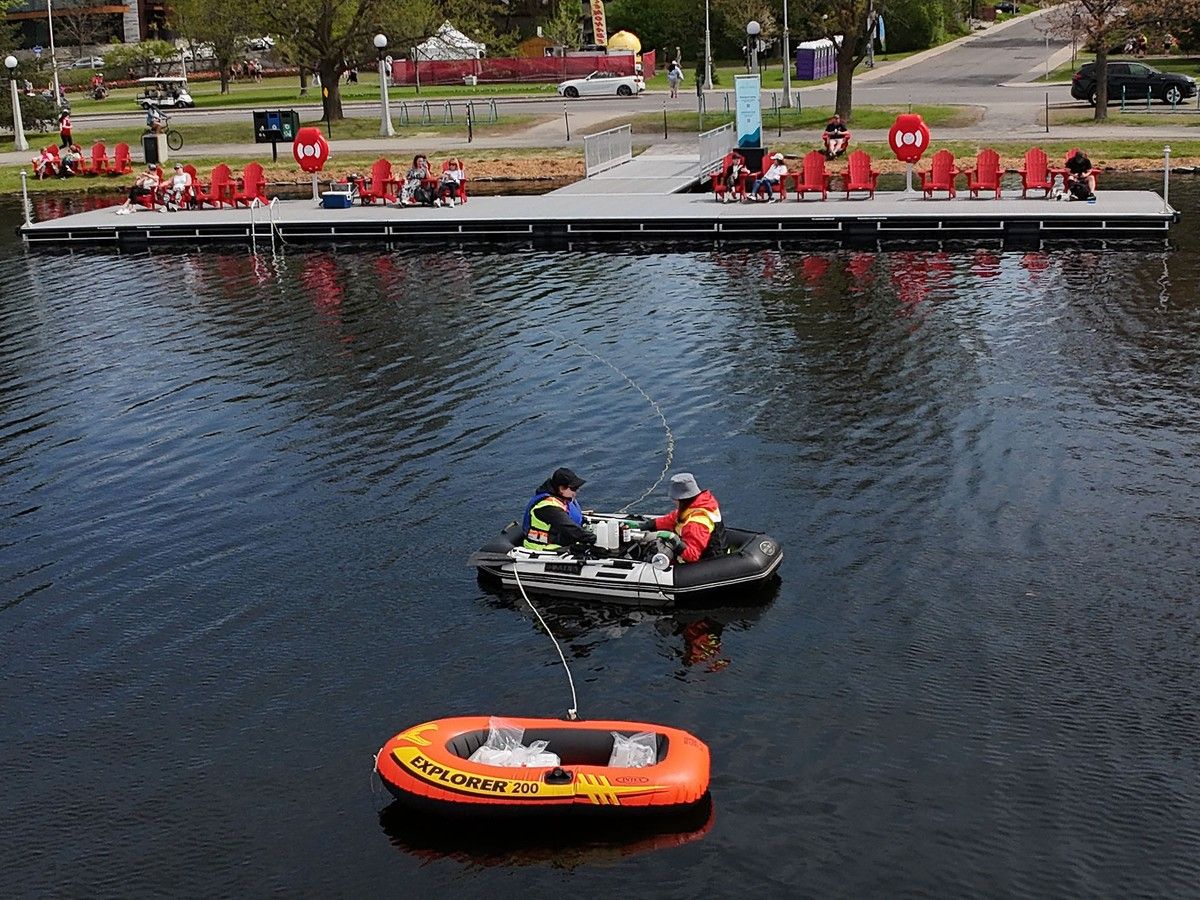
Banu Ormeci, a Carleton professor whose research focuses on water and wastewater treatment, said concerns about the water testing and quality of Ottawa’s urban swim spots come from lingering misconceptions from the 1960s and 1970s.
“We tested the water samples at five different locations for three months, in fact, we tested more samples than the Ottawa Public Health,” Ormeci said. “The water quality is excellent. There are no worries about E. coli limits or exceeding E. coli limits overall in the river.”
Funnily enough, Ormeci said the only location where her research team saw issues was at Mooney’s Bay, the popular beach along the Rideau River. “In general, the water quality is excellent,” she said.
Beyond quality, Ormeci believes it’s important for local waterways to be kept swimmable.
“We all need to protect our local rivers, but also try to make the best use of them. We can do much more with our rivers. We focus on recreational swimming, but this is also an issue with climate change, Ottawa is getting warmer,” Ormeci said. “Not everyone can go to a cottage. Not everyone has AC at home. So we also need cooling spaces in Ottawa. And that is why the rivers, both of our rivers, will be more important in the future because of the changes we see in climate.”
“It’s certainly not a pristine lake you might find in the far north or a lake that you might find in Algonquin Park,” Landsman said. “People have reservations about jumping in the water, and that’s certainly understandable.”
Landsman thinks one of the results that will come out from the project are the number of misconceptions.
“People just aren’t aware that there was routine testing going on and it was publicly available,” Landsman said.
Some might say, “‘If you jump in the lake, you’re going to grow a third eye like that fish in The Simpsons.’ There’s many reasons to believe that that’s not act that’s not accurate. The water quality was very good this summer,” he said.
The Carleton survey had about 700-750 responses their team is using in their dataset, according to Landsman. While it’s unclear how many people took the plunge last summer, Jennifer Halsall, who led
the NCC pilot project
to install a dock at the lake said just under 100,000 people stepped on it.
“You always launch a pilot with the hope that it succeeds. And we didn’t come into it blind,” Halsall said, indicating her awareness of the quality concerns around the lake.
“I’m quite interested to see how people’s opinions have changed and how their relationship to the water has changed. We know the canal has a stigma and that is not unique,” she said. “London now has swimming in the Thames. Paris now has swimming in the Seine. We’re seeing globally a real movement to open up waterways and make them accessible to people, and the NCC is very sensitive to that.”
Landsman is also on board with the trend, citing the Ottawa Riverkeeper’s signature on the Swimmable Cities initiative, which now includes seven Canadian cities.
“Without our freshwater, we’re doomed as people. And if the swimmable cities initiative is used in part to help promote the health of our freshwater ecosystems, that’s a worthwhile thing,” Landsman said.
Halsall said the NCC is absolutely trying to encourage people to take the plunge.
“Our partnership with the Ottawa Riverkeeper as well for water testing at our swim sites is hugely beneficial and they do a lot of work to educate people on the fantastic quality of our water and the really interesting facts about our rivers and waterways,” Halsall said. “And people are their own advertisement to a degree. You see other people having fun on a hot day and you can’t help but want to join in.”
But for Landsman, it’s also about fostering connections with the place you live.
“We’re all residents of Ottawa. If there are ways that we can build stronger connections with the place we live, then I think it leads to a better quality of life for everyone.”
Related
Our website is your destination for up-to-the-minute news, so make sure to bookmark our homepage and sign up for our newsletters so we can keep you informed.