

The dearth of homegrown TV shows
Canadian television has always faced an uphill battle getting traction against the more expensive American fare that floods our screens. And when homegrown shows do attract notice, they’re often spinoffs of U.S. franchises, like “The Amazing Race Canada” and “Law & Order Toronto.” But it’s hard to attract viewers if Canadian shows aren’t getting made in the first place.
Sure, publicly funded CBC and private behemoth Bell Media are still producing TV dramas and comedies, and U.S. streaming service Netflix has funded Canadian shows like “North of North” and the Mae Martin vehicle “Wayward.” But what about the other private Canadian broadcasters?
In June, Global TV, a division of Corus Entertainment, announced an almost all-American slate of TV “hits,” aside from a second season of the B.C.-set “Murder in a Small Town.” Rogers and Citytv, meanwhile, will bring back “Hudson & Rex” and “Law & Order Toronto,” while their new “Canadian original” is a spinoff of “The Price Is Right.” Nothing against game shows or other reality TV, but Canadians deserve to see themselves reflected in scripted stories. — Debra Yeo
Jonas Brothers baffle Blue Jays fans
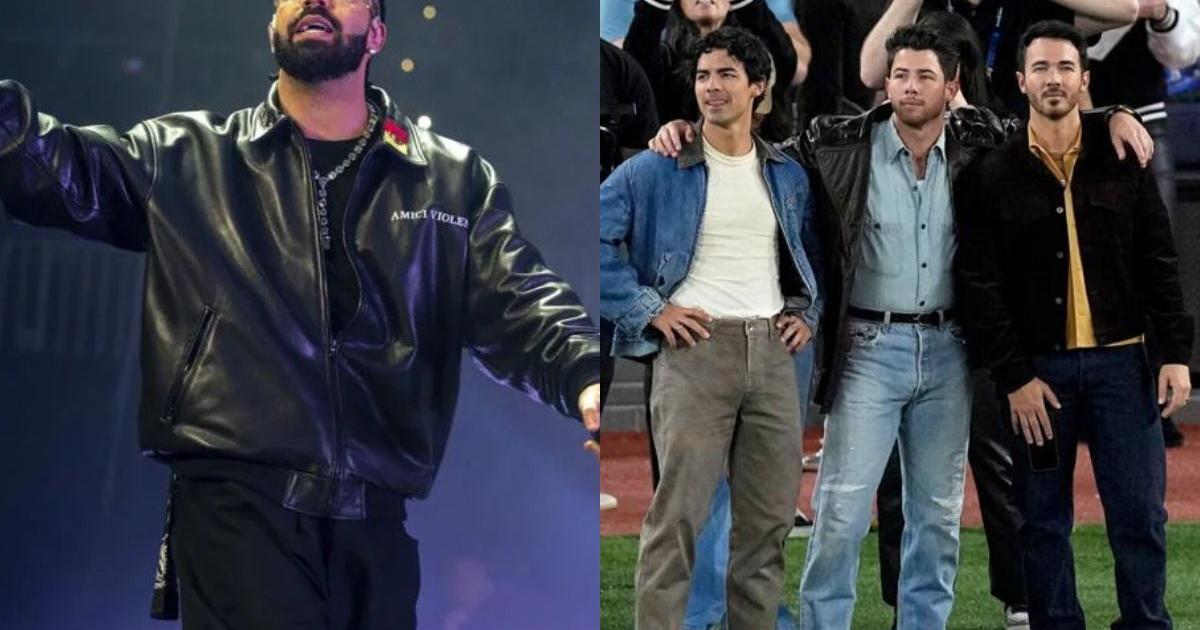
Game two of the World Series, and the Blue Jays were up 3 to 1 against the Los Angeles Dodgers. As a stagnant fifth inning came to a close, a Stand Up 2 Cancer tribute honouring loved ones who have been affected by the disease provided an emotional moment for fans and players. Then, a surprise voice. Fans took in the surprise sight of the Jonas Brothers, who performed their song “I Can’t Lose” as a coda to the cancer tribute. The spirit of the miniconcert may have been lovely; the fan reaction was not, particularly on social media. This X post summed up the general feeling: “‘Thank you for honouring those fighting cancer. The Jonas Brothers’ was not on my bingo card for this World Series.” — Savannah Ridley
Rogers Stadium’s rough start
Live Nation’s mammoth 50,000-capacity outdoor venue near Downsview Park had a rocky maiden voyage through a packed summer of marquee concerts: grandstands reportedly swayed under the weight of fans; concertgoers leaving the grounds caused a frustrating bottleneck; even Coldplay’s Chris Martin called it a “weird stadium in the middle of nowhere.”
Though the experience got better — attendees reported better crowd control and logistics as the summer progressed — the venue’s sudden emergence was one of the year’s weirder musical developments, given both its location and quasi-permanent nature.
But if a venue’s success is measured by the experiences it yields, Rogers Stadium gets a pass. It brought Oasis’s reunion tour to the city, as well as diverse gigs from such artists as Blackpink, Stray Kids and System of a Down (with the Deftones), adding another stage to the city’s roster of venues. There were magic moments, cathartic singalongs and memorable visual spectacles, which is all you really want from a colossal outdoor concert.
In 2026, the stadium will host Luke Combs, AC/DC and Foo Fighters, and is poised to rival the recently renamed RBC Amphitheatre (formerly Budweiser Stage) as the GTA’s premier outdoor live music venue. RBC Amphitheatre will undergo massive renovations starting in 2027 that will transform it from a summer-only venue to a year-round option for shows in the 9,000-capacity range. — Hayden Godfrey
Concert ticket prices reach dizzying new heights
Hoping to see the Rush reunion tour in Toronto next summer? You might want to start saving your loonies. As of this writing, the cheapest ticket available for the Aug. 7 show at Scotiabank Arena is going for $606.90. Want to check out AC/DC next September? Be prepared to fork over more than $232 to sit what seems like a mile from the stage at Rogers Stadium (floor tickets will cost you close to $450).
These are not exactly anomalies, either. In 2025, Toronto music fans watched in horror as ticket prices for major touring acts soared to absurd new levels: $650 for Coldplay; $550 for Kendrick Lamar; nearly $1,000 for a presale ticket for Blackpink.
The forces driving these price increases are complex and labyrinthine — on the macro level, experts have pointed to a combination of inflation, changing consumer behaviours and corporate consolidation. But these explanations offer little solace to frustrated fans, who can’t help but feel exploited by industry players like Ticketmaster and Live Nation, who critics allege have created a near-monopoly on major concert acts.
Fortunately, there are signs of hope. In recent months, fans have increased pressure on Ticketmaster to reconsider their use of “dynamic pricing” and to create more transparency around service fees. And they’ve pushed the government to clamp down on third-party ticket resellers who use deceptive practices to jack up prices.
Over the past 12 months, acts like the Cure and Neil Young have taken pay cuts to keep ticket prices low, while Oasis decided to scrap “dynamic pricing” for their North American shows. And in November, U.K. singer Olivia Dean called out Ticketmaster, Live Nation and AEG after discovering her tickets were being resold at exorbitant prices. In response, Live Nation and Ticketmaster announced they were capping resale prices and offered partial refunds.
These are small victories, perhaps, but prove that music fans (and artists) still possess power to change the tide. — Richie Assaly
Still licking his wounds, Drake gets litigious
Kendrick Lamar’s chart-topping diss track “Not Like Us” wasn’t the first time Drake suffered a reputational blow at the hands of a fired-up nemesis.
In 2018, the Toronto rapper was forced to concede defeat to his rival Pusha T after the latter released “The Story of Adidon,” a diss track that not only accused Drake of exploiting Black culture, but also of “hiding” a secret son. After admitting that he’d been outmanoeuvred — and even tipping his hat to his rival — Drake put his head down and returned to the studio. Later that year, he released “Scorpion,” a double album that went five-times platinum and received five Grammy nominations.
But when the dust finally began to settle on his feud with Lamar late last year, rather than hunker down in the studio, Drake opted to put his legal team to work. First, he filed a legal action against his record label Universal Music Group (UMG) and Spotify, accusing them of artificially inflating the popularity of “Not Like Us.” After dropping that legal action in January, he launched a separate lawsuit against UMG, accusing the company of defamation and harassment. (In October, after months of bitter back-and-forth between Drake and UMG, a judge tossed out the lawsuit, ruling that Lamar’s lyrics were not defamatory, but opinion.)
Meanwhile, Drake’s legal team also had to play defence. In October, the rapper, who has a partnership with the online gambling company Stake, was sued for allegedly promoting an illegal and fraudulent gambling scheme. And in November, Drake was named in yet another lawsuit against Spotify that claims his streaming numbers are inflated by bots.
To be fair, Drake did have a minor hit earlier this year with “Nokia,” a refreshingly fun and dancey track that proved the 39-year-old is still capable of creating magic in the studio. For the sake of his remaining fans, he might want shift his energy back to the music. Litigious Drake is getting boring. — R.A.

