


There’s a term for the practice of piling cheese, olives, crackers, grapes and whatever else is in the fridge onto a plate and calling the mishmash a complete meal: “girl dinner.” The viral TikTok trend from 2023 gave name to the low-effort way women can eat when no one’s watching.
Ottawa pop-up Girl Dinner 613 has applied the same freewheeling energy to a cause, rallying women in the city’s restaurant industry to cook elaborate charity meals together.
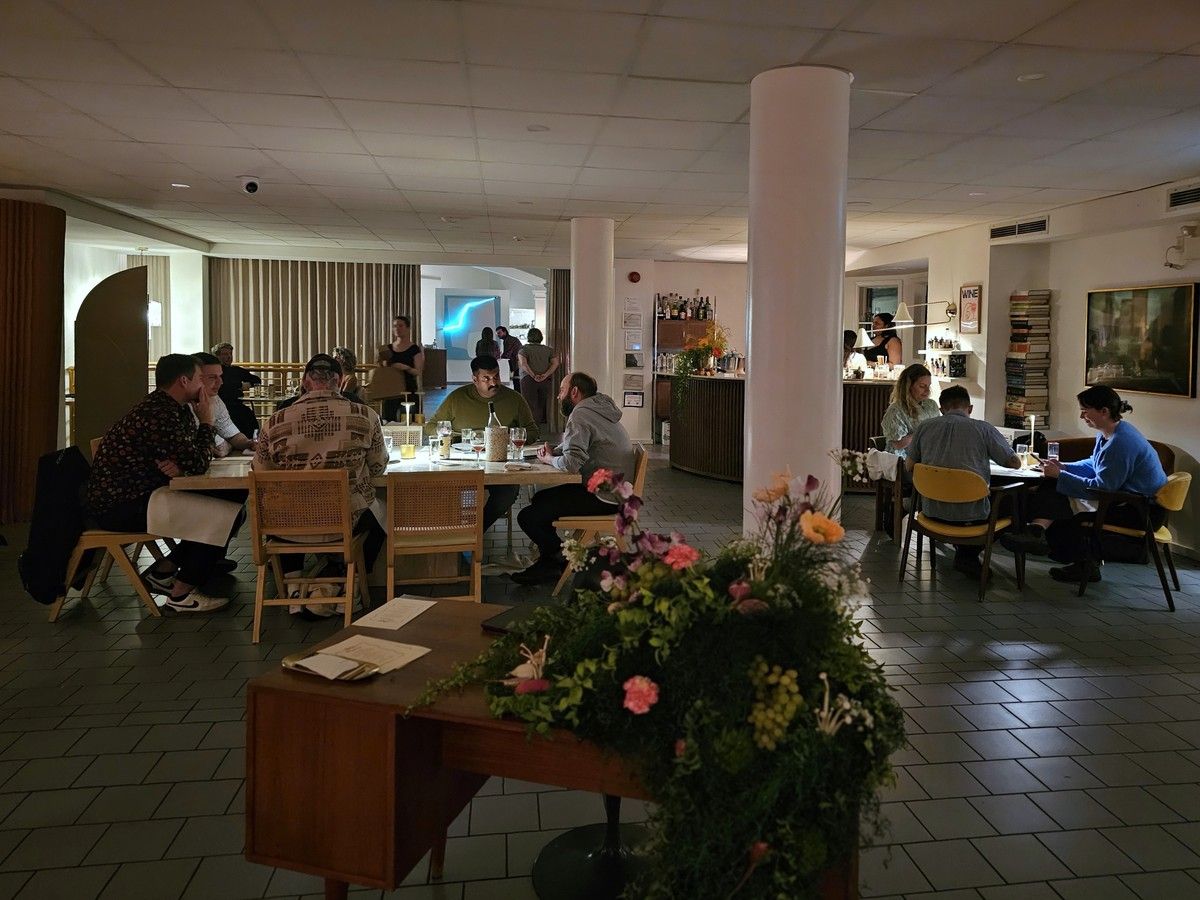
On Sunday, March 8, twelve chefs, a crew of sommeliers and bartenders, and a sold-out crowd packed into
Parlour on Wellington West
for Girl Dinner’s third annual International Women’s Day fundraiser. This year the cause was Hopewell, eastern Ontario’s only eating-disorder support centre. Only, instead of a motley collection of snacks at home, the $150 admission price is good for twelve courses that, while modest by tasting-menu standards, showcase incredible ambition.
Girl Dinner is the creation of Mélyna Amyot and Kali Fawcett, who met while working at
Buvette Daphnée
. Three years ago, they collaborated on an International Women’s Day dinner at the restaurant. The tradition has floated around the local hospitality scene for years, organized by whoever steps up.
Their first collaboration planted a seed. When
Buvette closed a few months later
, the two decided to keep going. The name came from a running joke at the restaurant. “After our shifts, we’d be like, ‘Oh, we’re just going to have girl dinner,’” said Amyot, recalling eating cheese and olives on an overturned milk crate in the alley behind the restaurant. “And then we decided, let’s do pop-ups in the city where we raise money to aid and protect women and non-binary people.”
Amyot is quick to note that the name captures the spirit of the trend, casual and unguarded, and that it extends to everyone. “Everybody’s invited,” she said. “It’s like a state of mind.”
The post-shift ritual of scrounging “sneaky snacks” has since become a pop-up operation raising money for real causes. Last year, the pair raised $11,000 for Minwaashin, an Indigenous women’s shelter in the city.
This year, the choice of charity was personal. “We spend all day cooking for others,” said Amyot. Hospitality workers, she explained, fall into a vicious cycle of eating at 10 a.m. and again at 3 a.m., rarely sitting down to a proper meal in between. It may not look like a textbook eating disorder, she said, but it is a pattern of disordered nourishment that most women in the industry recognize.
What has changed most in Girl Dinner’s third year is the scale of community support. Nearly every ingredient — all the wine, beer, and even the floral arrangements — was donated.
“People just started asking, ‘Can we give you flowers? Can we send four flats of beer you can sell to raise money?’” Amyot said. Most of the chefs declined their usual small budget and donated their course out of pocket.
With that much goodwill behind it, I wanted to see whether the evening could deliver on its more ambitious promise, that a stranger could walk in alone and leave with friends.
So I arrived solo. Amyot had described communal, wedding-style seating and a deliberate effort to group lone ticket-holders together. She told me about a past event where six women who’d each booked alone ended up at the same table and left with new friendships.
At a sold-out event with two seatings, that’s a tall order to execute consistently, and it did not quite reach my corner of the room. Most attendees near me were couples or industry acquaintances.
View this post on Instagram
Snacking, scaled up
The evening opened in an adjoining room with a standing reception of amuse-bouches, a grazing hour that suited Girl Dinner’s ethos. The room was lively and warm, wine circulating, with chefs ducking in and out in aprons. The beet ravioli was an early favourite: a thin sheath of beet enclosing goat cheese and candied nuts, lightly crunchy, with enough oil to give the filling a smooth counterpoint to the raw vegetable wrapper.
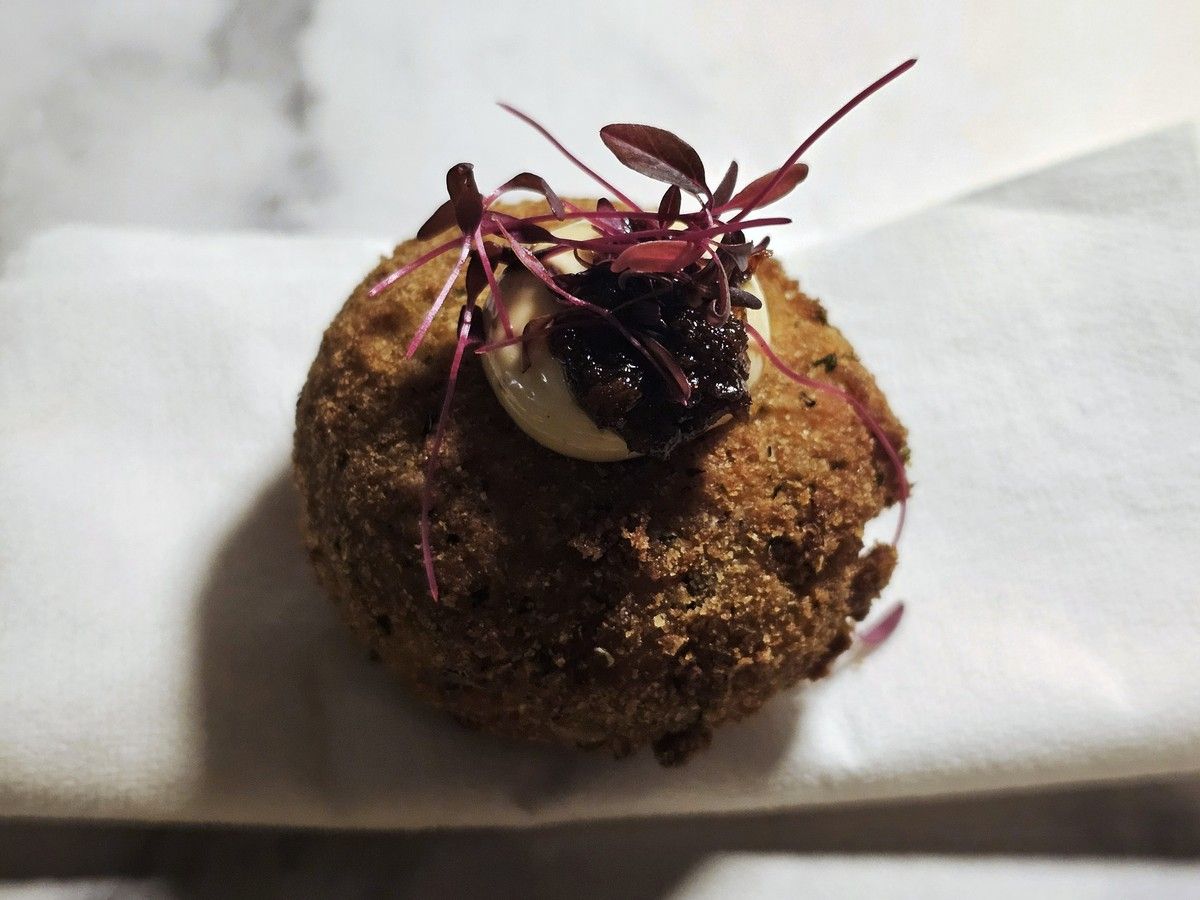
Jollof arancini, a West African-spiced rice ball reimagined as an Italian fritter and served with smoked shitto, a fiery Ghanaian chili sauce, was another triumph. Beside it, a Thai chicken appetizer balanced crunchy cucumber slabs piled with a bright, shredded chicken mixture with jalapeño crema and cilantro; interesting, though a touch unwieldy for a one-bite canapé.
The chicken and waffles, a bite I was eager to try since the
closure of Holly’s Hot Chicken
, was the one disappointment of the pass-around stage. The waffle was fluffy but drenched in syrup, so sweetness overpowered the whole bite. The chicken on top was room temperature and had none of the searing spice the menu’s “Nashville hot” label promised.
Anna Cote’s maple-smoked trout tostada drew the loudest praise at my table. The Algonquin chef from Kitigan Zibi, who launched her catering business Birch Bite after winning a Powwow Pitch competition, was cooking for Girl Dinner for the second year running, and a couple had driven from Kahnawake, outside Montreal, to support her.
When we moved to our tables, a mini grilled cheese with tomato soup awaited. As a first seated course, it was hearty, particularly after the hors d’oeuvres. The bread was the highlight, from an
Almanac Grain loaf
with a toasted, nutty flavour that made the sandwich worth eating for the crust alone.
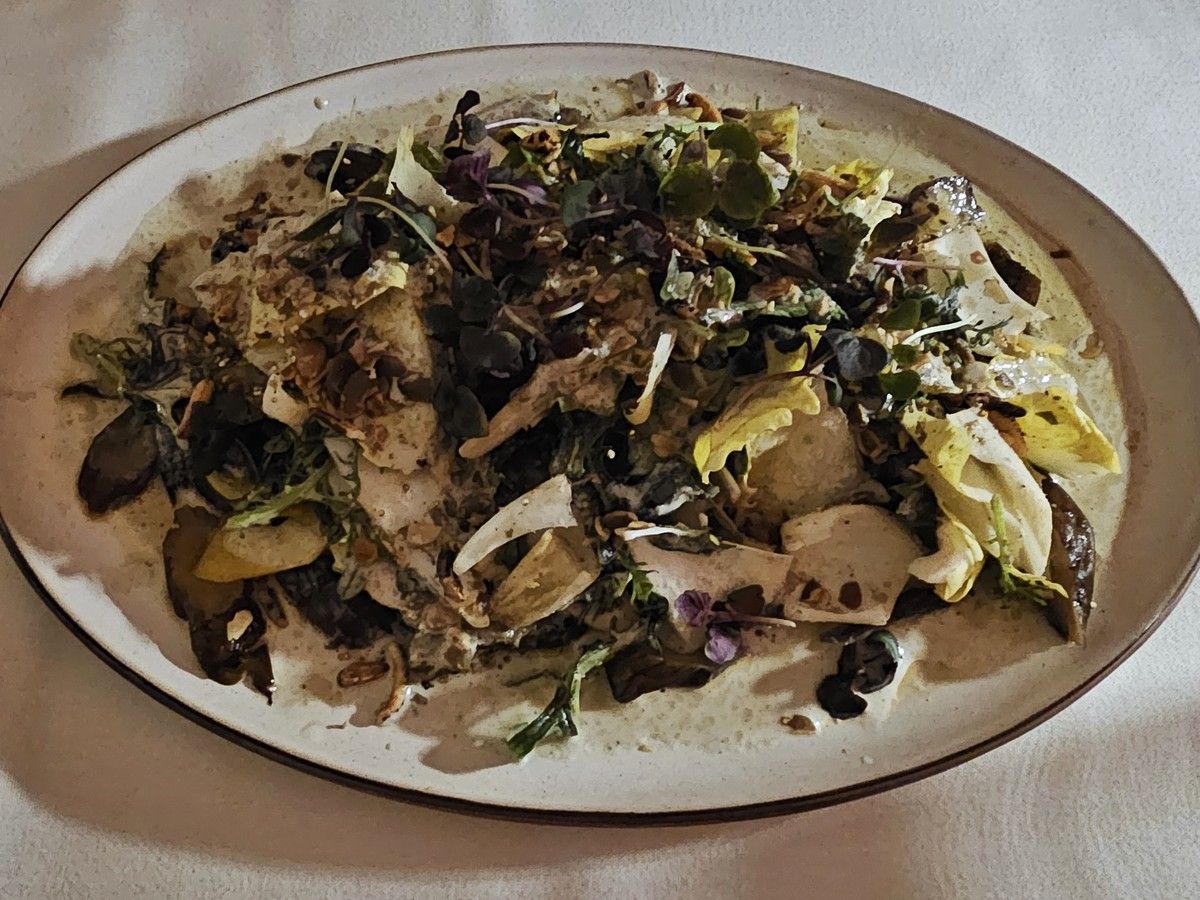
If the grilled cheese was comfort food played straight, the mizuna salad was its adventurous counterpart and, for me, a standout of the seated courses. Mustard greens and sunchoke met a pumpkin-seed vinaigrette, puffed amaranth and shiso in a tangle of competing textures and flavours — creamy, bitter, crunchy, herbal — that resolved into something cohesive. It was also the dish that finally broke the ice at my table: people leaned over to ask, “What is this?” trying to identify the various components. Salad can be a conversation starter when made with imagination. By the time the mains came around, family-style, our table was passing bowls without being asked.
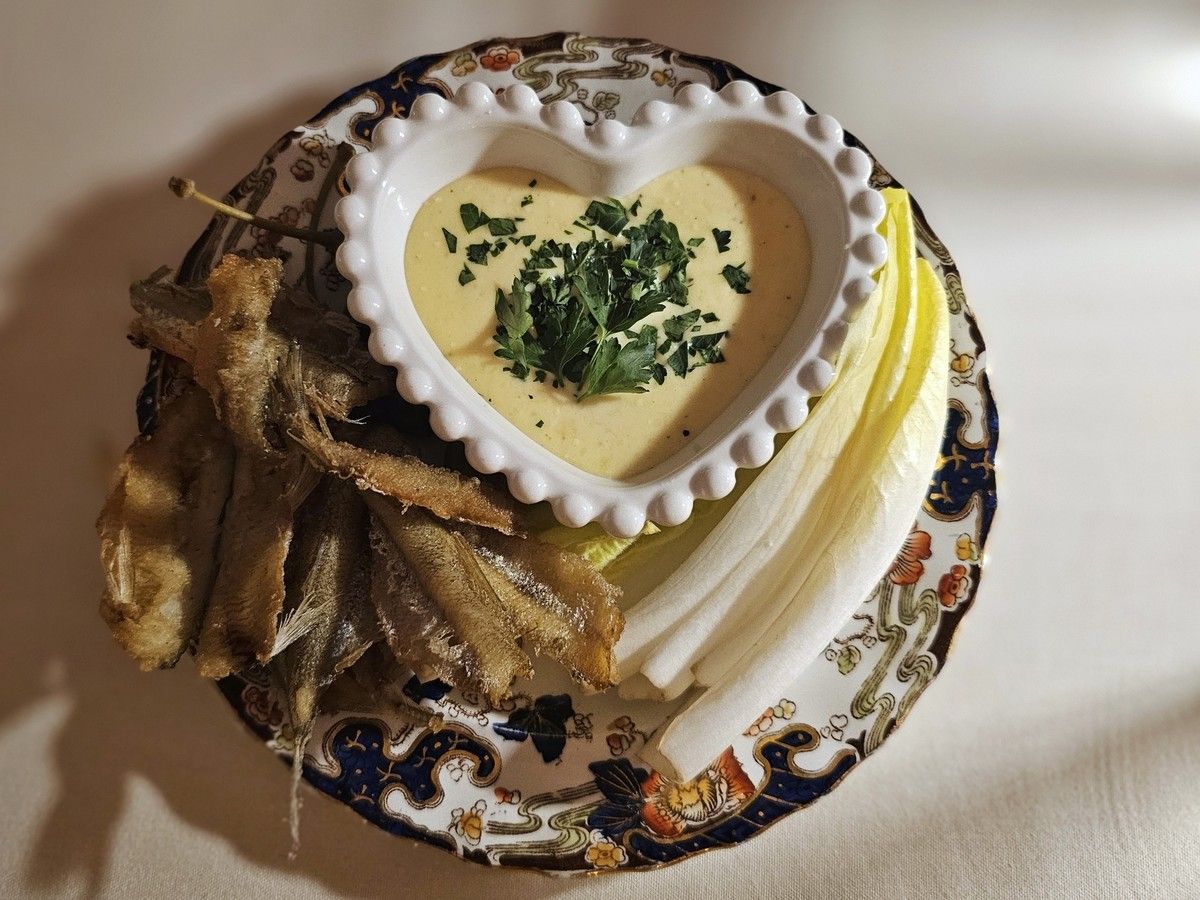
A deconstructed fish taco followed. The fish was well-fried and crisp, the lemon-parmesan aïoli a pleasant dip, but the endive wrapper brought a bitterness that overwhelmed the other elements.
Borscht, composed of pickled, earthy components in a sour-rye broth, came next. Two soups in a twelve-course lineup is a lot to ask of the pacing; this one earned its place on the quality of ingredients and cohesion.
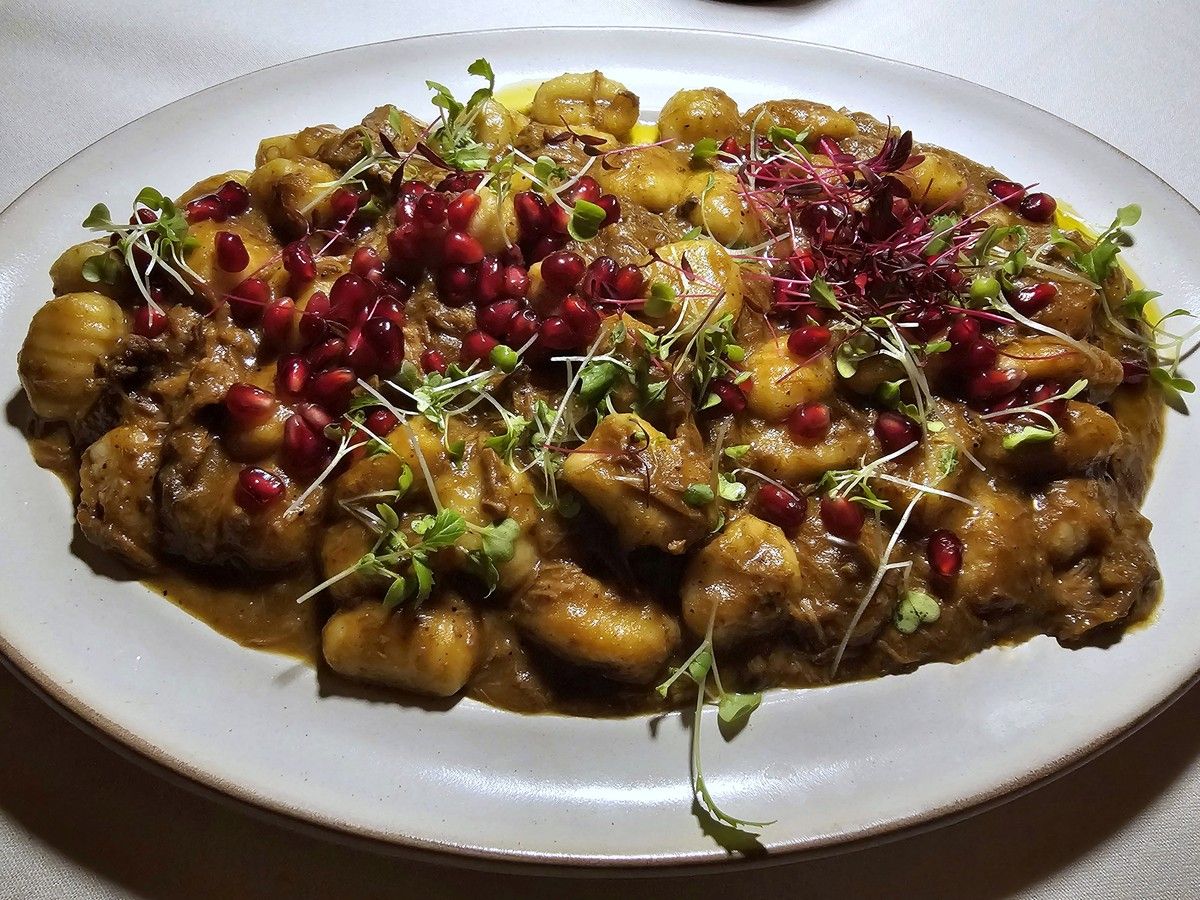
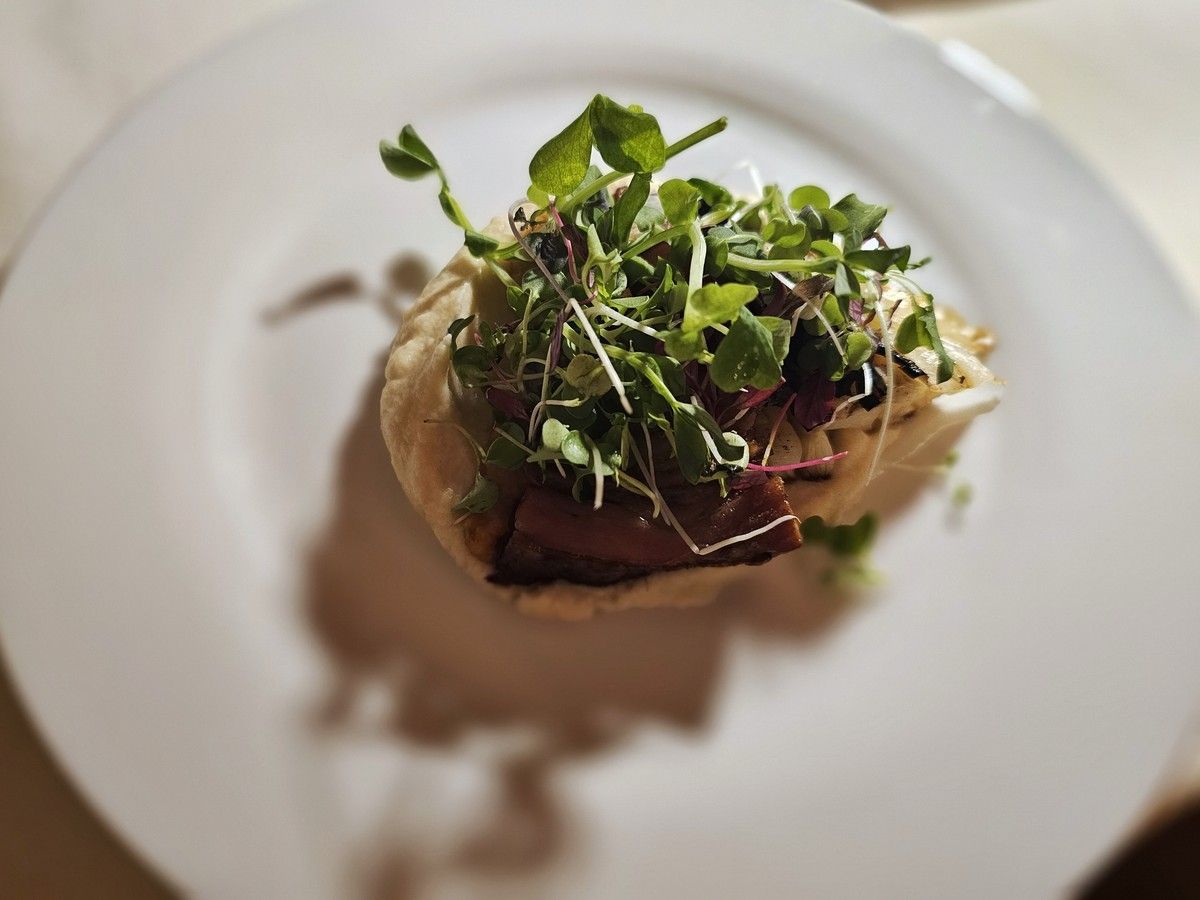
A braised lamb ragù with gnocchi, pomegranate and mint oil was creamy and comforting. The sharing plate got people passing bowls and talking. Beside it, a pork belly with braised cabbage delivered melt-in-your-mouth richness. The celeriac purée underneath was an earthy stroke of genius.
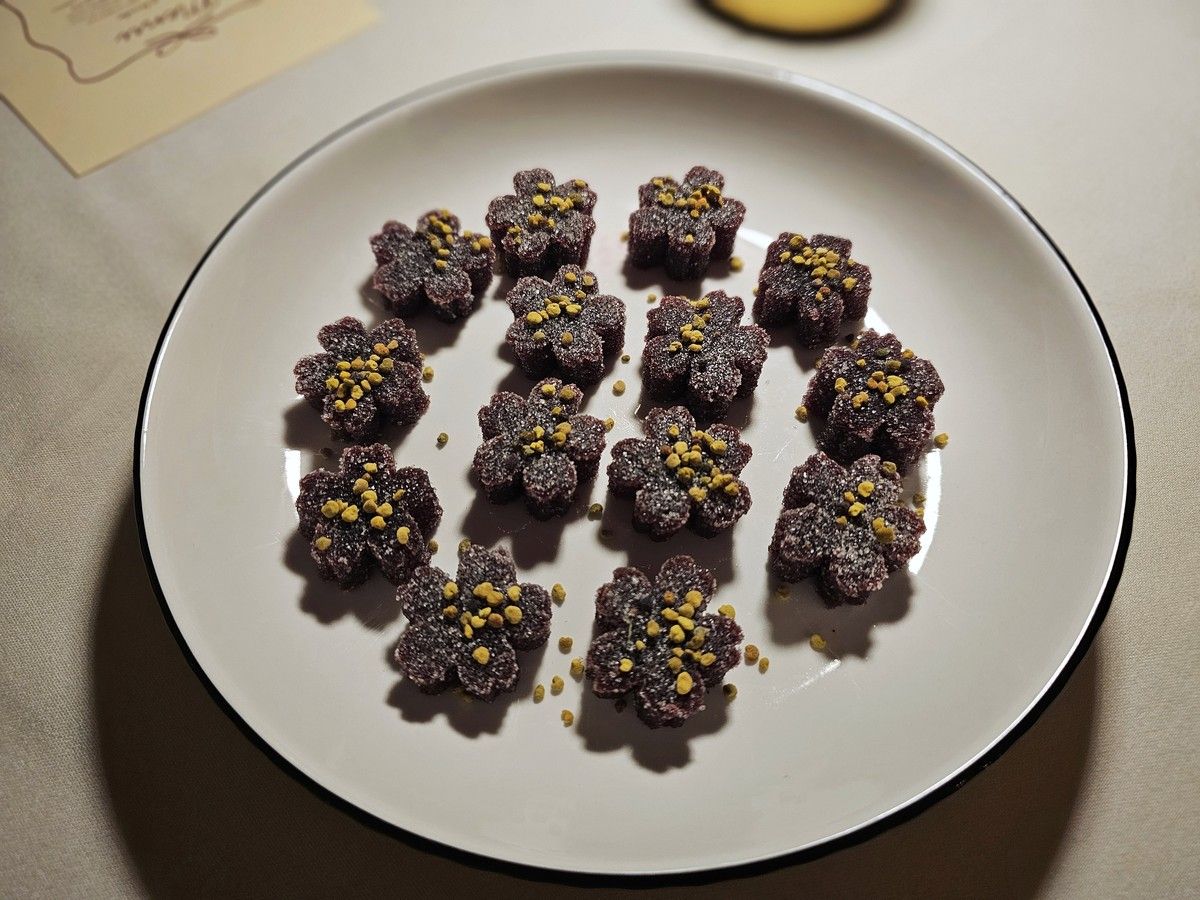
Dessert arrived in two parts. An apple-haskap pâte de fruit dusted with sumac sugar was soft where many jelly candies turn rubbery. The haskap berry stained each bite a deep purple, and on the plate, they
looked like cherry blossoms
, almost too pretty to eat.
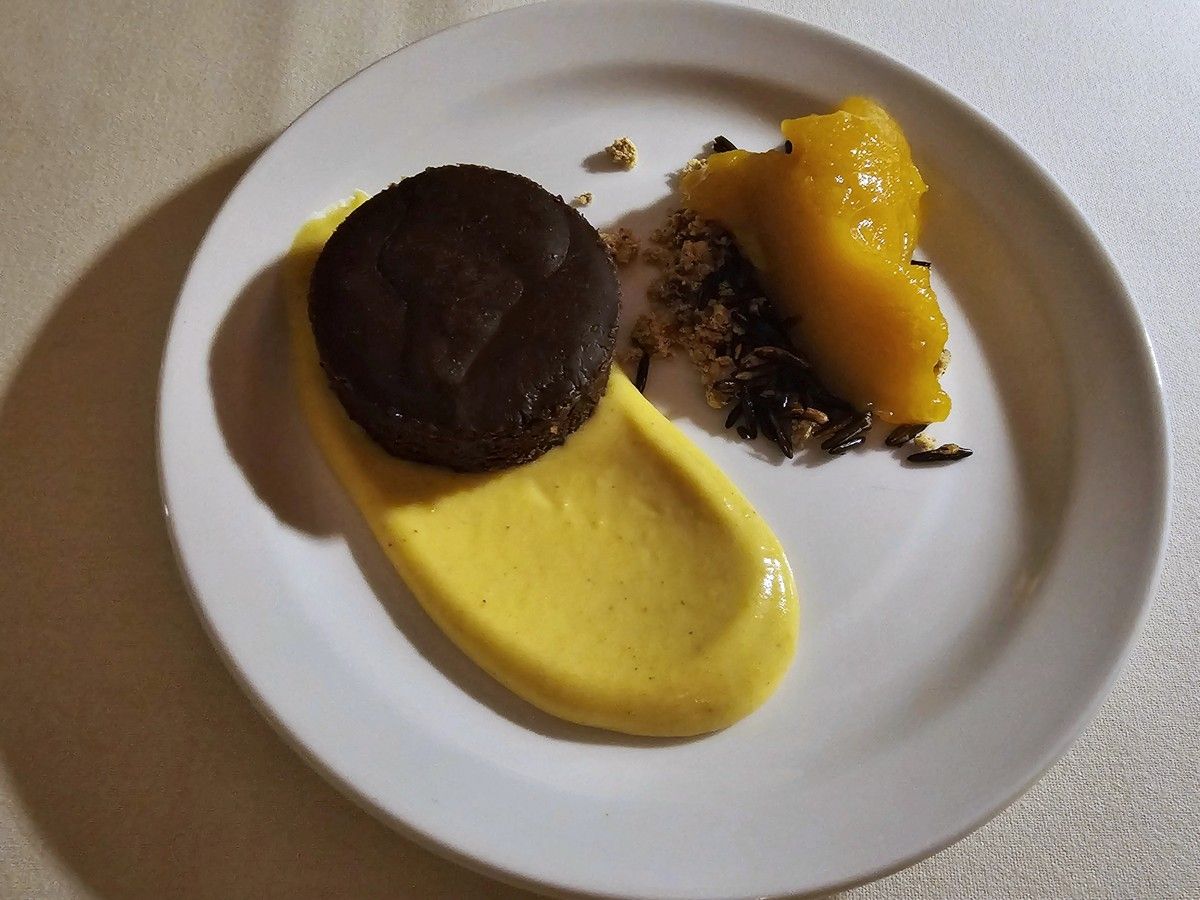
Then came Fawcett’s chocolate fondant with squash sorbet, brown-butter pastry cream and wild rice. The sorbet was extraordinary — smooth, intensely creamy and so sweet you forgot you were eating a vegetable-based dessert. The crunchy bed of wild rice underneath was less convincing, a textural distraction from something that needed no embellishment.
Twelve courses from twelve kitchens is a logistical feat in any context, and more so when nearly every ingredient has been donated. Girl Dinner pulled it off with scrappy, communal energy that it would be difficult for a white-tablecloth restaurant to replicate.
The cooking ranged from revelatory to good, with only a few stumbles along the way.
What the event should work on is the experience around the food. The promise of a welcoming, boundary-dissolving communal table is powerful, and Amyot spoke about it with sincerity. Intentional seating, more active hosting and a visible effort to bring strangers into the fold would ensure follow-through.
If Girl Dinner wants to be for everyone, the work has to happen before the first course arrives at the table.
Still, by any reasonable measure, the evening was a success. The room was sold out twice — for the 5 p.m. and 8 p.m. seatings — the donations were flowing and Hopewell will be better funded because of it.
If you liked this story, sign up for Out of Office — the Ottawa Citizen’s weekly guide to local arts, culture and things to do. For more local coverage, follow us on Bluesky.

