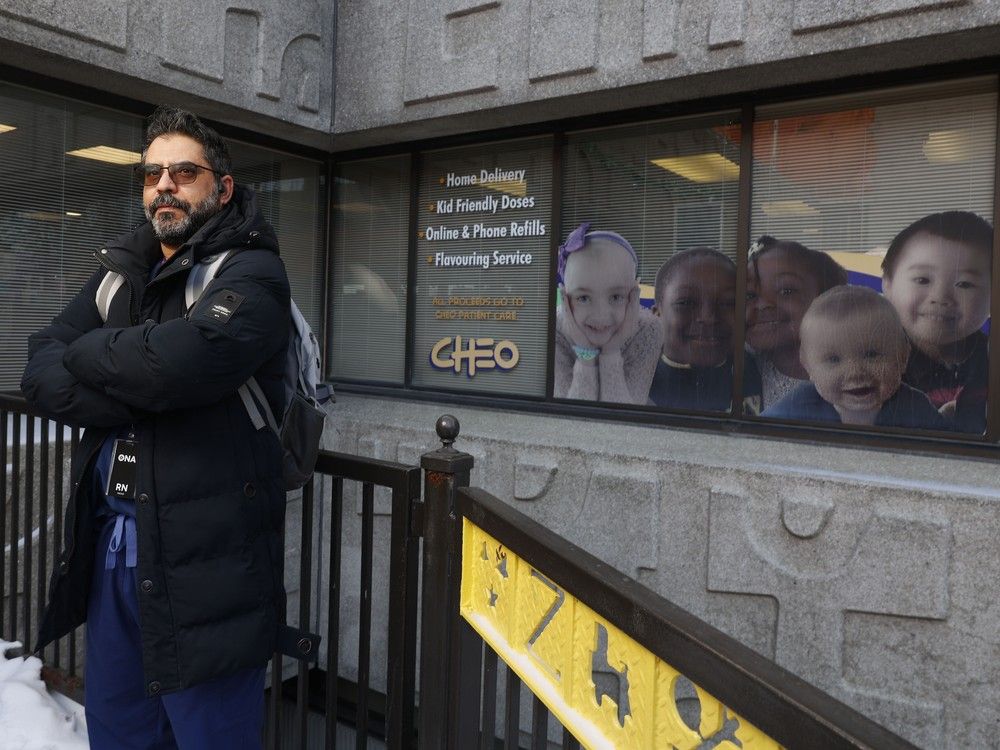
Five years ago, Sa’id Altawalbeh packed his life into a few suitcases and touched down in Canada with a dream of kickstarting a bright future for himself, his wife and three kids.
But with his
permanent residency status
in limbo and his work permit set to expire on Dec. 20, the 47-year-old nurse says he is now facing the possibility of losing the life his family worked so hard to build in Canada.
“I’m an optimistic guy, but I’ve started believing that there is no chance for me here,” he told the Ottawa Citizen.
Altawalbeh grew up in Jordan and graduated from the Jordan University of Science and Technology with a bachelor’s degree in nursing. After working as a nurse in Saudi Arabia for more than a decade, he watched a group of friends successfully apply for Canadian residency in 2018. While he applied with them, he says his file was missed in the process.
With his sights still set on living in Canada, he enrolled as an international student at Collège Universel Gatineau studying social service and moved to Ottawa in 2019. While completing his studies, he also worked to have his nursing credentials recognized in Canada.
In 2022, he passed the exam required to practise nursing in North America and started a job at CHEO under a three-year post-graduate work permit, a common pathway international students use to gain work experience ahead of applying for permanent residency.
He’s now one of three family members working in the Canadian health-care system: his wife is also a nurse at CHEO and his eldest daughter works in cardiovascular technology after recently graduating from Algonquin College. As the primary applicant aiming to sponsor his wife and kids, if he leaves the country, the rest of them will have no choice but to go too.
From the get-go, Canada’s tightening immigration system posed challenges for Altawalbeh and his family when applying to become permanent residents.
Canadian immigration targets have been reduced over the last few years, according to data from Immigration, Citizenship and Refugees Canada. Around 483,000 people gained permanent residency 2024, but this number will be capped at 380,000 by 2026, according to
the 2026-28 immigration levels plan
.
Altawalbeh first tried to apply through the federal express entry pool, a system that ranks applicants using a point-based system, with points awarded based on profile features like age, language ability and work experience.
His profile earned a total of 395 points, which was well below the 462 point total that has been required for rounds of applications specifically for health-care workers this year. At 47 years old, age was his biggest barrier, as the system favours younger applicants and awards up to 110 points to people in their 20s, eventually decreasing to
zero points for applicants 45 years of age or older
.
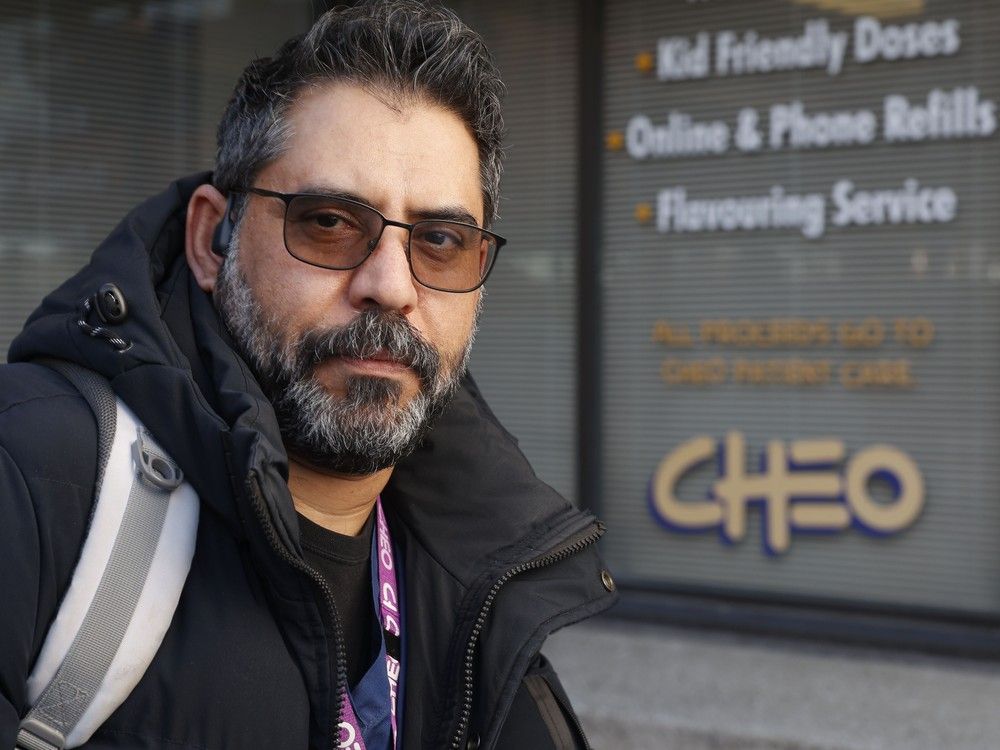
As of March 2025, the system no longer awards points to applicants who already have a job offer in Canada, meaning
Altawalbeh wasn’t even able to overcome the lack of points for his age by having work arrangements set up.
Jacqueline Bonisteel, a partner at Corporate Immigration Law Firm, said slimming immigration targets mean there’s less permanent resident spots to go around, making it nearly impossible for some people to qualify through express entry.
“Even if you fit into one of those targeted occupations like nursing and you’re over the age of 45, it’s still going to be very tough for you to get the points total you need to get an invitation in the federal system,” she said. “Even the folks we really need, even the folks these programs are set up to prioritize, it’s not always a guarantee that you’ll get a spot and get a spot in the time you need.”
Altawalbeh then turned to the Ontario Immigrant Nominee Program, an employer-led system that looks to nominate people with the skills to contribute to the Ontario economy for permanent residency.
While the CHEO nurse could be better suited to succeed in the provincial nomination system since it doesn’t deduct points for age and favours applicants outside of the Greater Toronto Area, it now comes down to whether he can go through the process before his work permit expires.
While he submitted an expression of interest earlier this year, a system overhaul in July meant that his expression of interest was wiped and he had to re-apply in September. He then received an invitation to apply for the program and his employers submitted their portion in late October. On Nov. 7, after he emailed Ontario officials overseeing the program, his application status was updated from “submitted” to “assessment.”
He said there’s been no movement since then as the province continues to review his application before it’s sent to the federal government for a final decision.
Asked about the impact of the system overhaul and the wait time for applicants, Ontario’s Ministry of Labour, Immigration, Training and Skills Development did not respond for comment in time for publication.
Altawalbeh’s employers have told him that he’ll be on unpaid leave as of Dec. 21 once his work permit expires.
“Right now, I’m stuck here,” he said. “I cannot renew my work permit, and unfortunately it’s going to be expired soon. I have (less than) two weeks more, and then I will be without any status, and they’re probably going to kick me out of Canada.”
He’s consulted with several lawyers to find out if there’s any possible way for him to stay in the country. While he’s accumulated thousands of dollars in legal fees, he said nobody has any solutions to help him stay in the country. Some lawyers have even advised him to “fraud the system” by changing his religion, for example, so he can claim refugee status.
“Why would I have to do that when I did everything I could?” he said. “I succeeded in my studies and have a certificate here. I did all the exams. I repaid all my taxes … I’m just a man looking for a safe and stable life for my family.”
He worries about returning to Jordan since he doesn’t have many familiar faces left to help him get settled after being out of his home country for almost two decades. He said the ongoing conflict on the Jordan border poses safety concerns for his family.
“I feel like sometimes holding myself, crying in a corner without anyone seeing me,” he said. “There is a lot of pressure. My mind is always busy trying to do research to do anything to keep myself here.”
Amid a
national nursing shortage
, he said he’s frustrated that his application isn’t being prioritized when it’s clear
his work is in high demand
.
“We need the nurses. And I’m here, guys, so what are you doing to help me?” he said.
Permanent resident spots are in even higher demand this year, Bonisteel said, as special work permit extensions granted during the COVID-19 pandemic are now coming to an end, leaving more people vying for fewer available spots.
In a race against the clock, Altawalbeh said he’s clinging to any hope he can find as he fights to stay in the country.
“I’m just trying to survive, you know? I’m trying so much but I can’t do it anymore and I’m almost (ready to) collapse,” he said.