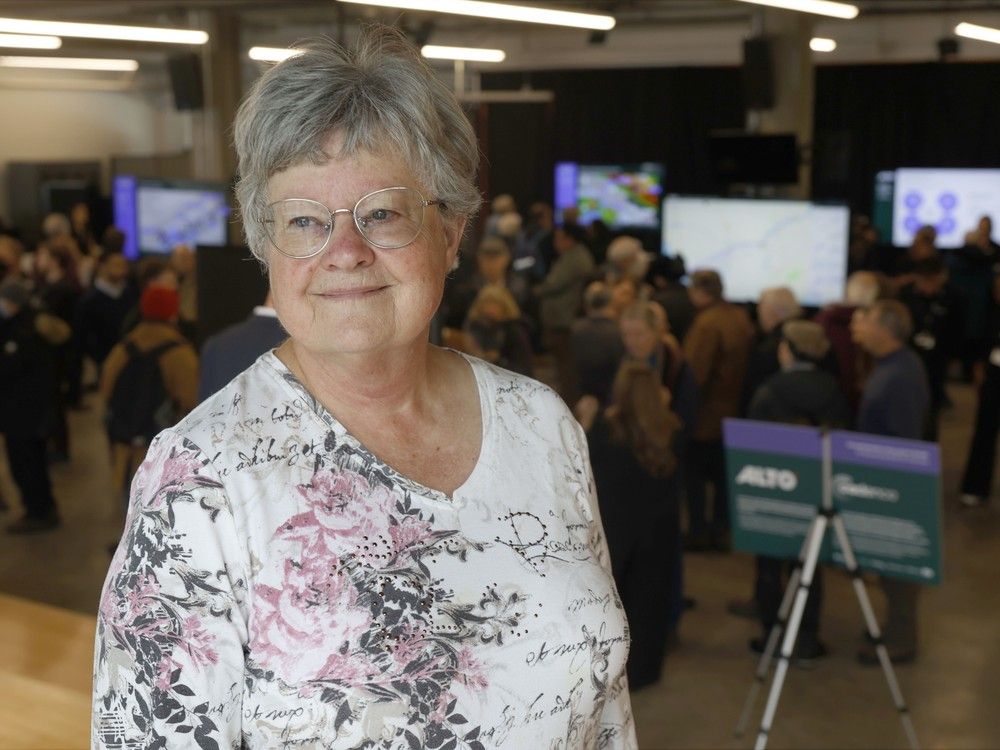
Kate Twiss wishes she could visit her ailing sister in Peterborough more often — and she believes a high-speed train
would help make that possible.
But on Wednesday, at the first of two days of public information sessions at Bayview Yards in Ottawa, Twiss joked: “I don’t think I’ll ride it before I’m gone.”
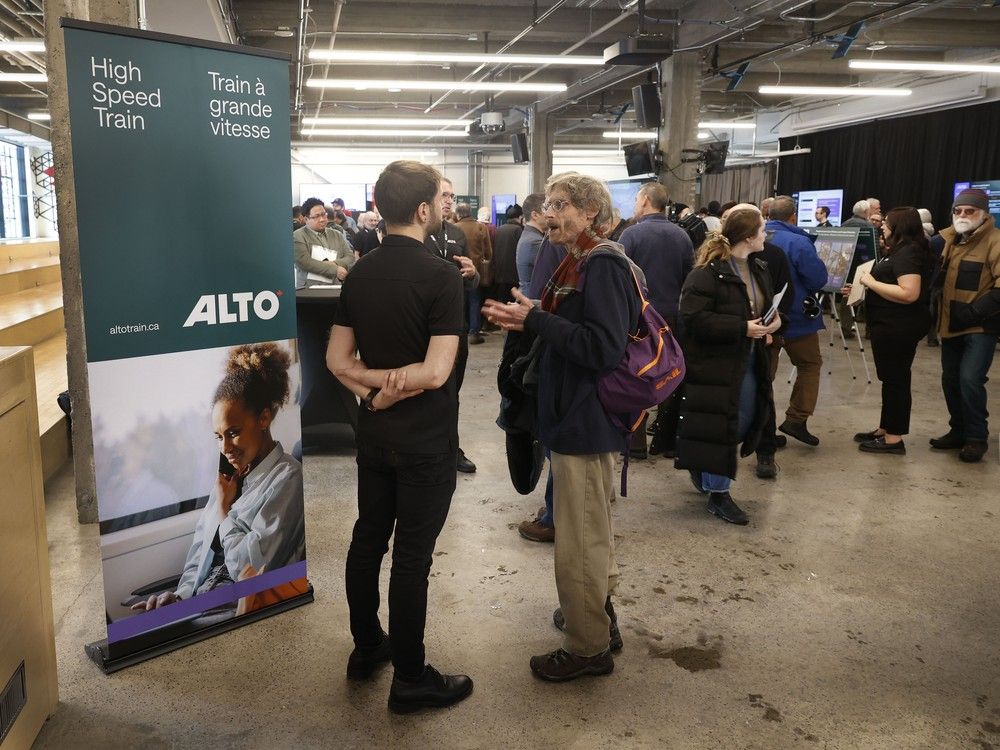
Among the hundreds of Ottawa residents who stopped by the open house, Twiss wasn’t alone in her skepticism.
A high-speed rail line in the Quebec City to Windsor corridor has been proposed and studied repeatedly over the years.
The federal government’s current project would see a
fully-electrified high-speed rail line running about 1,000 kilometres between Toronto and Quebec City. Expected to cost between $60 billion and $90 billion, it was originally launched by the Justin Trudeau government with
$3.9 billion over six years
earmarked for design and development.
In December, the roughly 200-kilometre leg between Ottawa and Montreal was announced as the first step of construction.
Now, the Crown corporation leading the project, Alto, is
running a series of community consultations.
Alongside a dose of skepticism at Bayview Yards, residents described plenty of optimism as well.
Michael Kostiuk described his dream of catching a Canadiens game in Montreal before returning to Ottawa by train the same night.
Brandon Robins
on, who travels to Toronto to practise with his indie rock band, said a
high-speed rail line would change the way he lived.
“I could see myself using it multiple times a month,” he said.
But residents also had plenty of unanswered questions.
The Ottawa Citizen put several of them to Alto CEO Martin Imbleau.
What are consultations meant to accomplish?
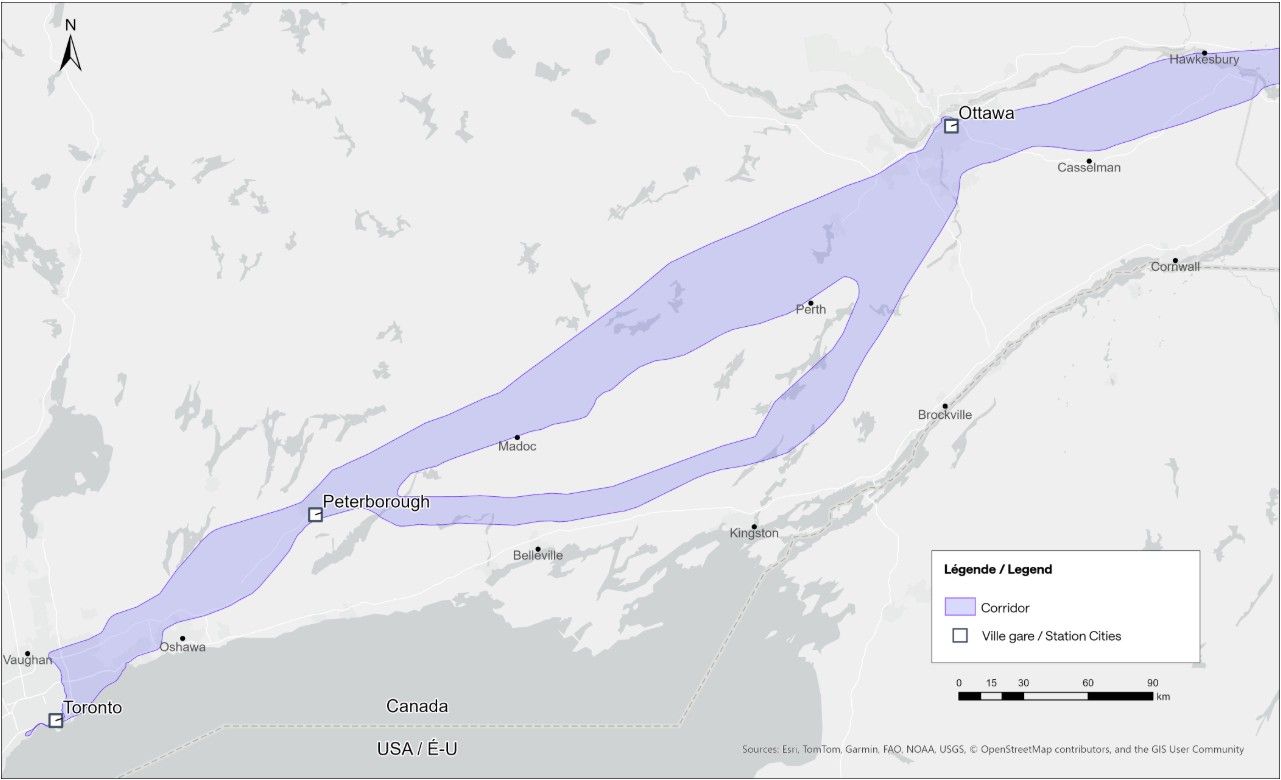
Alto released maps ahead of the consultations showing a broad corridor connecting stops at seven locations: Toronto, Peterborough, Ottawa, Laval, Montreal, Trois-Rivières and Québec City.
Imbleau said those corridors were wide by design.
“I’m very religious about this,” he said. “It’s not about pitching a specific solution. It’s about consulting about the possibilities in a fairly large corridor.”
Alto will take in feedback gathered through in-person and virtual open houses and apply it to the route it ultimately selects, he said.
That final “alignment” is to be released to the public next fall.
Imbleau said he was trying to follow an approach that had worked for him in the past.
“You start with something that is very broad, then you try to follow existing corridors because you already have some impacted communities,” he said.
That process could mean tracking alongside an existing highway, pipeline or recreational trail.
What about a downtown station?
Much like the corridors, Alto’s approach to stations has been to identify general regions that include numerous viable options.
The region for Ottawa captures several possibilities, but Imbleau said two were “top of mind”: the current Via Rail station on Tremblay Road and the former Union Station building downtown.
Imbleau said the downtown location, which currently houses the Senate, has drawn plenty of interest since the Globe and Mail reported that the building was under consideration.
“I understand the enthusiasm about the Senate building,” Imbleau said, though he cautioned the site had “significant constraints and challenges” due to the nearby Rideau Canal.
The building would also require a “dead-end” station, forcing trains to reverse out.
Push for Kingston?
Preliminary corridor maps show two potential swathes of land connecting Ottawa and Peterborough.
One runs in a relatively direct line north of Perth and Madoc, while the other swoops further south toward Kingston before turning west to Peterborough.
Kingston Mayor Bryan Paterson said he and other local leaders were engaging in a “full-court press” to raise awareness for why the southern route swinging closer to his city should be selected.
Kingston-area MP Mark Gerretsen encouraged his constituents to speak up during consultations.
“Now is the window of opportunity for people to have their voice officially heard,” he said.
Gerretsen recognized that, to benefit from a closer route, Kingston would also require an eighth stop that was not currently included in the plans.
Imbleau, however, threw some cold water on Kingston’s campaign.
The split between northern and southern routes, he said, was due to unforgiving geography in between.
“In the middle, it’s just too difficult,” he said. “Too many lakes.”
As for adding a stop? That, he said, isn’t being considered.
“The mandate today is seven stations,” Imbleau said. “No more, no less.”
Can Alto sustain the momentum?
Lavagnon Ika, a management professor at the University of Ottawa, said Alto faced the “legitimacy dilemma.”
Mega-projects must walk a tightrope, Ika said, balancing pressure to move fast with the need to protect the environment and to respect human rights.
To push the project forward quickly, the 2025 federal budget included proposed legislation granting Alto sweeping new powers to accelerate the acquisition or expropriation of land.
The bill excludes the railway from review by the Canadian Transportation Agency and breaks environmental assessments into segments — measures that Ika’s Major Projects Observatory
has called “uncharted territory.”
Ika said thus far the consultation process appeared to be striking an effective balance, but he added Alto had a steep challenge ahead.
It will have to maintain public trust throughout the long life of the project. Even if everything stays on schedule, construction on the first leg won’t begin until 2029.
Imbleau said Alto would begin approaching landowners this year, but most land acquisition would begin in earnest only after the route was defined and released to the public next fall.