

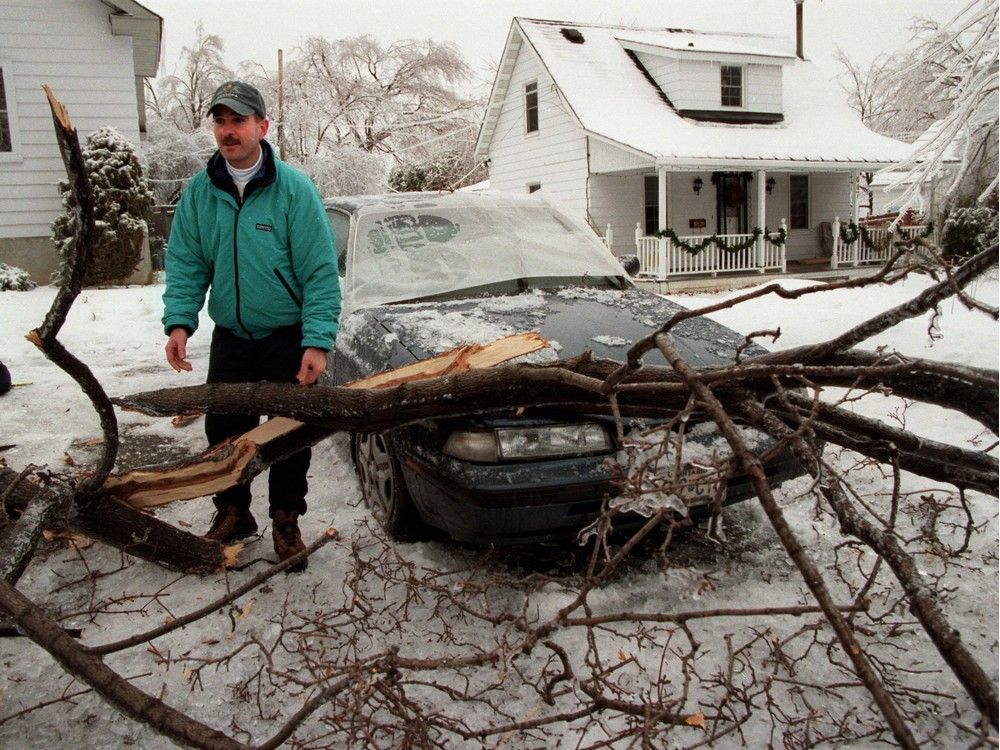
This
ice storm
is going to be a “notable” one, but nothing like the
storm of 1998.
The big difference between the two was that in 1998, there was a series of storms over a week, allowing ice to build up on powerlines and trees, said Geoff Coulson, a warning preparedness meteorologist with Environment Canada.
The current storm is also expected to be a series of events, but not to the same extent. When it comes to comparing the two, it will be no contest.
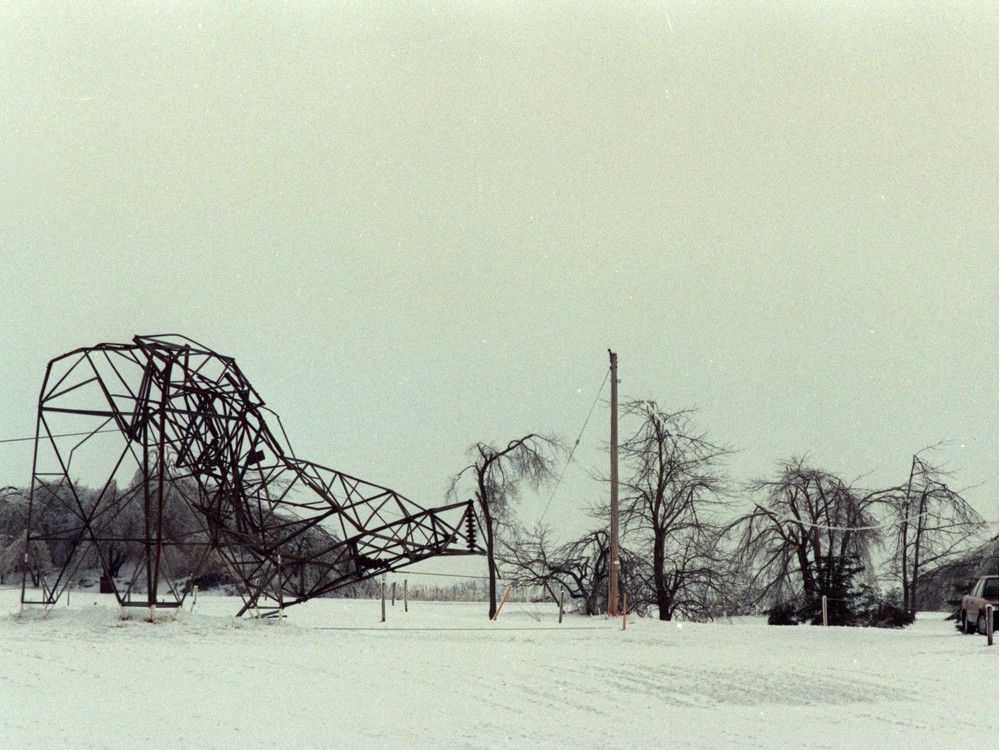
In the ice storm of 1998, some areas near the St. Lawrence saw an ice build-up of over 85 mm. Some parts of Montreal into the Eastern townships saw ice build-up of over 100 mm, said Coulson.
To compare, current ice storm is expected to be a notable event, and it’s a large scale system, just like the ice storm of 1998. But the ice build-up this time around is is likely to be about 10 mm.
“It will not be continuous today. There will be some gaps,” said Coulson on the morning of March 11. “Untreated roads will be icy. There will be localized hydro impacts. There will be some tree damage to weak tree limbs that will have an effect.”
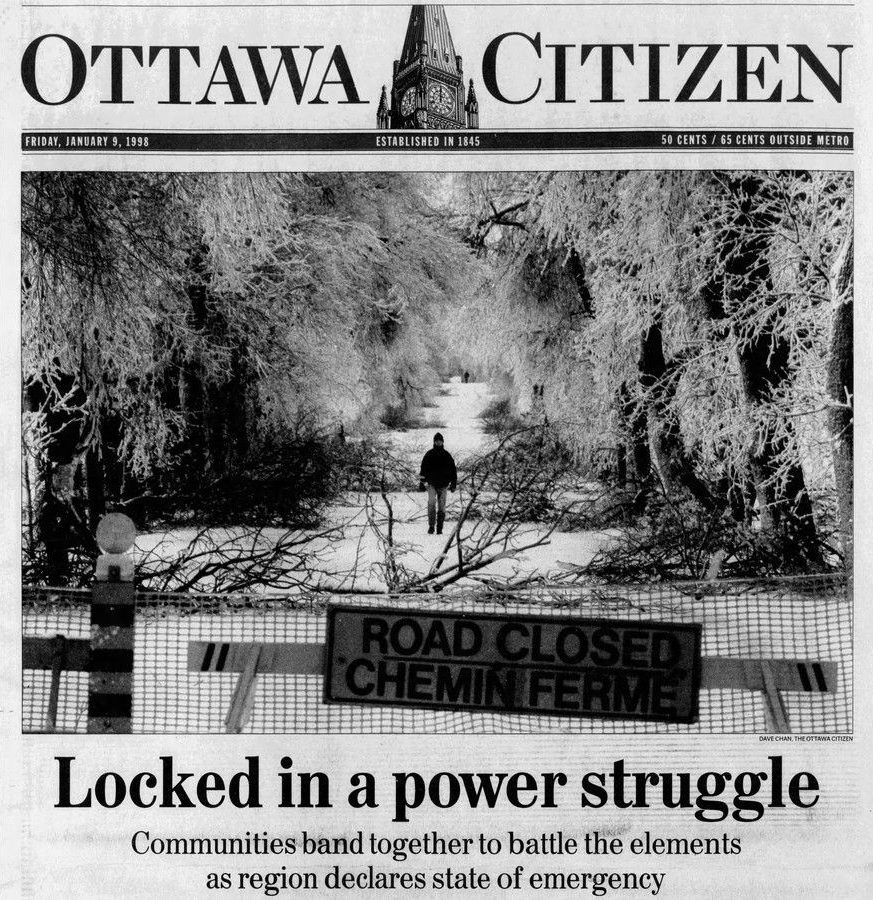
The Big One of 1998 started late on Jan. 4, 1998 when rain fell and did not melt. By Jan. 5, the ice load on hydro lines and trees caused hydro outages and crumpled cell phone towers. By the next day, an estimated 650,000 people in Quebec and Ontario had lost power. Eventually, almost 1.4 million customers in Quebec and 232,000 in Ontario were without power.
On Jan. 7 1998, New Brunswick, Ontario, and Quebec asked for help from the Canadian Armed Forces. More than 15,000 troops were dispatched to Quebec and Eastern Ontario, with almost a third of them were deployed to Eastern Ontario.
On the morning of Jan. 8, Bob Chiarelli, then the regional chair for the Regional Municipality of Ottawa-Carleton, which included Ottawa and 10 other municipalities, declared a state of emergency. More than 20 shelters were set up in schools and community centres. By the end of it, some rural customers in the Ottawa area went 33 days without power. Statistics Canada later reported that 2.6 million people were impeded or couldn’t get to work.
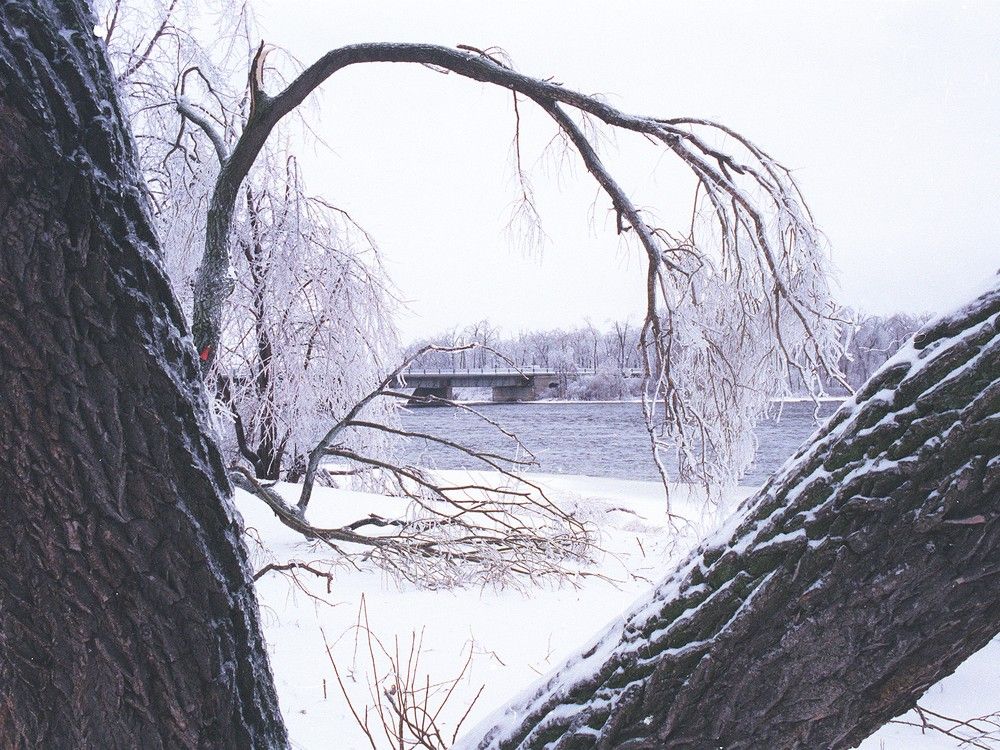
The records set in the storm of 1998 will “continue to stand for years and years,” Coulson predicts.
Meanwhile, the current situation is still developing and will affect Ontario, Quebec, New Brunswick, Prince Edward Island and Labrador.
It’s important to stay on top of the forecast, said Coulson. As families head into March Break and head out on the roads, especially for those who are looking to travel to North Bay and Sudbury and other destinations northwest of Ottawa, should exercise care.
Environment Canada is forecasting that rain or freezing rain will end in the early hours of March 12, then cloudy with 40 percent chance of flurries in the morning and early in the afternoon.
It will be cold on March 12 and 13, said Coulson. If the temperatures manage on climb above freezing in the coming days, it will be on March 14, with a high of just one degree above the freezing point. Mixed precipitation is possible on March 15.

