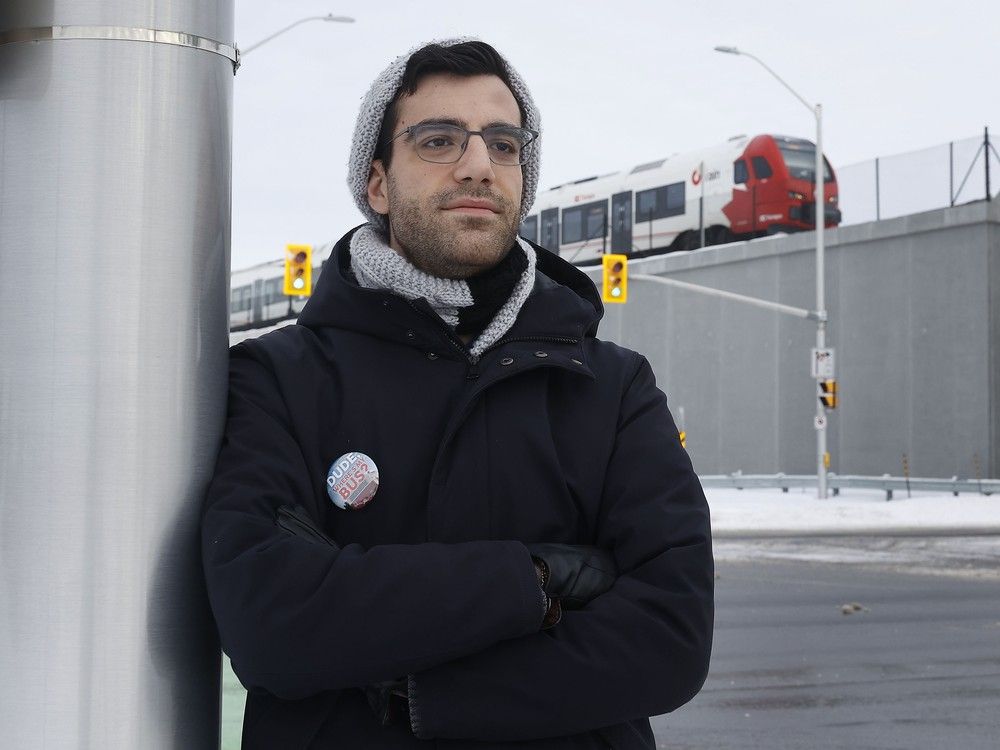
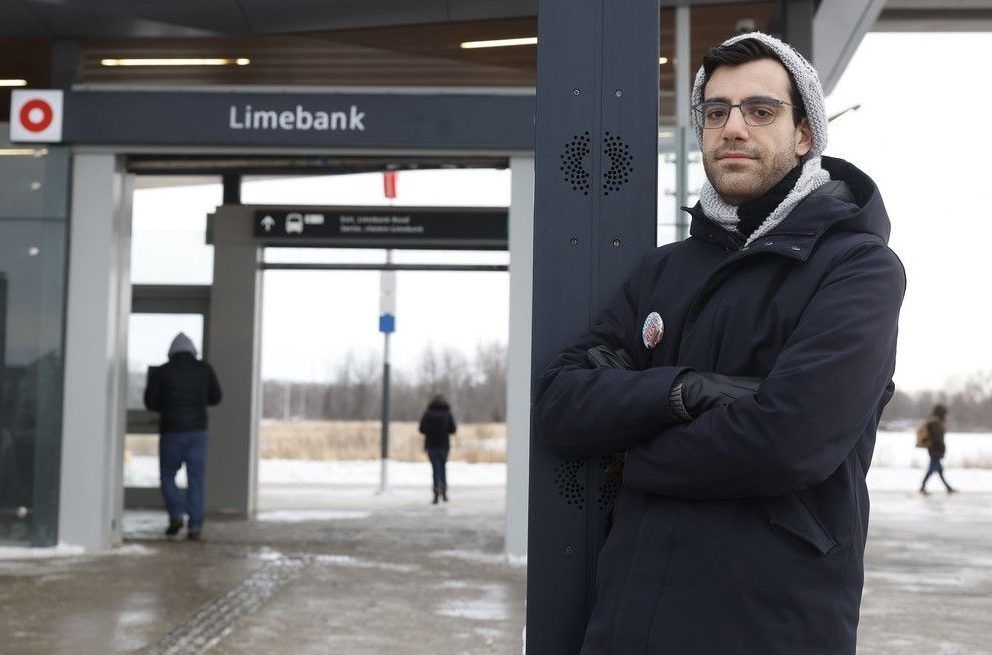
Gio Petti says he grew up in an area of the city commonly known as the “middle of nowhere.” But in reality, the Riverside South suburb he calls home is actually less than 20 kilometres south of downtown Ottawa.
For years, an
unreliable and disjointed bus system
served as his only link to the city core, making the commute feel far longer than the distance might have suggested.
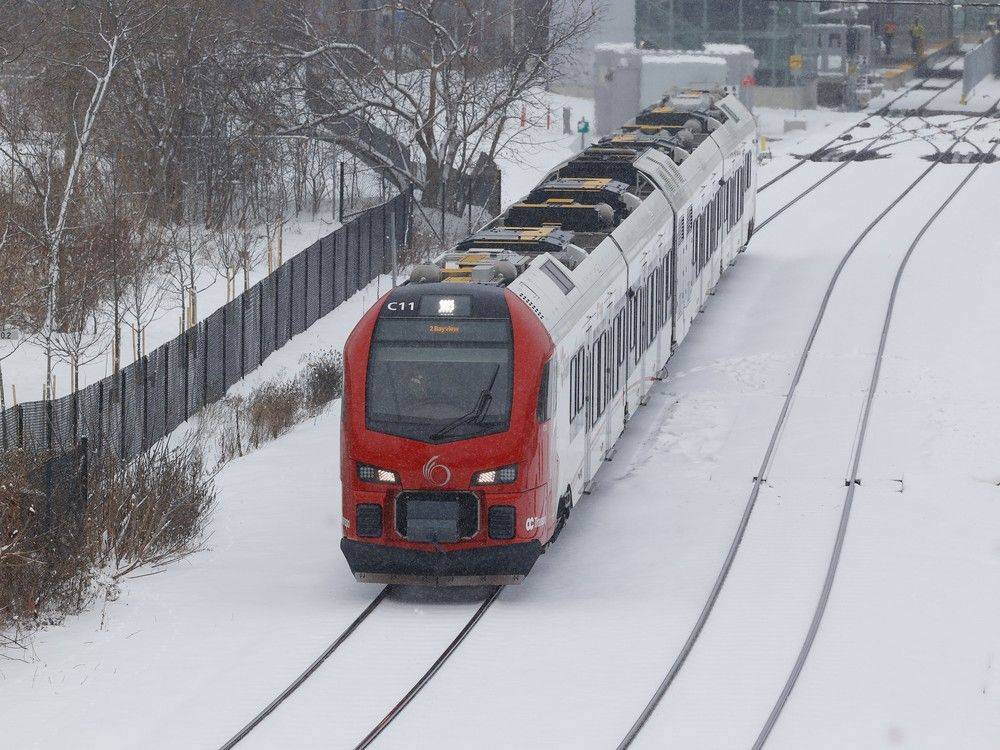
That sense of isolation started to shift just over a year ago with the reopening of the LRT Line 2, introducing new stations to extend light-rail service to the south end. The line ends at Limebank Station, on the southeastern corner of Riverside South.
As Petti puts it, an area that was once considered the middle of nowhere, is now connected to somewhere.
“It’s marking a new era in Riverside South,” said Petti, who is the creator of the new documentary, “
The Train to Nowhere
” and its viral predecessor, “
Dude, Where’s My Bus
?”
Over the last year, Line 2 has started to put Riverside South on the map. A realtor says light rail is a step in the right direction for the growing suburb. City officials say transit-oriented communities are in the works around the Limebank LRT station. Park & Rides are returning to pre-pandemic popularity as people travel in from nearby suburbs to access the train.
“A lot of people used to hear about the struggles of Riverside South as far as the lack of amenities and proper transit,” Petti says. “And I’m just so glad to see that the train exists now.”
Is Riverside South a more appealing place to live now?
Riverside South is one of the newer communities to spring up in Ottawa, with the first pockets of houses built in the 1990s. Still considered a suburb defined by its new, higher-end builds, it can have a higher barrier of entry for price points for prospective buyers.
In Riverside South, the housing market starts in the $500,000 range, with a new-build townhouse likely to cost around $700,000, says Steve Peippo, a realtor at Real Broker Ontario.
“It’s a little tougher of a neighbourhood for the typical buyer to get into, just based on the limited affordability range,” he says.
Community amenities are also still trying to keep up with the rapid growth in the new suburb, Peippo adds, as prospective buyers know they’ll have to keep “piggybacking on Barrhaven for a good number of amenities that you still need to do day-to-day tasks.”
But considering Riverside South is one of the first suburban neighbourhoods to get LRT access in Ottawa, he says it’s a step in the right direction to see how the area can expand with transit-oriented developments at the forefront.
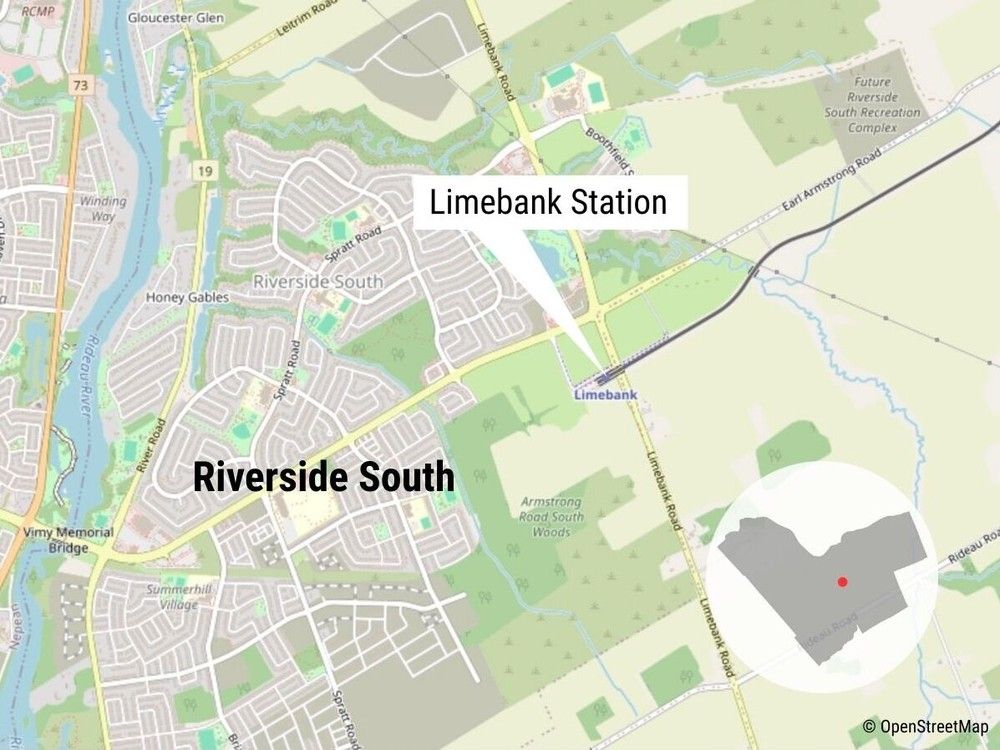
As of the end of 2024, Riverside South was home to about 24,000 residents, according to city data. At eventual full build-out, Peippo says the suburb is expected to be home to between 50,000 and 80,000 people.
Already, Limebank Plaza is starting to develop right across the street from the LRT station, home to various retail units, local boutiques and clinics. Soon, a new grocery store and a large shopping space is planned to pop up adjacent to the rail line.
New community amenities are also underway. Riverside South-Findlay Creek Coun. Steve Desroches adds the city is well underway with its plans to build a library, a community centre and additional housing in close to Limebank Station.
“There’s a plan to really build a vibrant town centre in a vibrant and transit-oriented development in and around Limebank Station … where people are going to be using transit on a regular basis because they live steps away from the station,” Desroches says.
As the suburb eyes expansion, Peippo emphasized the importance of purpose-built rentals around transit to give prospective residents more options and different price points in what has quickly become known as a higher-income area of the city.
“Now that the transit is in place, building around it should be a bit more of a smoother process,” he says. “Knowing that the station’s there, it’s a good hub to work around.”
Increasing connectivity should be a priority, residents say
While the LRT expansion has provided massive benefits for Riverside South residents, Petti says he spoke with many people when putting together his documentary who were quick to point out that the
system hasn’t come without its problems
in the last year.
Mainly, he says Line 2 only gets Riverside South residents
part way home
. While the train journey itself is easy, he says the bus routes connecting residents to and from Limebank Station are unreliable and infrequent, often leaving commuters waiting out in the cold for up to 20 minutes.
“It’s just been very difficult to connect to and from the train, which is unfortunate, because you’ve got this great independent transit corridor,” he says. “It’s a pretty irritating problem.”
There’s no parking available at Limebank Station, with the city instead prioritizing development around the station. The closest available Park & Ride is at
Bowesville Station
, another four kilometres east along Earl Armstrong Road.
To combat this issue, Petti says he is one of many who rely on getting a drive to and from Limebank Station when he can. The drop-off location, he says, is often flooded with cars helping commuters complete either the first or last leg of their journeys.
“It seems to be getting worse, especially with winter time as the
tolerance of waiting for a bus in these cold temperatures
is really low,” he says. “So if you have the chance to call someone to pick you up, then you’re probably going to do that.”
Also, Petti’s new transit route to get downtown for his day job isn’t exactly quicker than the string of buses he used to rely on.
On a good day, it would take him just under an hour to get downtown on the bus before the LRT opened. But now, after adding up the 10-minute bus to get to Limebank Station from his house, the 35-minute train journey on Line 2, the seven-minute ride on Line 1 as well as all the connection times in between, a one-way journey downtown still clocks in at a little over an hour.
Line 2 is run on a single track for most of the route, meaning trains often have to pull aside and wait for another train to pass by in the other direction before continuing on.
Despite some flaws, Petti says the 98 per cent reliability rate on Line 2 is a significant upgrade for himself and other Riverside South residents. It takes the unpredictability out of his journey, as he’s no longer left wondering how his bus that was supposed to arrive five minutes ago managed to
vanish into thin air
.
What’s next for Riverside South?
Aware of the increased traffic in and out of Riverside South and some of the connectivity issues that come with it, Desroches says an important step is to upgrade the transit infrastructure to and from Limebank Station.
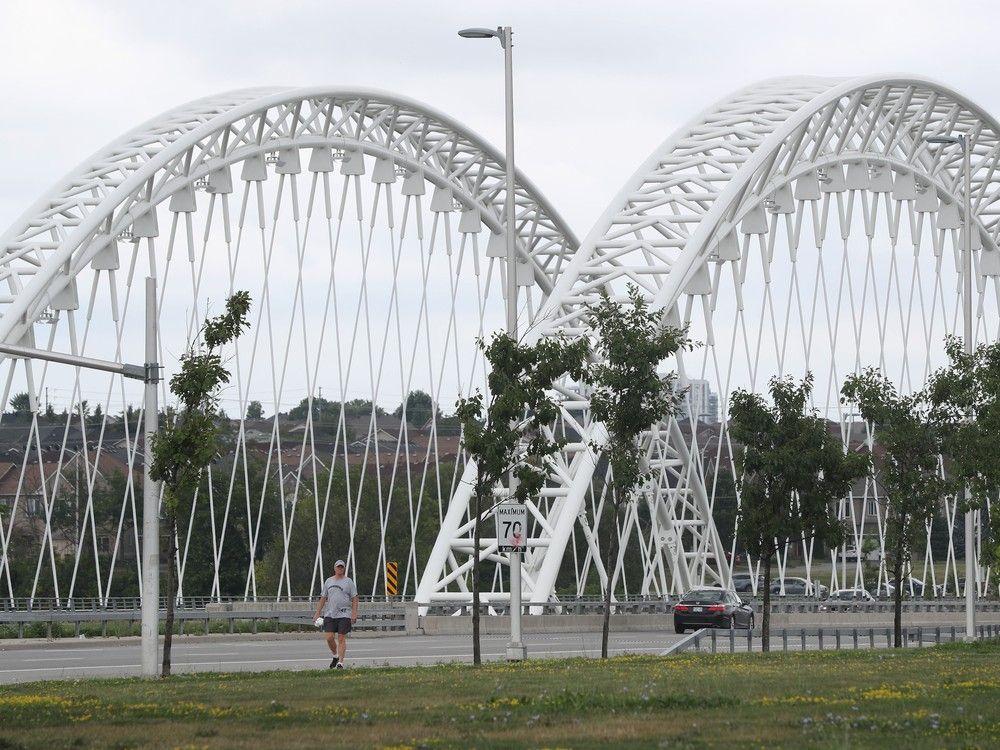
He’s noticed more cars travelling along the Vimy Memorial Bridge connecting Riverside South and Barrhaven over the Rideau River, with more Barrhaven residents making the trip by bus or car to access the LRT.
A medium-term solution, he says, is to build a bus rapid transit system connecting Barrhaven to Riverside South, which will take buses off of the high-traffic roads and give them their own dedicated route.
“I know this will increase and strengthen the reliability of buses, since they’re currently mixing with the traffic and the high congestion that’s on Earl Armstrong Road,” he says.
Dedicated bus lanes currently exist on the bridge, but Desroches says it’s common to find a car using the bus lane, reducing the effectiveness of the infrastructure.
There are also plans to increase the number of parking spots available at the Bowesville Park & Ride, which Desroches says is “bursting at the seams” most weekdays.
For now, further residential and commercial development on the rural landscape around Bowesville Station is not in the cards, Desroches says, as there is not yet water and sewer infrastructure to support community growth.
Even from the perspective of Barrhaven residents, Line 2 in Riverside South has been an overwhelming success in the last year, according to Barrhaven West Coun. David Hill. His daughter is one of the commuters taking advantage at the Bowesville Park & Ride as part of her commute, he says.
On the Barrhaven side of the river, Hill says he’s also committed to ensuring the infrastructure is managing the influx of people relying on transit networks in the south of Ottawa.
“Fast growth means the need to be looking at all of our infrastructure in terms of upgrades and changes,” Hill says. “That’s part of the challenge of being in a high-growth community like Barrhaven and Riverside South, where nothing stays static for very long.”
As Ottawa’s light-rail line
eyes further extensions
toward Algonquin College, Petti says he hopes Line 2 serves as an example of how effective transit infrastructure is the key to increasing ridership.
“If we can have more projects like Line 1 and 2 that show that public transit can be successful and it can work to get you downtown, I think more people will be turned on to it.”
Related
Our website is your destination for up-to-the-minute news, so make sure to bookmark our homepage and sign up for our newsletters so we can keep you informed.