

It’s unlikely that Canadians elected Mark Carney as prime minister hoping that he would go all-in on fossil fuel development. But that is what Canada appears to be doing.
The prime minister sold us on Canada as an “energy superpower.” Turns out that mostly means oil and gas.
During his visit last week with U.S. President Donald Trump in Washington, Carney reportedly made favourable reference to Trump of a revived Keystone XL crude oil pipeline.
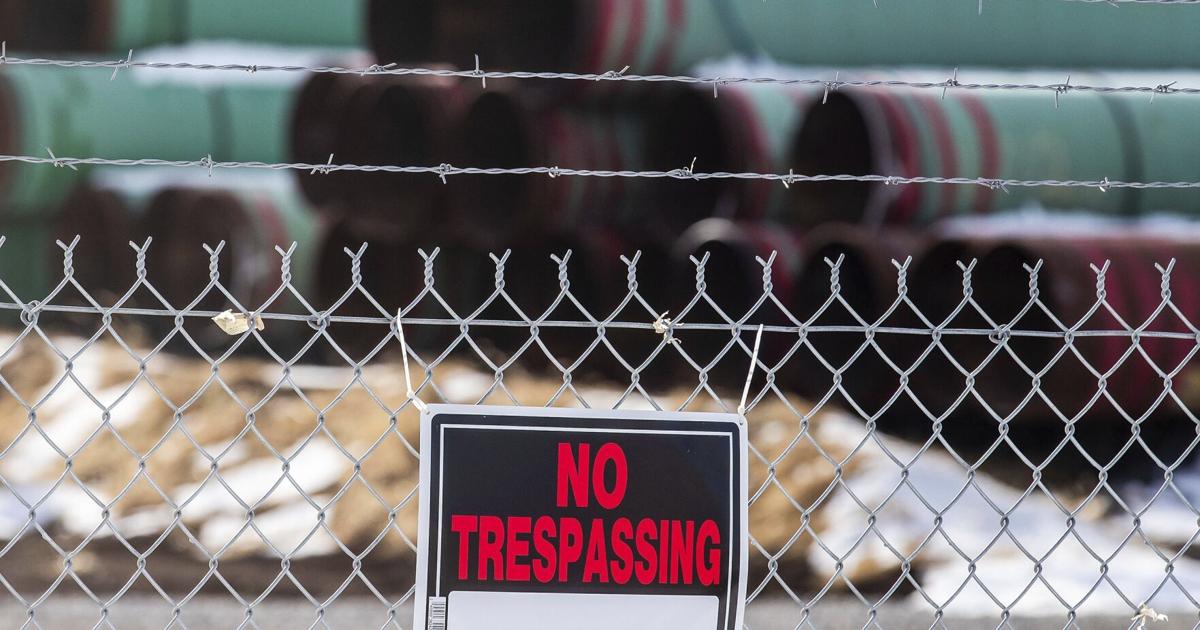
Keystone XL is among the most controversial energy projects ever proposed by Canada. It would have carried Alberta crude oil to Nebraska. Approval for Keystone XL was withheld by U.S. presidents Barack Obama and Joe Biden. Trump has twice reapproved it.
Keystone XL would increase Canada’s reliance on the U.S. market.
The end game of climate change — more powerful fires and floods and rising temperatures until the planet is uninhabitable — has never been more visible as the “tragedy of the horizon.” Carney often used that term when he was UN Special Envoy for Climate Action and Finance to advocate for reduced global greenhouse gas emissions.
We saw the impact of climate change this year in the mass evacuation of residents of Northern Manitoba, forced out of their homes by wildfires that destroyed forests across the country.
Yet on March 14, his first day as prime minister, Carney killed the consumer portion of the carbon tax. Eliminating the tax could add another 20 megatonnes of CO2 emissions to the atmosphere by 2030, according to the Canadian Climate Institute (CCI).
The CCI says Canada will fail to meet its emissions reduction target for 2030 and is in jeopardy of falling short of its international climate commitments by 2035, as well.
On Sept. 5, Carney “paused” the Trudeau-era ban on the sale of gasoline-powered vehicles by 2035.
The automakers, who lobbied Carney against the ban this summer, are “under extreme pressure,” Carney explained. “So, we’re taking that off.”
The auto industry apparently is incapable of converting to production of electric vehicles (EVs) even in a decade’s time. In 2024, roughly half of China’s vehicle production was EVs.
On Sept. 11, LNG Canada’s prospective doubling of production of liquefied natural gas was listed among the first five “nation-building” projects for potential fast-track approval by the Carney government.
At full capacity, LNG Canada would produce an estimated 13 megatonnes of greenhouse gas emissions per year.
Carney’s positive regard for Keystone XL suggests he will approve the pipeline project that Alberta Premier Danielle Smith’s government is planning that would take Alberta oil to the Northwest B.C. coast.
That pipeline is essentially a revival of the Northern Gateway megaproject that was cancelled by the Trudeau government on environmental grounds in 2016. Smith hopes to present her proposed pipeline to Carney’s Major Projects Office for fast-track approval next spring.
Like the Trans Mountain pipeline (TMX) that carries Alberta oil across B.C. to the Pacific coast at Burnaby, Smith’s pipeline would mostly supply Asia Pacific and other non-U.S. markets.
It would conform with the Carney government’s drive to expand Canada’s markets beyond the U.S.
That project can’t proceed, however, unless the Trudeau-era ban on tanker traffic near the Northwest B.C. coast is lifted.
On that question, and whether the Trudeau government’s scheduled cap on emissions of oil producers will remain in place, Carney is noncommittal.
In March, Carney said he would keep the emissions cap in place.
But on Oct. 10, Carney would only say “it depends” when asked about whether he will maintain the emissions cap and the tanker ban.
He elaborated with mumbo jumbo suggesting that he wanted to see alternative means of reducing the oilpatch’s emissions without saying what they might be.
Smith has warned that Alberta separatism, already a potent force, will gain further support if Carney doesn’t approve her pipeline and remove the emissions cap and the tanker ban.
On reducing greenhouse gas emissions, “All we know that is happening is that we’ve been removing existing climate policies,” Simon Donner said recently on CBC Radio’s “The House.”
Donner is co-chair of the independent Net-Zero Advisory Body, the expert group that advises the government on climate change policy.
In each apparent retreat from the climate change fight, Carney has used Trump’s threats to Canada’s economy and sovereignty as justification.
And Carney appears to have the support of Canadians in that. An Angus Reid poll this month found that 59 per cent of Canadians favour second crude oil pipeline traversing B.C. from Alberta to the Pacific coast, including most B.C. poll respondents.
Canada has more potential as an energy superpower in wind, solar and other alternatives to fossil fuels than most countries.
Instead, we are poised to make big, long-term investments in projects that contribute to climate change rather than fight it. That’s an astonishing reversal for Canada and Carney, once a member of the global vanguard for emissions reductions in the fight against climate change.
Clarification — Oct. 16, 2025
This article has been updated to correct the name of the Canadian Climate Institute.

