

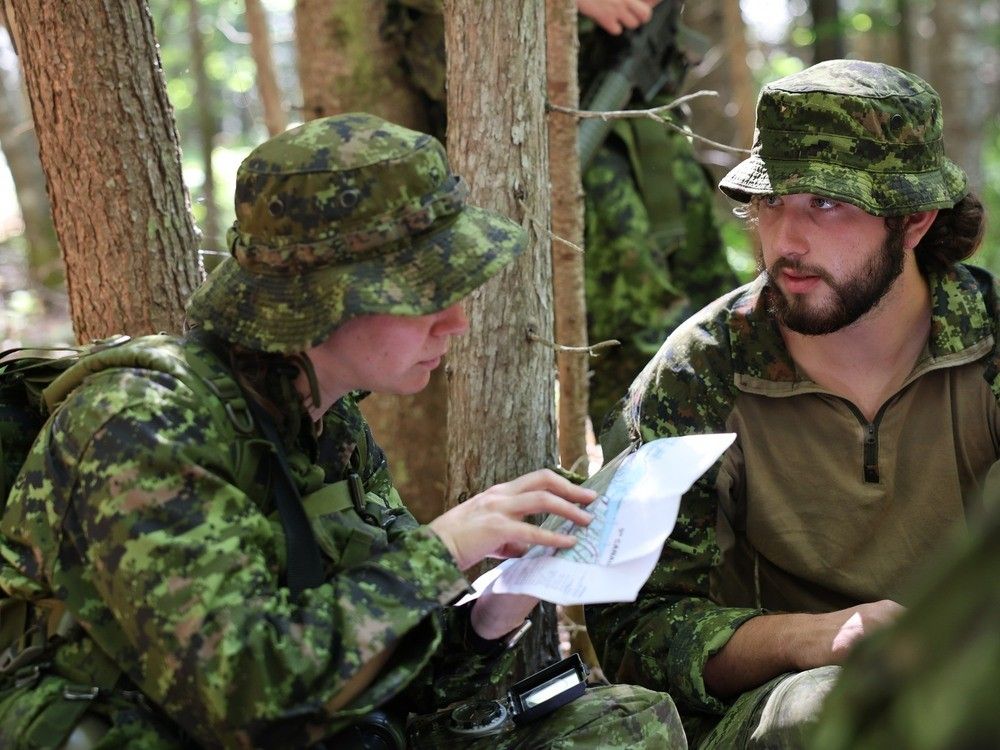
Some Canadian Forces reservists feel they are being treated as second-class soldiers and don’t receive the same opportunities for training and deployments as their regular force counterparts, according to a military study.
The document, originally presented at an Oct. 24, 2025, academic conference on the reserves, outlined some of the initial findings from the report being compiled for the Director General Military Personnel Research and Analysis.
Data is still being analyzed and a
final report is expected later this year
, but the presentation outlined some of the key observations from reserve force personnel.
“There is a mindset within the Regular Navy that reservists are second-class citizens,” an unnamed senior naval officer told researchers. “And I think there are impediments to making sure reservists get trained to the same level as the Regular Force counterparts.”
While the initial analysis noted that the relationships between the full-time regular force and the part-time reservists was generally seen as positive, there were problem areas.
Those included a lack of training and deployment opportunities for reservists as well as a bias that labelled reservists as being less competent.
In addition, a number of reserve officers noted that regular force personnel tended to get priority for various opportunities.
“It’s very difficult to get career progressions and training, and deployments in particular that are necessary,” a senior air force officer noted. “This is by design because Regular Force counterparts have to get preference.”
A junior non-commissioned officer in the Canadian Army noted there was a lack of respect and that reservists were not allowed to do certain tasks when they were deployed. “They were kind of forced or shunted to a lesser role,” that individual told researchers.
The analysis could give senior military leaders more insight on what changes need to be made as they prepare the Canadian Forces for the future.
The analysis pointed to
concerns with reserve pay and benefits
as well as ongoing problems faced by reservists in taking time away from families and civilian jobs for military service.
“We have members who have gone on deployments, they want to deploy, they’re hungry to serve in that aspect, but then, based on past experiences with the issues that have come up with their pay and benefits, they’re not willing to go again,” a senior air force non-commissioned member told the researchers.
The Canadian military leadership is currently looking to the reservists to form the backbone of a significantly expanded force.
In October 2025, the Ottawa Citizen reported the Canadian military had set in motion an initiative to increase the number of its part-time soldiers from the current 28,000 to 400,000 as part of an overall mobilization plan.
The document, signed by Chief of the Defence Staff Gen. Jennie Carignan and then defence deputy minister Stefanie Beck on May 30, 2025, outlined the need to increase the current reserve force from 23,561 to 100,000 and supplementary and other reserves from the current 4,384 to 300,000.
In their document, Beck and Carignan noted the Canadian government had called for greater resiliency and autonomy on security matters. To achieve that goal, the Defence Mobilization Plan is needed, they added.
The Canadian Forces is also
counting on public servants to volunteer
for military service.
Federal and provincial employees would be given
one-week training courses
in how to handle firearms, drive trucks and fly drones, according to the mobilization document.
The public servants would be brought into the Supplementary Reserve, which is currently made up of inactive or retired members of the
Canadian Forces
willing to return to duty if called. At this point, there are 4,384 personnel in the Supplementary Reserves, but, in the case of an emergency, that would be boosted to 300,000, according to the planning outline from Beck and Carignan.
Department of National Defence spokesperson Andrée-Anne Poulin confirmed in a previous email that participation in the expanded reserve force would be voluntary. Neither DND nor the military would provide comment on the timelines for the creation of the mobilization plan.
Related
- DND confirms budget for new Arctic vehicles could be as high as $1 billion
- Canada delays destroying WW2 pistols while Ukraine figures out if it wants them
David Pugliese is an award-winning journalist covering Canadian Forces and military issues in Canada. To support his work, including exclusive content for subscribers only, sign up here:
ottawacitizen.com/subscribe

