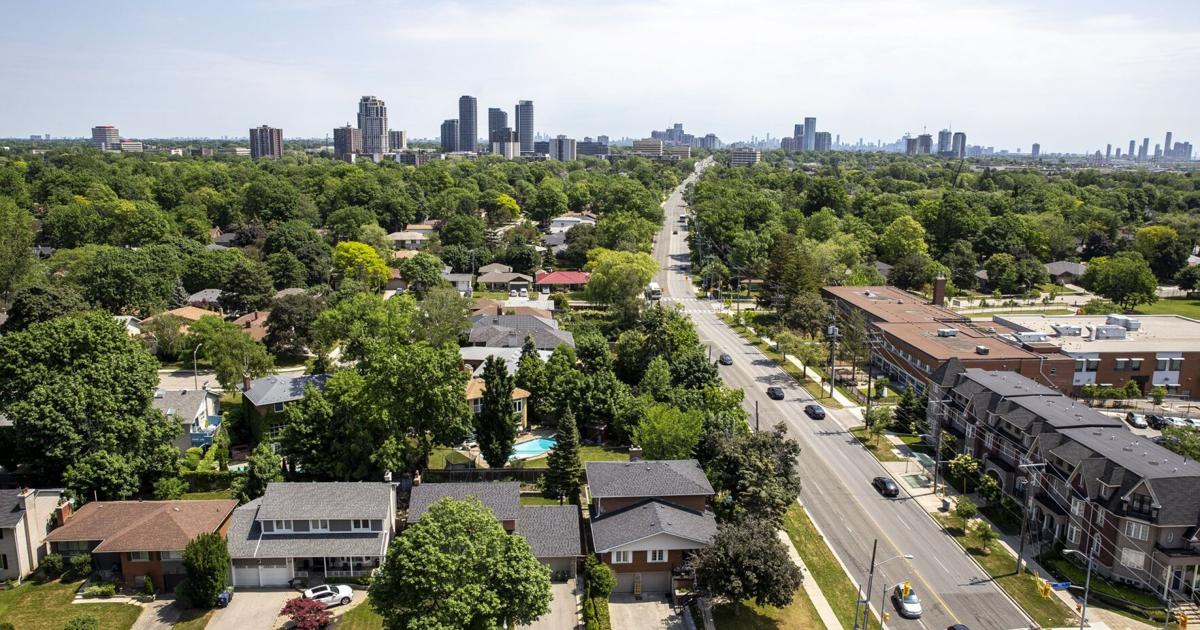
More than 84,300 houses across Ontario — around the number you’d find in a mid-sized city like Markham — were owned as investments by businesses or for-profit government entities such as public-sector pension funds in 2023, according to data from the Canadian Housing Statistics Program.
This data, released in recent months, offers a glimpse at where, and how acutely, businesses of all types have invested in Canadian single-family housing stock.
Jean-Philippe Deschamps-Laporte, an assistant director at Statistics Canada, said their team had noticed a growing number of questions about private companies buying housing several years ago. “We noticed a lot of conversations on investors, but there was really no measurement,” he said.
Since 2022, he said they’ve combined information from property assessment rolls and land registries with other sources, like tax and business data, to better understand the scale of investment activity.
Among the 84,335 houses they identified within this ownership category, 19,540 were in Toronto’s census metropolitan area, which extends as far as Oakville to the west, Ajax to the east, and north to Lake Simcoe.
In St. Catharines-Niagara, analysts with the statistics agency identified 3,365 houses owned by a company or for-profit government entity as of 2023; in Hamilton, they counted 4,185 houses; in London, 6,615; and in the Ontario portion of Ottawa-Gatineau, there were 6,820. The Barrie and Oshawa census areas had around 1,900 apiece, plus another 1,025 in Chatham-Kent.
More than 20,000 houses owned by businesses and for-profit government entities were outside census metropolitan areas and census agglomerations, the data says, suggesting rural locations.
These numbers suggest around two per cent of houses in Ontario in 2023 were owned by businesses or for-profit government entities as investment properties. That pales compared to nearly 540,000, or around 13 per cent, of single-family houses owned as investments by people, not companies.
But analysts and external housing experts say more research is needed to understand the impact corporate ownership of single-family homes has on the Canadian market — including better data on which companies are buying homes in which locations, and how they plan to use the properties.
It’s not clear, for example, how many of the houses included in the data set were purchased to produce rental income, Deschamps-Laporte said, versus a company that bought a single-family home to later redevelop that land. The houses captured in the data may also include cottages registered under a business “for whatever tax reason,” he said.
“We don’t have all the analysis that is necessary to really assess what it means on rents, what it means on tenants,” Deschamps-Laporte said, while hinting further study is underway to hopefully provide more clarity.
“We’ve been actively working on new research.”
University of Toronto housing chair David Hulchanski sees the data as cause for deeper study — while reflecting a small cut of the market, it is still tens of thousands of houses, he said. “We’re beginning to have some data finally, and we’re yet to understand fully what we’re looking at.”
While corporate ownership of single families for rental income is believed to be more common in the U.S., some Canadian companies have voiced interest in single-family home rentals in recent years — and have began buying them.
In 2022, a Star analysis of more than 80 homes obtained by Core Development Group found the company was purchasing moderately priced, older properties in smaller cities such as Peterborough and Kingston. Their strategy involved fixing them and adding features such as soaker tubs or extra units. The homes were then listed for rent, in many cases above market price.
At the time, the company said it was offering rentals to families priced out of home ownership, and addressing a gap in supply for family-sized rentals. Critics, however, accused the company of profiting off the housing crisis.
Toronto Metropolitan University professor emeritus David Amborski told the Star he wonders if the current real estate market downturn might entice more investors to buy single-family homes in cities where prices have dropped.
“Some potential investors might look at it as an opportune time,” Amborski said. “It’s like the stock market. When the stock market drops, certain people invest because they expect it to go back up.”
He noted more study was needed on who was buying and where, as well as what their strategies are, as a company that keeps units idle and a company that rents them have different impacts on the market, he said.
Hulchanski agreed, saying more information is needed to create better and more targeted housing policy — the kind rooted in hard evidence.
“You go back several decades, and a house was a house. Someone would buy it and live in it,” Hulchanski said. “There’s something new happening.”
Error! Sorry, there was an error processing your request.
There was a problem with the recaptcha. Please try again.
You may unsubscribe at any time. By signing up, you agree to our terms of use and privacy policy. This site is protected by reCAPTCHA and the Google privacy policy and terms of service apply.
Want more of the latest from us? Sign up for more at our newsletter page.