

Mirvish embraces Canadian
Theatre should react to current events. But that’s often a challenge for many companies because they program their seasons months, if not years, in advance.
Just look at the #ElbowsUp movement earlier this year, spurred by the ongoing trade war between Canada and the U.S. You would have been forgiven for thinking Toronto theatre companies missed the memo.
Canadian Stage might as well have been renamed American Stage with the number of American plays featured in its lineup. Soulpepper as well. So, whether intentional or not, it was such a pleasant surprise to see Mirvish, Canada’s largest commercial theatre producer, program so many Canadian shows this year — from Britta Johnson’s astounding “Life After” to the new Alan Doyle musical “Tell Tale Harbour.”
Even many of the American and British productions in the lineup featured all-Canadian casts, including “& Juliet” and “We Will Rock You.” — Joshua Chong
‘The Handmaid’s Tale’ wraps up
Blessed be the fruit, indeed: For a show that painted a vision of a dystopian future that increasingly felt alarmingly close to our present reality, “The Handmaid’s Tale” was otherwise a remarkably bright spark in our cultural landscape.
Bringing one of Margaret Atwood’s most famous novels to the screen was no small task, but over six seasons — the last airing this year — this show managed to capture both critics’ hearts (see its 15 Emmy Awards and a record-breaking number of nominations) and speak to something in the zeitgeist. You know you’ve made an impact when the phrase “It’s like something out of ‘The Handmaid’s Tale’” is meaningful to most people, regardless of whether they have a Crave subscription or not. (Kudos to the show, major thumbs down to the actual state of our world right now.)
It also gave Toronto and surrounding areas a star turn: The show was filmed here, meaning our city and suburbs stood in for Gilead. While watching (often between our fingers), it was a fun game to spot the familiar landmarks: Oakville’s Coronation Park, Toronto’s City Hall, half of Hamilton and practically all of Cambridge, Ont. had starring cameos in the series.
Nolite te bastardes carborundorum, forever. — Sarah Laing
Oasis-mania hits Toronto
As we enter the second half of the 2020s, charging furiously forward through this wild decade, it’s easy to forget how small the world had suddenly become during the pandemic just five years ago; how, for better or for worse, it temporarily narrowed the scope of our lives, as we retreated indoors and into our tightly enclosed bubbles. Life is mostly back to normal now, but there remains a part of us that has not fully recovered from that unprecedented shock. We continue to crave experiences that orient us within a broader collective. And we still desire the healing catharsis of a large-scale spectacle.
If that sounds dramatic, please refer to the abundance of clips from the Oasis reunion tour — lovingly dubbed as “the Eras Tour for Dads” — which included two sold-out stops at the 50,000-capacity Rogers Stadium in Toronto last August. Both gigs went off without a hitch, which was a relief given: a) the long history of Oasis shows going off the rails, including one in Toronto that ended when a fan assaulted Noel Gallagher; b) the logistical nightmares that plagued the early days of Rogers Stadium; and c) the terrifying and potentially disastrous prospect of placing tens of thousands of very drunk Gen X men in close proximity. What occurred instead was two nights of blissful, nostalgia-fuelled euphoria — mobs of men (and women!) decked out in ‘90s-inspired tracksuits and Kangol hats, dropping all pretension as they chanted along at the top of their lungs to songs of their youth, embracing one another in the pouring rain.
Though it was over almost as soon as it began, Oasis-mania felt like a reprieve from our difficult, divided times (the tour was enthusiastically hailed by Slate as “a cure for the male loneliness epidemic,” while Rolling Stone said that the tour “was all about positive masculinity”). The tour’s overwhelming success also seems to have inspired a slew of new megatours from aging rock bands: Rush is reuniting for four shows in Toronto in August, while AC/DC is set to perform at least one show at Rogers Stadium in September. Perhaps by next fall, rock and roll will have healed the world. — Richie Assaly
A reprieve for the Fleck
The pandemic was a death knell for dozens of arts venues across the city struggling with rising rents and declining audience attendance. In March, it looked like the Fleck Dance Theatre was heading for a similar fate after the Harbourfront Centre ended its decades-long lease for the 446-seat venue. The move was devastating for the many companies that rented the theatre, widely regarded as Toronto’s most prestigious stage for contemporary dance. And at the time, no one knew whether the space would remain a theatre or if its landlord would gut it entirely. But in November, it was announced that the venue would ultimately be saved and renamed the Terminal Theatre, after its lease was taken over by the Toronto Stage Company. The theatre reopened its doors earlier this month, with Toronto Stage Company founder Jon Chaters promising a full season of four to six productions beginning next year. — J.C.
Daniel Caesar delights Trinity Bellwoods
Ahead of his album release, “Son of Spergy,” Daniel Caesar — with fellow Toronto artist Mustafa the Poet — surprised Torontonians with a free, spontaneous concert in Trinity Bellwoods Park in September.
The moment Caesar dropped the announcement on Instagram, fans swarmed in droves. They converged on the park to hear his succulent vocals unveil new tracks and revisit classics. While most settled onto the grass, others scrambled up trees for a better view of the serenade. One music lover even hauled a ladder across the park to catch the show. — Savannah Ridley
Stratford’s new director
After months of speculation, the British Canadian theatre maker Jonathan Church was appointed the Stratford Festival’s new artistic director in October, capping an 18-month international search to replace outgoing leader Antoni Cimolino.
The announcement wasn’t entirely surprising. Church is best known for turning around the fortunes of the U.K.’s Chichester Festival, another repertory company whose main stage is inspired by Stratford’s Festival Theatre. The electrician turned director also maintains close relationships with many Canadian theatre leaders, including commercial producer David Mirvish.
But Church’s appointment still marks a bold new era for Stratford, effectively Canada’s de facto national theatre.
In a wide-ranging interview with the Star earlier in the fall, Church said he wants to broaden the company’s reach, such as by attracting international actors and star directors. As well, he wants to extend the life of Stratford productions beyond the festival’s four stages.
This marks a notable shift from Cimolino’s tenure, which has increasingly focused on developing Canadian talent. But Church’s vision is not without precedent and recalls the early days of Stratford, when stars like Brian Bedford and Maggie Smith regularly trod the boards. In previous decades, it was also not uncommon for Stratford productions to tour internationally or transfer to Broadway.
The big question, however, is whether Church can help Stratford grow internationally and enter new markets, while maintaining the artistic quality of its productions. We’ll see: his first full season will be in 2027. — J.C.
Celebrating 25 years of Reelworld
Back in 2000, “The Young and the Restless” star Tonya Williams saw a glaring lack of Canadian BIPOC talent in film. Fast-forward 25 years: the trail-blazing Reelworld Film Festival and Screen Institute marked its silver anniversary this October, proving its seminal impact on the industry. The organization has been a launch pad for hundreds of creatives, including Simu Liu, Marvel star (and one of the many “Ken”s in the Barbieverse) and directors Richie Mehta and Alison Ducal. The 25th-anniversary celebration, held at the Paradise Theatre, showcased a new wave of Canadian film talent, including Vanessa Magic, Fitch Jean and Adrian Bobb. — S.R.
Cindy Lee’s triumphant farewell
When Cindy Lee cancelled her “farewell tour” in the spring of 2024, it was reasonable to assume we might never see her again. The drag-queen alter ego of Calgary musician Patrick Flegel, Lee never seemed comfortable with the success of “Diamond Jubilee,” a bizarre, hauntingly gorgeous collection of hazy psychedelia and girl group-inspired doo-wop that became an unexpected hit and critical darling. Nor did Lee appear to enjoy performing live (“I feel like a caged f—king animal,” she said during one of the few shows she played last year).
But there she was, some 18 months later, the reluctant saviour of indie rock, gracing the stage at Massey Hall for one final Toronto show. You could feel the audience ripple with excitement and gratitude as Lee appeared, wearing a sequined gold dress, a black bouffant wig and white go-go boots, wielding her electric guitar like a royal sceptre. Alone on the stage, Lee moved efficiently though her catalogue, swaying along to the music’s ghostly rhythms, and sending the otherwise hushed audience into a frenzy with each ragged guitar solo. As the show ended, fans filtered out of the venue, exchanging dazed looks, repeating the same refrain: “I can’t believe that just happened.” — R.A.
A square by any other name
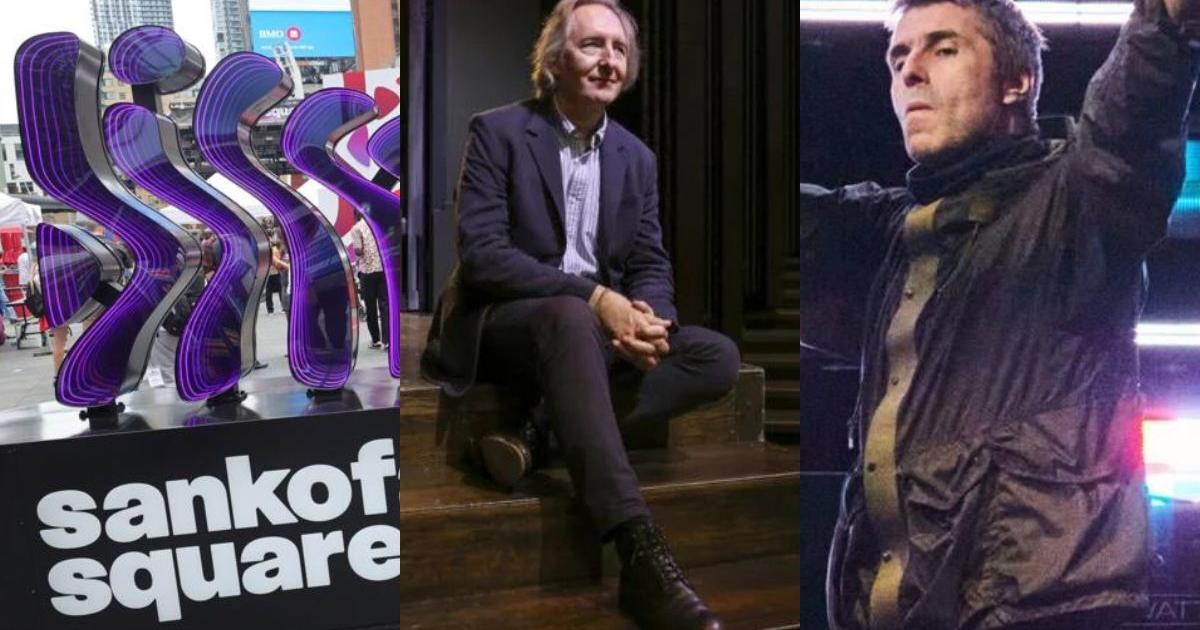
At a festive bash that featured rap performances, film screenings, pickup basketball and a bevy of food vendors, thousands of Torontonians gathered downtown on Aug. 23 to commemorate the grand opening of Sankofa Square, the public space formerly known as Yonge-Dundas Square. Its reopening came five years after discussions began to rename the square, which honoured the controversial 18th-century Scotsman Henry Dundas, who played a role in upholding the trans-Atlantic slave trade. The name Sankofa comes from the Akan people in Ghana and loosely translates into English as “go back and get it.” — J.C.

