

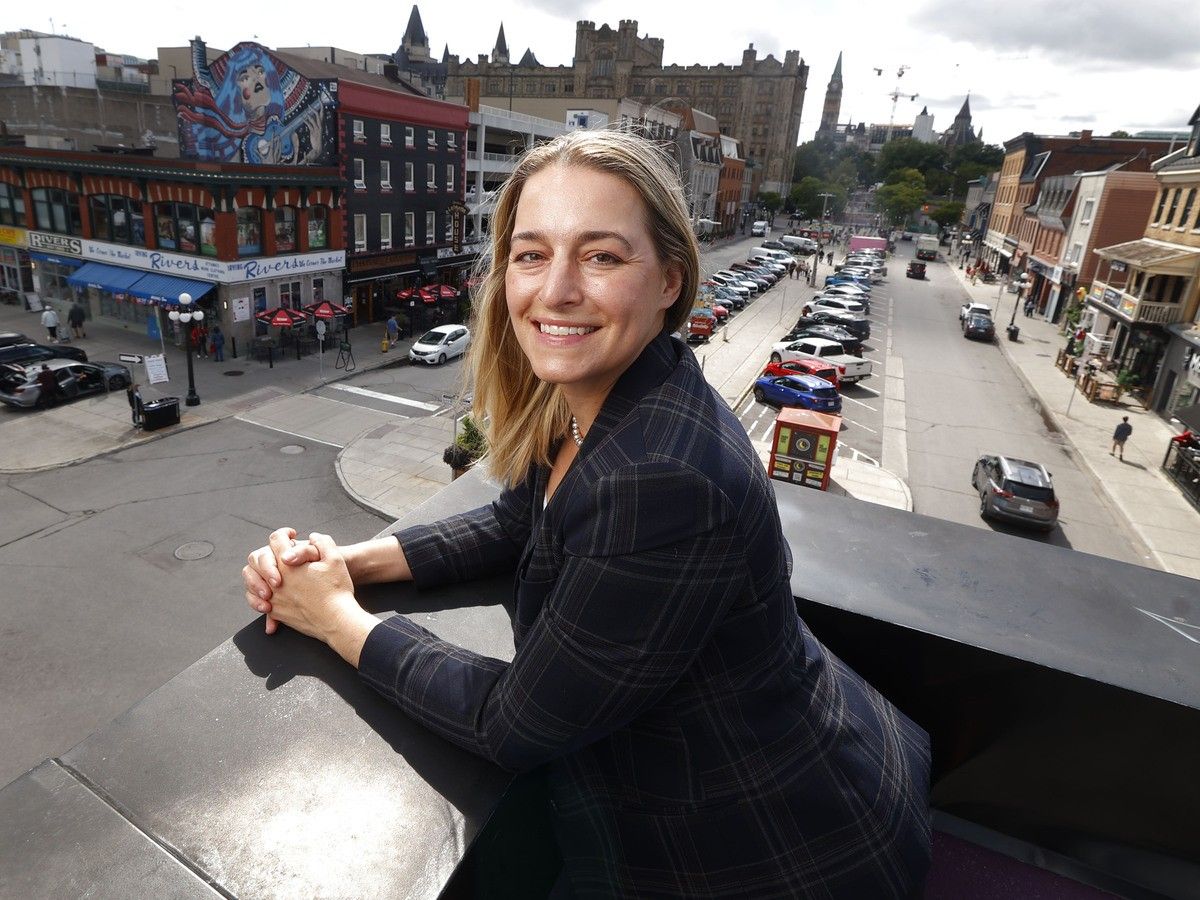
Ottawa city councillors approved a $200-million revitalization plan for the
ByWard Market
with several key amendments proposed by Coun. Stéphanie Plante, including pedestrian-friendly initiatives, increased after-hours daycare spots to cater to the Market’s nightlife economy, 24/7 accessible washrooms and a recognition of the impact of the high concentration of social services in the downtown neighbourhood.
Plante, whose Rideau-Vanier ward includes the ByWard Market and Lowertown, also called on staff to report back to councillors after the strategic initiatives department said it would defer $10 million in provincial funding earmarked for the the “reimagining” of William Street and would “realign” that project with future work planned for 55 ByWard Market Square.
The renovation and streetscaping of the historic building at 55 ByWard Market Square is
one of three projects included in the revitalization plan, along with a pedestrian-oriented plaza on York Street and the repurposing of an aging city-owned parking structure on Clarence Street.
The Province of Ontario allocated $11.8 million in funding to the street renewal and “pedestrianization” of William Street as part of the ByWard Market public realm plan that was approved by council in 2021.
Debbie Stewart, general manager of the strategic initiatives department for the city, said $1.8 million of that funding had already been spent on the detailed design of the William Street renewal, while the remaining $10 million was allocated to construction work.
“Given the economic conditions and concerns from the businesses, the recommended path forward is to realign that work because businesses are concerned with the dual impact of construction along with an uncertain economic environment,” Stewart said at the March 11 council session.
Mayor Mark Sutcliffe said the $10 million could be reallocated to other downtown revitalization priorities meeting with provincial approval, which would free up equal funding for William Street in the future.
“The net result would be the same,” Sutcliffe said. “Instead of (the city) spending money on some other improvements and the province’s money going to William Street, the province’s money goes to those other improvements and our money goes to William Street, and the net effect for the province and the effect for Ottawa is the same.”
Stewart said city staff were in discussions with the province on reallocating those funds to other downtown priorities that would attract more visitors to the ByWard Market, along with “enhanced security measures so their overall experience is better and people are feeling comfortable and safe returning downtown.”
One of Plante’s motions called for staff to report back to council or the city’s finance and corporate services committee for approval on reallocation of the provincial funds.
Another motion, which was carried by council, called on staff to amend one area of focus in the revitalization plan addressing the “safety and well-being for all,” which will now include strategies to address
the impact of the high concentration of social services in the ward
.
Plante’s motion cited a recent report on unsheltered and homeless outreach that found Ottawa’s highest concentration of encampments in downtown neighbourhoods like Centretown, Lowertown and Sandy Hill.
“Compounding the unsheltered homelessness crisis is the toxic drug crisis the city is facing,” the report stated, with 941 overdose-related visits to hospital emergency rooms in 2024 and 166 opioid-related deaths.
The motion cited a 2025 survey that found 41 per cent of downtown residents felt unsafe walking around after dark and more than 65 per cent felt their neighbourhood had worsened in the previous two years, “citing public drug use and discarded needles as key concerns.”

The Rideau Business Improvement Area commissioned a public opinion survey in 2025 that found the top two barriers for residents visiting downtown were perceptions of crime and safety (23 per cent) and homelessness.
“Support for capital infrastructure investment in the ByWard Market is welcomed, but will not bear the fruit of visitation and increased tourism if perceptions of crime, safety and homelessness are not addressed as a city-wide issue,” Plante’s motion said.
Plante said she “wholeheartedly” supported the city’s long-range housing and homelessness priorities, but said provincial and federal funds were needed to achieve a “housing-first” strategy that included transitional and supportive housing, along with improved mental-health and addiction services.
“We don’t want to remove services that displace vulnerable people elsewhere,” Plante said. “We want to ensure we support them with dignity … A more balanced approach by the city would allow people to access these services closer to their community and would reduce the pressure on one single ward with the organizations that offer these services. It would be more equitable for everybody.”
Plante also called for an assessment of child-care spaces in both daytime and nighttime to reflect the “diversity of parents who work in the ByWard Market,” along with a 24/7 public washroom strategy to accommodate the Market’s after-hours economy.
Another motion identified a “gap in public governance” for implementation of the revitalization plan. Plante requested a monthly update from the steering committee and asked city staff for a review of the existing committees and working groups related to the ByWard Market revitalization.
“The ByWard revitalization framework and co-ordinated redevelopment program is a welcome and long-overdue effort to focus attention on one of the most important places in our city,” Plante said.
“For many residents, workers and business owners, it’s not just a destination, it’s home. It’s their livelihood and it’s part of Ottawa and Canada’s identity … But over the years that specialness has been overshadowed by headlines of crime, empty storefronts and the red-lining of social services into (Rideau-Vanier ward).
“At the same time, we’ve had no shortage of plans, working groups, task forces, advisory committees, road maps, strategic alignments. Too often, the people leading these discussions do not live in the neighborhood, which can unintentionally insulate them from the day-to-day realities their decisions create.”
The ByWard Market plan recognizes that “revitalization cannot occur in isolation,” Plante said.
“From housing, mental health, addiction, public safety and economic vitality, these issues are interconnected, and the report reflects that reality … But residents, families and businesses deserve clarity about what will actually change in the near term.”
Related
Our website is your destination for up-to-the-minute news, so make sure to bookmark our homepage and sign up for our newsletters so we can keep you informed.

