When Bill Staubi learned two years ago that he had Stage-4 liver cancer and about 18 months to live, he accepted the prognosis directly and methodically. He began immunotherapy. He made funeral arrangements. He notified friends. He applied
for MAiD
.
And then he set about
the monumental chore
of finding new homes for the 1,200 to 1,500 pieces of art he’d collected over nearly half a century, a task he did not wish to posthumously lay at his son’s feet.
“It wasn’t a burden I felt I should pass on,”
he reasoned
.
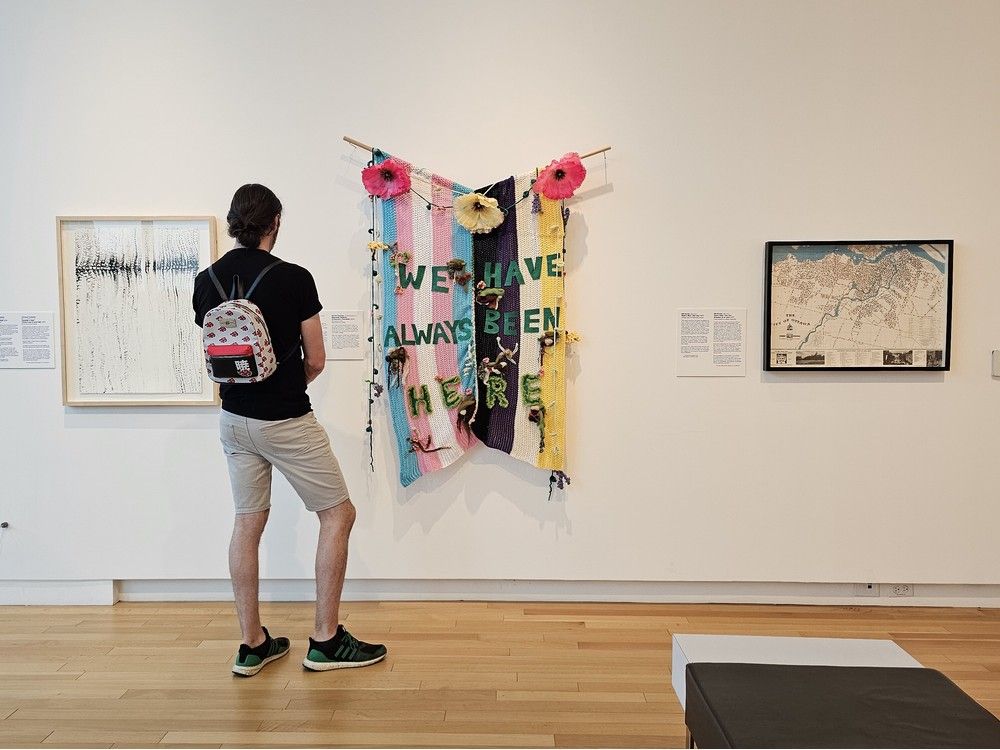
Some of the items were returned to the artists who created them. He gifted numerous works to the City of Ottawa and the Ottawa Art Gallery — the latter currently has an exhibition, titled Grotto, built from many of the works. Still others he gave to such organizations as SAW Gallery, the Ottawa Arts Council and the Mississippi Valley Textile Museum, to be used as fundraisers.
Bit by bit, he parcelled out the collection with the same intentional care that went into acquiring it, even as the cancer metastasized to his lungs.
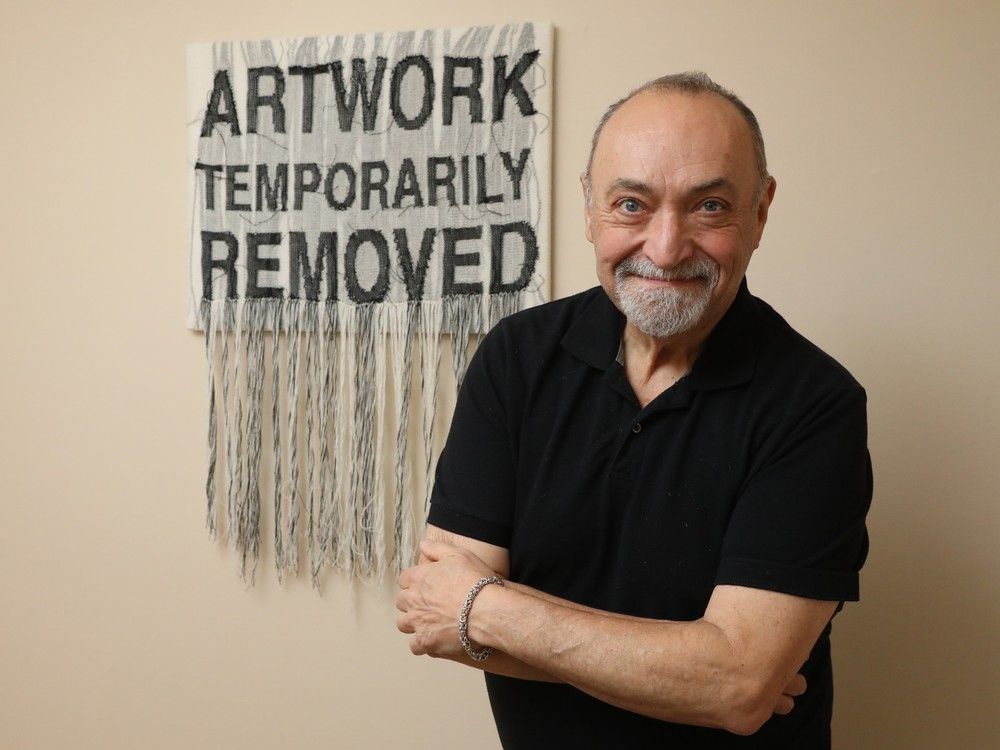
It was, logistically, a Herculean task — one that he completed only a few weeks ago, roughly six months after his estimated “best before” date had passed. In the meantime, he’d borrowed and rented a few pieces of art to soften the increasingly barren walls of his downtown apartment. Beyond family, after all, art had been Staubi’s lifelong raison d’être. He couldn’t live without any. One of the recently added pieces, Ottawa fabric artist Greta Grip’s “Artwork Temporarily Removed,” is a particularly apropos wink to the hundreds of works that once enlivened the walls and other surfaces of Staubi’s home.
As last spring’s expected appointment with the inevitable came and went, however, Staubi noticed that the pain wasn’t worsening. His energy was returning. The spots on his lungs were shrinking; then they disappeared altogether.
Then, only weeks ago, he learned that his cancer had gone into remission: the original tumour had died. The cancer cells were gone, and it was, unexpectedly, Staubi who was still standing. It’s a turnabout he’s still trying to navigate.
“It’s a very odd feeling. I’m going through the weird process of giving up the idea that I’m dying,” he says.
He’s now off any cancer-related medications. His doctors will monitor him every three months for the first year, then every six. If he remains in remission for two years, his check-ins will be annual. After five years, he’ll simply be told to let them know if he’s not feeling well.
Staubi’s newfound lease on life hasn’t come with a soaring Hollywood score. An unfulfilled bucket list hasn’t magically appeared, nor any great desire for re-invention; he’s not planning a round-the-world trip or Szechuan cooking lessons. “There was never some big thing that I had to do before I died,” he says. “I was just gonking along, and now I have to figure out how to go back to that.”
Still, arriving on the other side of his obituary has provided him a remarkable vantage point that few of us get to experience. As word of his illness, and his decision to give away the entirety of his art collection, spread last year, he began receiving letters, calls and messages from people whose lives he changed in ways large and small — a modern-day George Bailey in It’s a Wonderful Life, learning of how his everyday actions, unremarkable to him, touched others deeply. Artists, curators, arts organizations, friends, acquaintances and even strangers reached out. On one level, Staubi knew that his financial support and encouragement of artists, especially ones in the early stages of their careers, made a difference to them, but the outpouring of messages from the arts and non-arts communities nonetheless amazed and disoriented him.
“It was a year of discovering how people saw me,” he says. “Things I knew intellectually, but hadn’t fully absorbed emotionally.”
The mayor named him Ottawan-of-the-Day. The Governor General honoured him with the Meritorious Service Medal. The Ottawa Art Gallery established the Bill Staubi Acquisition Fund, which will be used to buy art from emerging artists, with a focus on those from the queer community.
And there were other moments, smaller but no less significant. Neighbours in his building, people he’d nodded to for decades, suddenly recognized him: “Oh, you’re the art guy!”
“I got all the love you get at a funeral,” he says, “but to my face.” And unlike George Bailey, Staubi didn’t need an angel to show him the outsized impact his life has had — Ottawa’s residents did that.
In the meantime, he’s bought about 15 new pieces in the last month or two, as he rebuilds what he promises will be a much smaller collection. “I’m not getting back to 1,500 pieces; I don’t want to have to do all that again.” But supporting artists, he says, is simply baked into his DNA. “It’s just who I am.”
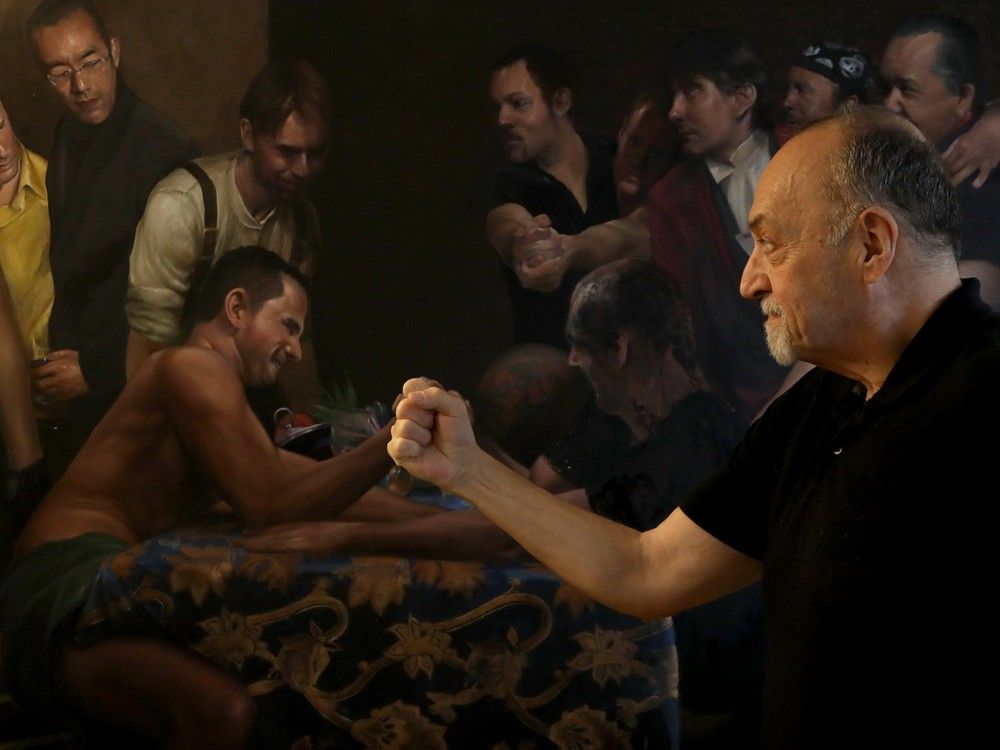
The reach and impact he’s had are still sinking in. “I didn’t think my life was anything unusual,” he says. “I was just doing what I thought you should do as a citizen.”
Beyond that, he’s now simply navigating whatever time he has left in small steps, allowing the next chapter to unfold the way the last one did — with small acts that will likely ripple further than he knows.
“It’s nice,” he says. “It’s nice to still be here.”