OTTAWA – As a number of countries condemn the ouster of Venezuelan President Nicolás Maduro by the United States, protesters in front of the U.S. embassy in Ottawa on Sunday called for the federal government to support the right to self-determination for the Venezuelan people and for the U.S. to back away.
Emmanuel Galleguillos-Cote, who was one of the protesters, said the military action is just the latest chapter in a story of the U.S. treating Latin America “like its own backyard” to develop resources.
Protesters chanted in support of Maduro, who they said should be supported by Canada and Prime Minister Mark Carney, and against U.S. President Donald Trump, who they said is causing instability in the region.
”(The United States) thinks that these resources belong to them and it doesn’t — it belongs to the people, and it’s up to the people and their right to self-determination to be able to govern themselves and not have the U.S. intervene,” Galleguillos-Cote said.
Carney on Sunday spoke with Venezuela’s opposition leader, Nobel Peace Prize laureate María Corina Machado. The Prime Minister’s Office said in a readout that both leaders “underscored the importance of seizing this opportunity for freedom, democracy, peace, and prosperity in Venezuela.”
It said they also condemned Maduro’s “brutally oppressive, criminal, and illegitimate regime.”
On Saturday, Venezuela’s high court ordered Delcy Rodríguez, who served as Maduro’s vice president since 2018, to assume the role of interim president.
Diana Rizo, a counter-protester in Ottawa who fled to Canada from Venezuela in 2014, said she was confused why people would take to the streets to support Maduro, who she said has caused harm to her country and those who opposed his leadership.
“I have lived so many years without hope of going back to my country, and finally I see the hope,” she said.
Claudia Carrera, who has lived in Quebec City for 25 years, said Venezuelans like her had been “waiting for something, a miracle.” She said she hoped the United States would remain for some time before leaving and letting the people run the country.
“We tried strikes, we tried demonstrations, we tried for a democratic life with elections, but nothing worked,” Carrera said.
“The only hope we had was that someone from outside would come to our aid.”
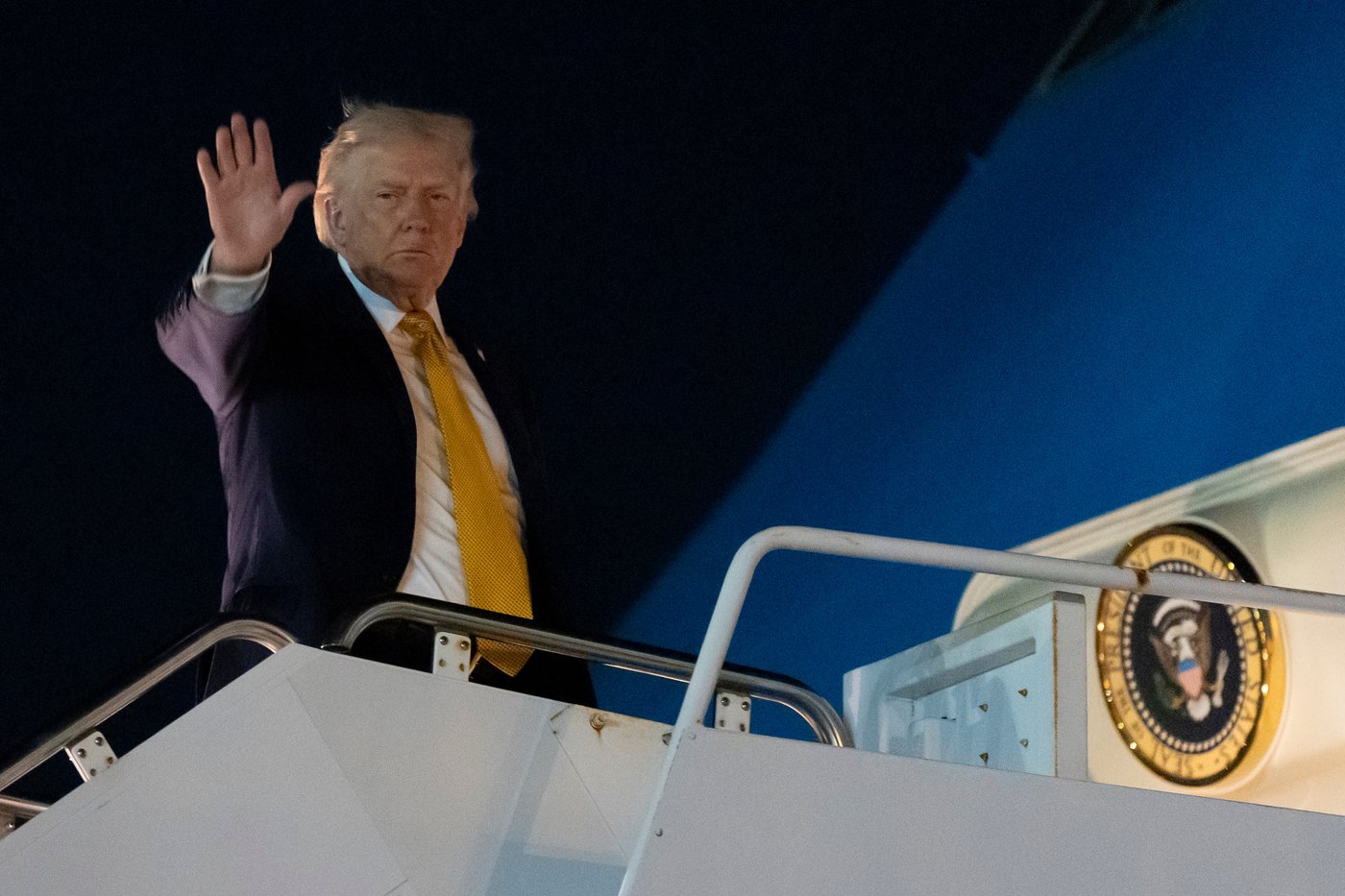
Speaking to reporters hours after Maduro’s capture, Trump revealed his plans to exploit the leadership void to “fix” the country’s oil infrastructure and sell “large amounts” of oil to other countries.
U.S. Secretary of State Marco Rubio seemed to backtrack Sunday, suggesting that the United States would not take a day-to-day role in governing Venezuela other than enforcing an existing “oil quarantine.”
Six countries, including Mexico and Spain, issued a statement Sunday condemning the U.S.‘s actions, saying it sets a dangerous precedent for peace and regional security.
“We reiterate that the situation in Venezuela must be resolved exclusively through peaceful means, by means of dialogue, negotiation, and respect for the will of the Venezuelan people in all its expressions, without external interference and in accordance with international law,” the statement said.
“We express our concern regarding any attempt at government control, administration, or external appropriation of natural or strategic resources, which is incompatible with international law and threatens the political, economic, and social stability of the region.”
Carney reacted on Saturday afternoon to Maduro’s ouster by noting that one of the first actions taken by his new government in March was to impose additional sanctions on his “brutally oppressive and criminal regime.”
In a statement posted to social media, Carney noted that Canada has not recognized “the illegitimate regime of Maduro since it stole the 2018 election.”
But he also wrote that Canada has “long supported a peaceful, negotiated, and Venezuelan-led transition process that respects the democratic will of the Venezuelan people,” adding that Canada calls on all parties to respect international law.
“We stand by the Venezuelan people’s sovereign right to decide and build their own future in a peaceful and democratic society,” Carney’s statement said.
This report by The Canadian Press was first published Jan. 4, 2025.
— With files from Cassidy McMackon and Charlotte Glorieux
Error! Sorry, there was an error processing your request.
There was a problem with the recaptcha. Please try again.
You may unsubscribe at any time. By signing up, you agree to our terms of use and privacy policy. This site is protected by reCAPTCHA and the Google privacy policy and terms of service apply.
Want more of the latest from us? Sign up for more at our newsletter page.