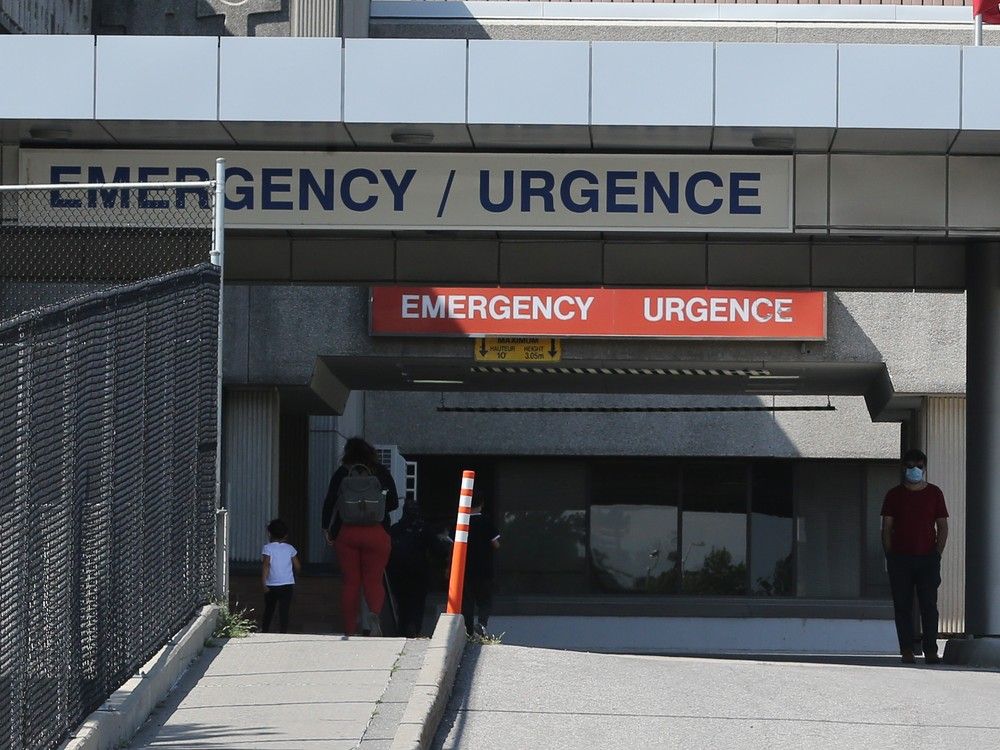
A new Ontario study is countering a common narrative about pressure on the health system caused by newcomers to Canada.
The research, from the Institute for Clinical Evaluative Sciences (ICES) and The Hospital for Sick Children (SickKids) in Toronto, found that children of newcomers to the country are less likely to
visit emergency departments
for minor illnesses than Ontario-born children.
Researchers followed 113,098 refugee and immigrant children for the first four years after arrival to Canada and 345,499 Ontario-born children over the same period.
They found that refugee and immigrant children had more primary care visits for minor illnesses and fewer emergency department visits for similar conditions than their peers who were born in Ontario.
Researchers say a possible explanation for the different use of the health system, especially in the early years after newcomers arrive, could be related to health care navigation support that newcomer families receive during early settlement in Canada.
After two years, researchers noted a slight shift with a decrease in primary care visits for minor conditions and a slight increase in emergency visits, but they continued to use emergency departments at a lower rate than their Ontario-born peers.
Researchers say that shift might be related to reduced resettlement financial support and challenges accessing primary care during regular work hours.
Dr. Susitha Wanigaratne, senior research associate at the Edwin S.H. Leong Centre for Healthy Children and SickKids said the study “contributes to the growing research that disproves the belief that newcomers misuse healthcare services”.
The study, published in the medical journal JAMA Network Open, comes at a time when support for
immigration
among Canadians has been decreasing and pressure on the health system is among the concerns.
At a time when health systems are under extraordinary pressure across the country, with long waits in emergency departments and the normalization of hallway medicine, there is a growing focus on the issue by both federal and provincial politicians in Canada.
The Conservative Party of Canada put forward a motion to curtail federal benefits to refugee and asylum claimants living in Canada. That motion failed, although the federal government has said it has
plans to require claimants to cover a share of some costs.
Conservative Leader Pierre Poilievre has talked about wanting to cut “deluxe benefits” for “fake refugees.” The Official Opposition want a full review of the Interim Federal Health Program (IFHP) which provides health-care benefits to refugee and asylum claimants living in Canada, saying it should only cover life-saving healthcare for those whose claims are rejected.
The Alberta government has also focused on new Canadians and healthcare in recent days with plans for a fall referendum that will include questions about immigration. Premier Danielle Smith has focused on concerns about pressure on healthcare in some public statements.
Some who work with refugees fear language being used about immigration in Alberta and elsewhere could stir up hatred toward new Canadians and scapegoat them for ongoing economic pressures.
Refugees and immigrants in the study were all permanent residents and covered by OHIP for health services. Resettled refugees in the study would have had access to the Interim Federal Health Program for supplementary benefits such as prescription drugs, dental and vision care for one year.
Authors of the recent study say their work suggests newcomer settlement services have a positive effect on health-care navigation.
Wanigaratne noted that studies from comparable high-income countries suggests that inclusive healthcare for migrants “not only improves health outcomes but saves money.”
The study did not directly examine the IFHP program, but Wanigaratne said the idea that recent immigrants and newcomers are a burden to the healthcare system is ”not supported at all” by the research.
Instead, she said the findings suggest that supports offered to refugee and immigrant families and children contribute to help reducing health care costs by helping them navigate the health system.
Related
- Ottawa Heart Institute celebrates 50 years of ‘stepping outside the box’
- More adults with developmental disabilities ending up in homeless shelters