They came to Canada with big dreams and a belief in commitment to society.
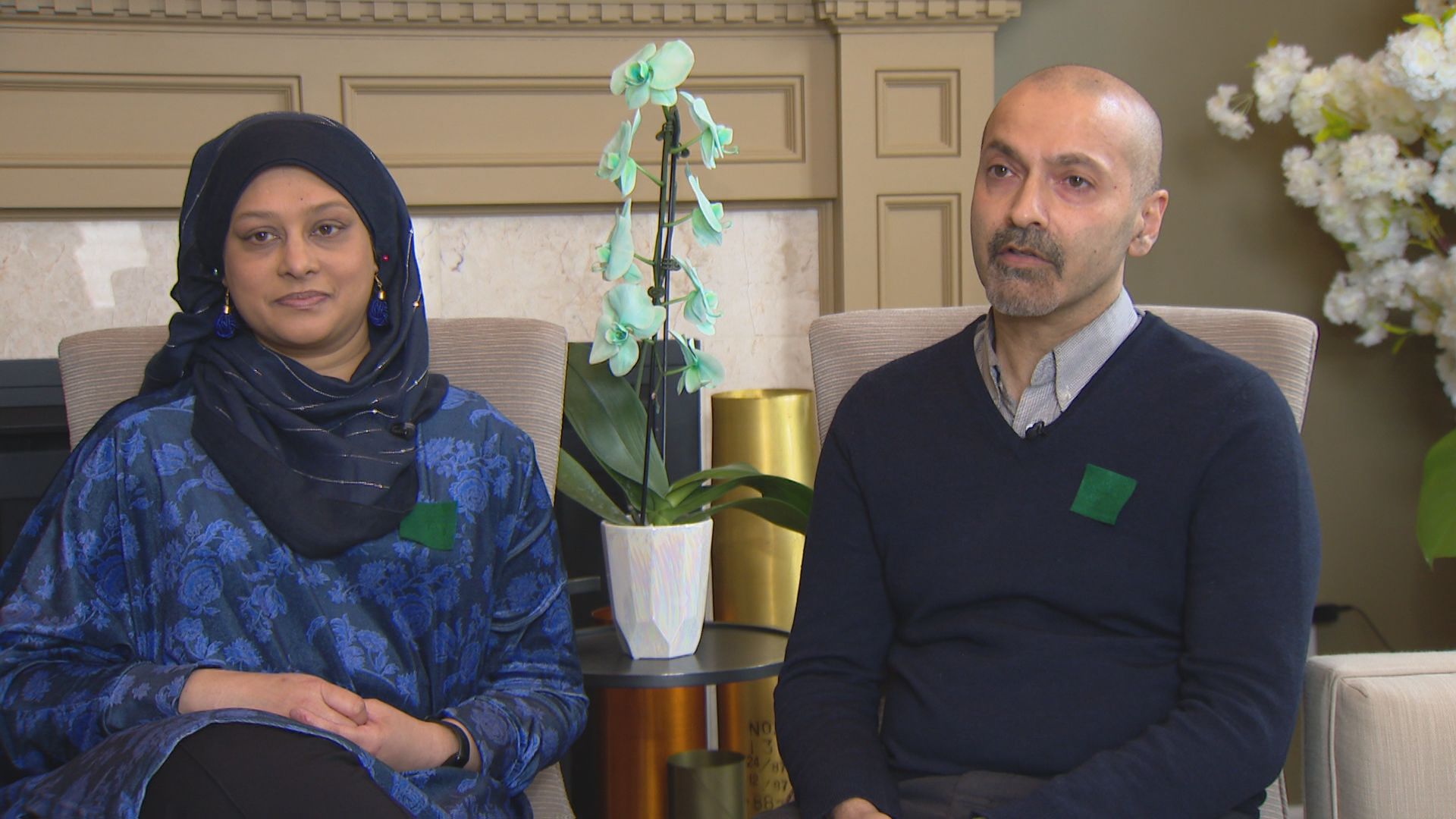
That’s how relatives Ali and Hina Islam are remembering Salman Afzaal, Madhia Salman, Talat Afzaal and 15-year-old Yumna, now known as London’s “family,” tragically killed in a terrorist attack by a right-wing nationalist in London, Ont. in 2021. The family’s son, a 9-year-old, survived the attack.
“They came here as students to build, to contribute. They came with a small toddler at the time. Yumna was just very young,” said Ali Islam, the uncle of Madiha Salman.
“They came to do what we all hope that we could do, be successful in our professional lives, be successful in our community and give to Canada, to their new home, everything they had, and that’s what they did in the short time that they were alive.”
Hina Islam, Madiha’s aunt, told OMNI News that even after their deaths, the family’s legacy lives on through their silent acts of kindness.
“They would do things which to help others, to support others, but very quietly. And I love that about them. It was, like, we didn’t find out (about) things until after they were gone that people would say, oh, I remember they did this for me, and we had no idea. And that’s something I so admire about them.”
A lot has changed for the family – and the nation – since the attack almost five years ago. Speaking to OMNI News Arabic leading up to the National Day of Remembrance of the Quebec City Mosque Attack and Action against Islamophobia, they reflected on the time that has elapsed since the tragedy gripped London.
“There’s a lot that was accomplished over these five years, in terms of personal growth as well as community as well. And there’s a sense of like thanking God, and that we were able to get through such a difficult time with so much patience and gratitude,” said Hina.
And while progress has been made since to increase awareness surrounding Islamophobia, the family says, they’ve witnessed a notable increase in hate, as well.
“We were sort of complacent in our thinking and understanding. We saw the most horrific of acts, but we didn’t really spend, as a society, time and effort to see what was underneath the iceberg. We just saw the tip. And I think there’s a lot of exploration that needs to go into what drives people to reach that level of hatred,” Ali said.
Hina is noticing that Canadians are not paying enough attention to acts of hate that are not violent.
“We’re being desensitized to acts of hate that may not be violent. We’ve seen literal examples of incidents where people, like the hijab being set on fire. And that does not evoke the same emotional response that we saw perhaps after the attack. Why is that?”
Statistics Canada reported a 94 per cent increase in police-reported hate crimes against Muslims in 2023. Last August, the National Council of Canadian Muslims said that there had been an 1,800 per cent increase in Islamophobic incidents reported to the organization since October 7, 2023.
The family is encouraging Canadians to speak up, because small acts of hate are as damaging when they accumulate, according to Hina. Ali is also warning against “hate coming from south,” highlighting what he notices as the “passing of the buck” between different sectors of government, the RCMP and media when hate manifests.
“We have to be really careful about bad faith actors who wear a mask of patriotism, but are actually trying to divide Canadians. They’re trying to tell Canadians that someone who looks different than you is a threat to you. And we can’t be ignorant of those voices. We have to be aware that they’re out there. And we have to stand together and unite against hatred and by referencing what makes us Canadian and our values,” said Ali.
When asked whether designating January 29 as a day to combat Islamophobia in Canada has served its purpose, the family agreed that “channels are now open,” but that is not enough.
“Just a day doesn’t fix something in and of itself, it’s what we do on those days and how we actually act and move forward. And I would say, and this goes specifically towards the government in this case: understand that Islamophobia in Canada is actually not just a social issue. It is also a systemic issue,” said Esa Islam, the son of Ali and Hina, who is 18 years old.
“I think that especially on January 29th, the anniversary of the Quebec mosque shooting, that we don’t forget about the fact that there are systemic policies in Quebec that actively discriminate.”
Ali added that he is not convinced that there is enough action.
“There has been a positive shift in that people are listening. So whether it’s elected officials or police or RCMP, they are listening to the voices of communities who are targets, whether it’s Muslims or people who are Black or Indigenous or Jewish. I’m not convinced that this translates into enough action.”
Hina said that combating hate starts with every person, even with small acts that create a “ripple effect.”
“Those small nudges, if I am able to do something with my background as a therapist as well as within the education system, then I’m going to use that, whatever I have, whatever knowledge and power I have to be able to do that.”
Speaking on the current political climate, Ali said that Bill C9, the anti-hate legislation currently debated in Parliament, shouldn’t pass in its current form and needs amendments.
“There’s a lot of work that needs to be done on C9. I’m surprised they got as far as it did, despite consultations beforehand. There are some serious objections about the bill and how it curtailed freedom. And while the thought behind it may have been good, I think it’s drifted over time.”
Concerns were raised after amendments to Bill C9 could potentially criminalize sharing certain passages of religious scripture like the Quran and Bible.
Esa thinks C9 would cause harm to the people it targets to protect.
“I find it ironic that when we’re trying to protect, in some cases, religious groups from being discriminated against, we’re actively saying that, ‘Oh, but you can’t read your religious text.’ And it’s important to remember to not lose sight of the end goal, right? We don’t want to throw such a big net that we end up catching everybody in it.”
The family concluded by saying that Canada’s political and judicial system is making up for what Ali calls its “systematic failure” of not labeling the Quebec Mosque attack as an act of terrorism, by designating January 29, as a day to combat Islamophobia.
“A message to the entire Canadian community would be to speak up, to do something if you see hate, if you hear about, and not just to stay silent because that’s no longer enough,” concluded Hina.