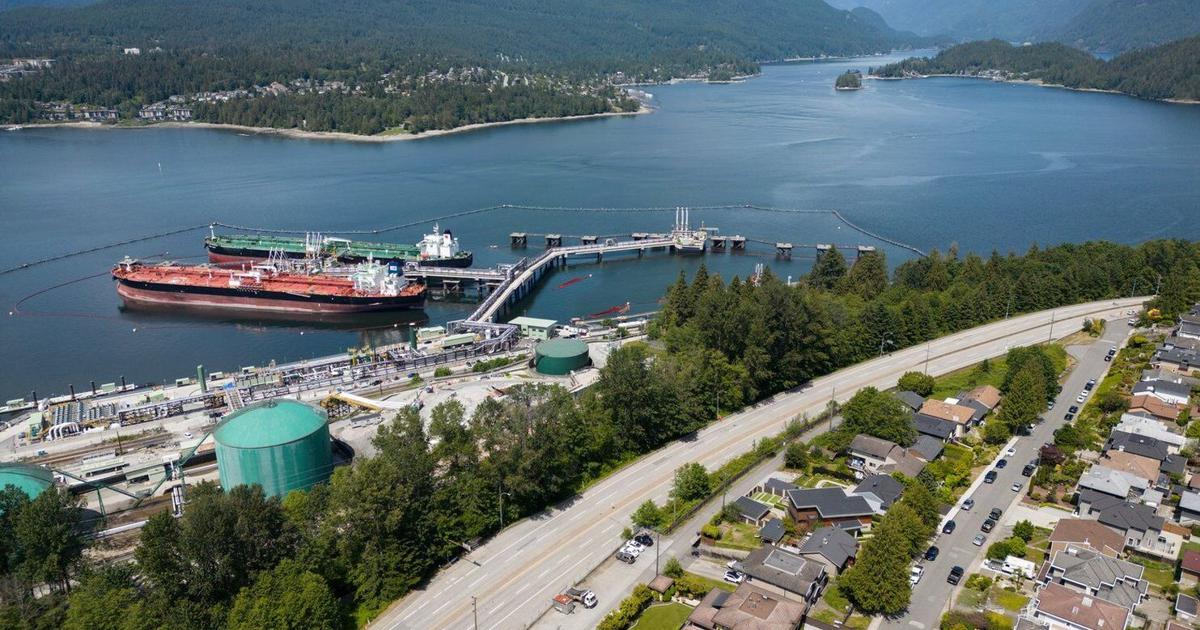
Trans Mountain has paid a regulatory fine for environmental lapses along its British Columbia pipeline route in the aftermath of a January 2024 storm.
The $196,000 fine is the largest cumulative penalty of its kind issued by the Canada Energy Regulator.
The regulator says when a January 2024 storm hit, the company failed to ensure enough environmental workers were on hand to handle the floodwater, and directed all of its crews to one location where weld repairs were taking place and where senior leadership was set to visit.
It took the company several days, in some cases, to turn its attention to issues along other stretches of the pipeline route around Abbotsford, including a small landslide and sediment-laden floodwater.
The regulator says although the lapses ultimately did not result in much harm, the risk was high.
The Canadian Press has reached out to Trans Mountain for comment.
In what’s called a notice of violation detailing its reasons for the fine, the regulator says the pipeline company repeatedly failed to prioritize known issues along the pipeline’s B.C. segment as it tried to get the much-delayed project over the finish line.
The storm arrived just three months after the company had been put on notice by the regulator over related lapses. In October 2023, an inspector noted a slew of issues at a wetland complex along the Fraser Valley pipeline route, including garbage and soil handling.
Facing pressure to get the project done, the company had started to fall behind on its environmental compliances, the regulator reported. The regulator says around that time, the company’s “timely resolution of environmental deficiencies” fell below 80 per cent, and a “significant number” remained overdue by October.
The company’s own environmental inspector advised company leadership about a lack of attention to those issues given the “larger focus on production,” the regulator said. After the October inspection, a senior director issued a memo affirming the company’s commitment to prioritizing safety and environmental compliance over cost and schedule.
Then came the January storm. Heavy rains flooded the Fraser Valley starting on Saturday, Jan. 27, 2024. The regulator says the company failed to adjust its scheduling to ensure it had enough erosion and drainage workers on hand to manage the weekend storm.
Instead, the company sent all of its environmental crews to a single site to help support workers who were fixing a weld failure from a previous day on a pipeline section set to be visited by senior leadership, the notice of violation says.
The regulator says areas along the Fraser Valley pipeline route were overwhelmed with water in the meantime. There were 25 spots along the route where pumps were available but not turned on during the flood, the regulator found.
Near the Sumas River crossing in Abbotsford, an inspector noted a small landslide. Measures to control erosion needed maintenance and pumps needed repairs, the inspector noted. Sediment-laden water was getting into a nearby stream.
In Chilliwack, a watercourse crossing to divert a small stream around the pipeline route was overwhelmed. Bypass pumps were only turned on the next afternoon.
In most cases, the regulator notes the company “appropriately turned its focus to the issues” once an inspection order was issued on Jan. 31. A followup report suggests the inspector’s requirements were met and the file was closed on April 2024.
The regulator’s decision notes the actual severity of the situation was low, but the “probability of harm resulting from these violations was high.”
Those risks included flooding that could have affected two dairy farms and a section of a highway, the regulator said. Landslides could have endangered workers in the area. Erosion can carry soil into nearby streams, harming fish and degrading water quality.
Submerged gas cans, generators and pumps could have contaminated floodwater. Overland flooding could have contaminated well water relied on by nearby homes and farms.
The regulator had initially issued the company four administrative monetary penalties totalling $292,000, but that was brought down to $196,000 upon review. The maximum daily penalty is $100,000.
The Trans Mountain project twinned an existing pipeline from Alberta to the B.C. coast. The project first proposed by Kinder Morgan in 2012 to boost Canada’s oil exports was met by fierce environmental and Indigenous resistance.
Beset by issues, the project was purchased in 2018 by the federal government for $4.5 billion. Costs spiralled to around $34 billion by the time it opened in May 2024, and questions still loom about how large government loans will be repaid.
The company was last issued an administrative monetary penalty by the CER in 2022. That October, it was fined $164,000 in connection to a 2020 workplace death near Edmonton.
In February 2022, the company was initially penalized for disturbing bird nests to the tune of $88,000, but the fine was later revised down to $4,000 on review.