


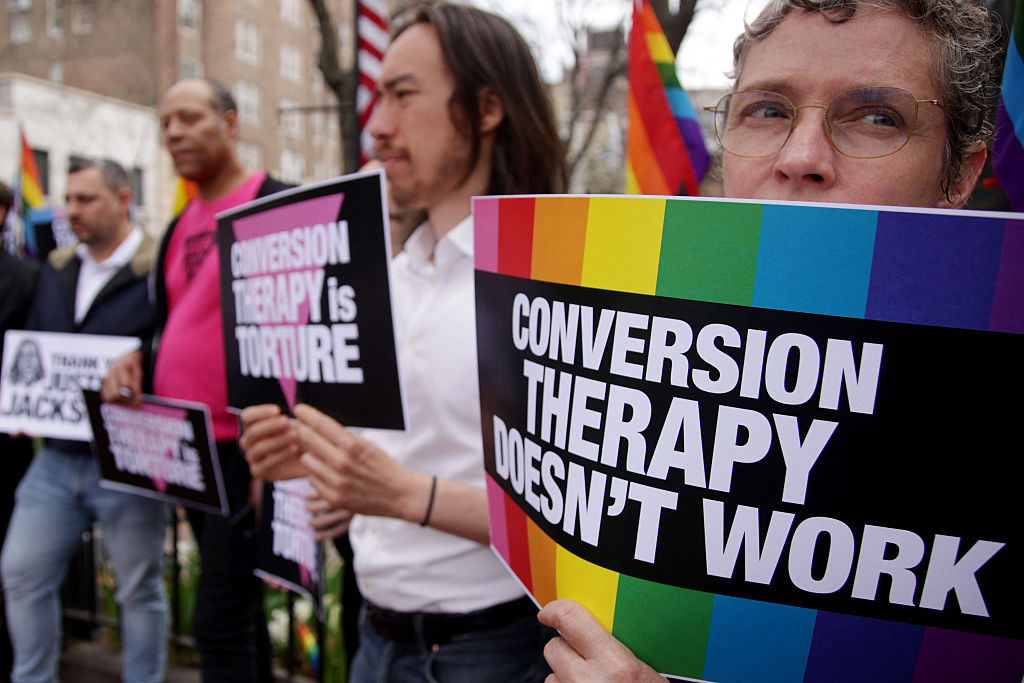
On April 1, the Supreme Court delivered a major, and controversial, decision in Chiles v. Salazar, ruling 8–1 against Colorado’s law banning conversion therapy for minors. The case centers on House Bill 19-1129, a 2019 measure that prohibits licensed clinicians from attempting to change a young person’s sexual orientation or gender identity using practices widely rejected by the medical community. Notably, Justice Ketanji Brown Jackson was a lone dissenter in the case.
In its ruling, the Court determined that talk therapy constitutes “pure speech” protected under the First Amendment, rather than professional conduct subject to state regulation. That distinction proved pivotal. By rejecting Colorado’s argument that the law governs professional behavior, not speech, the Court issued a preliminary injunction, temporarily blocking enforcement of the ban while the case returns to lower courts for further review.
Colorado is one of 23 states that have enacted similar restrictions on conversion therapy for minors. Now, the future of those laws may be uncertain.
What did Justice Ketanji Brown Jackson say in her dissent?
In her dissent, Justice Jackson warned that the ruling could have far-reaching and dangerous consequences. She argued that the decision risks undermining states’ authority to regulate medical professionals and could expose vulnerable patients to harmful, unproven treatments.
“Ultimately, because the majority plays with fire in this case, I fear that the people of this country will get burned. Before now, licensed medical professionals had to adhere to standards when treating patients: They could neither do nor say whatever they want. Largely due to such State regulation, Americans have been privileged to enjoy a long and successful tradition of high-quality medical care,” she wrote.
“Today, the Court turns its back on that tradition. And, to be completely frank, no one knows what will happen now. This decision might make speech-only therapies and other medical treatments involving practitioner speech effectively unregulatable, not to be reached via licensing standards, medical-malpractice liability, or any other means of state control. Who knows? Certainly not the majority. It appears to have made this momentous decision without adequately grappling with the potential long-term and disastrous implications of this ruling. The fallout could be catastrophic. Many regulations impact the speech of medical professionals in the context of their provision of healthcare to patients; the possibilities go far beyond talk therapy and informed consent.”
Justice Ketanji Brown Jackson added that the decision “threatens to impair States’ ability to regulate the provision of medical care in any respect. It extends the Constitution into uncharted territory in an utterly irrational fashion. And it ultimately risks grave harm to Americans’ health and wellbeing.”
What brought the case to the Supreme Court?
The case was brought by Kaley Chiles, a licensed counselor who challenged Colorado’s ban, arguing it violated her First Amendment rights. Chiles maintains that the law restricts her ability to speak with clients about her religious beliefs, including her views on “biological sex,” according to the Guardian. She was represented by Alliance Defending Freedom, a conservative legal organization known for its involvement in high-profile anti-abortion and anti-LGBTQ+ litigation. The Court sided with Chiles, finding that the law likely censors her viewpoint. The case will now return to a lower court, where the statute will be evaluated under “strict scrutiny,” the highest standard of judicial review.
Notably, Justices Elena Kagan and Sonia Sotomayor joined the conservative majority in the decision, leaving Ketanji Brown Jackson as the sole dissenter, but the first Black woman Supreme Court justice wasn’t alone in her thoughts. Major medical organizations, including the American Medical Association and the American Psychological Association, have long condemned conversion therapy, citing a lack of scientific evidence and strong links to increased rates of depression, anxiety, and suicide attempts among LGBTQ+ youth.
What happens next?
While the Supreme Court’s decision challenges how states can regulate conversion therapy, it does not explicitly endorse the practice itself. Legal experts note that other avenues, such as malpractice or consumer protection laws, could still be used to hold providers accountable. But the latest decision has created a large grey area. Advocates warn that weakening preventive bans could shift the burden onto patients after harm has already occurred, with dangerous consequences.
“While survivors can certainly seek redress after they’ve been harmed, the absence of preventative regulation means some of these practices may pop up again and that has real concrete impacts on youth, like increased suicidality, anxiety and depression,” said Josh Rovenger, legal director of GLAD Law during an interview with the Guardian on April 2.
Research consistently shows that LGBTQ+ youth subjected to conversion therapy are more than twice as likely to attempt suicide.
The American Psychological Association echoed those concerns, cautioning that the ruling could leave patients without meaningful protection.
“APA is unsettled that the Court would treat restrictions against ineffective and harmful treatments as a violation of a counselor’s speech rather than regulation of professional conduct,” said APA CEO Arthur C. Evans Jr., Ph.D. “Our ethical standards are unchanged. Psychologists should continue to provide evidence-based care and avoid practices known to cause harm.”
The National Association of Social Workers also pushed back strongly.
“This decision directly contradicts the NASW Code of Ethics, which prioritizes client well-being, cultural competence, and the fight against oppression and discrimination,” the organization said in a statement. “Conversion therapy is not an ethical or evidence-based practice — it is harmful and damaging.”
Why it matters
Conversion therapy, sometimes referred to as “reparative therapy,” has been widely discredited by the medical and mental health community. These practices, which often target LGBTQ+ youth, can take many forms, from talk therapy to more extreme and coercive methods.
Web MD notes that some forms of the controversial practice “teach stereotypical masculine and feminine behaviors or use hypnosis to try to change thought patterns for same-sex attraction.”
In some cases, methods have included aversion techniques designed to create negative associations through pain or discomfort, including through “electric shocks” or “paralysis-causing drugs” in the hopes of the patient changing their identity, Web MD adds.
Before the latest Supreme Court decision, concerns about the practice rose steadily over the last year. Shockingly, a 2025 study by The Trevor Project tracked nearly 1,700 LGBTQ+ young people across the U.S. from September 2023 through March 2025 and found a sharp rise in concerns around conversion therapy. Over that time, the share of youth who said they had been threatened with conversion therapy increased from 11% to 22%, while those who reported actually experiencing it grew from 9% to 15%.
As the case moves back through the courts, its outcome could have sweeping implications, not just for Colorado but for similar laws across the country. We must do better.
SEE MORE:
Ketanji Brown Jackson’s Bold Inauguration Statement
Favoring Trump, SCOTUS Majority Undermines Federal Court Judges
Understanding Ketanji Brown Jackson’s Dissent In Conversion Therapy Case
was originally published on
newsone.com

