

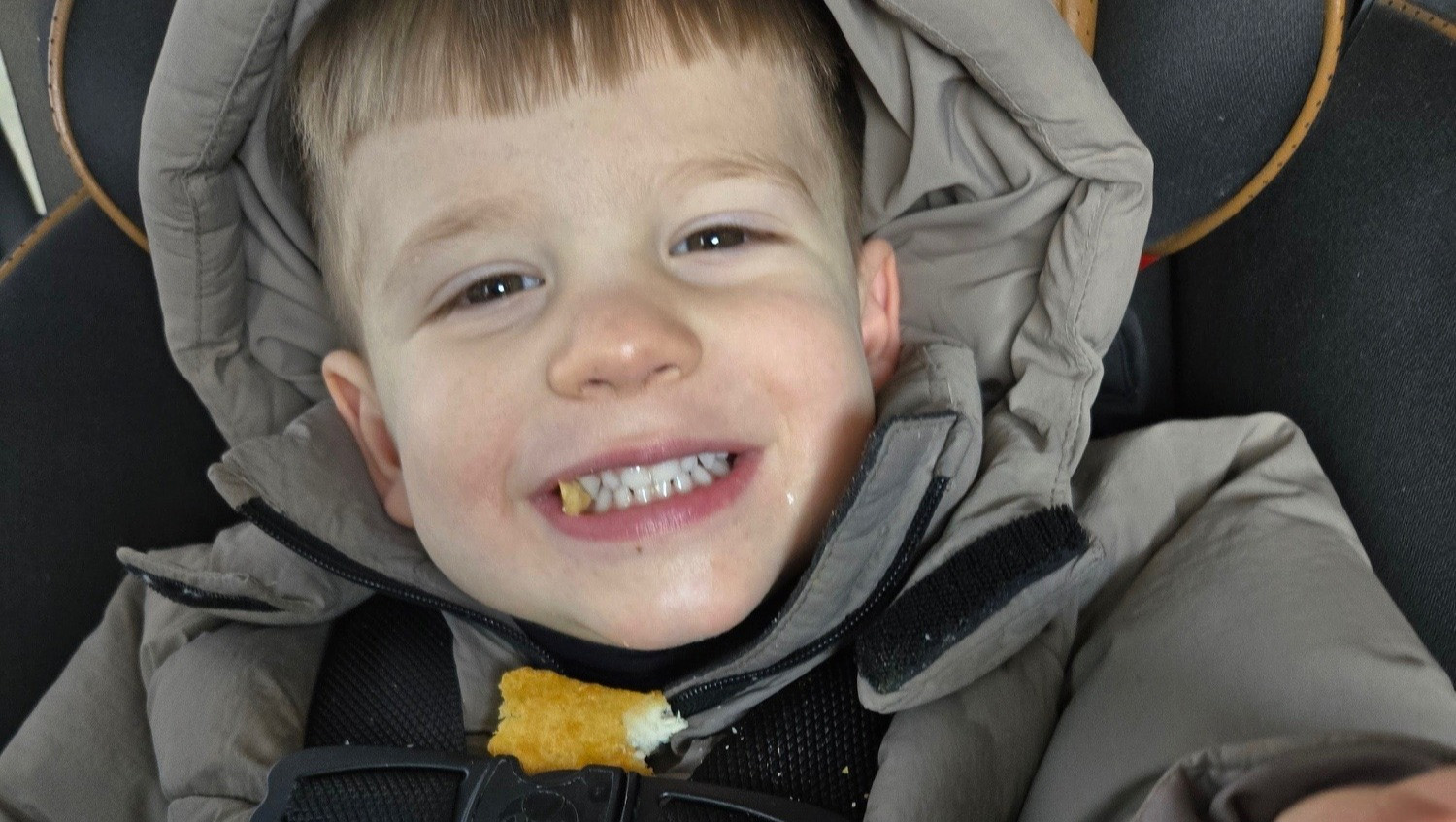
For the most part, Lucas Azevedo is just like most four-year-old boys – he’s active, smiles a lot and loves playing with cars and trains. But he also struggles to stand unsupported and has some trouble speaking.
Until recently, the cause of these symptoms resembling cerebral palsy mystified both his parents and doctors. Then, in November, genetic testing conducted at Mackenzie Health in Richmond Hill identified a condition so rare that Lucas is now only the second child in the world known to have it.
Both copies of his RBM28 gene were identified as the likely culprit, giving his parents the relief of an answer but a whole new challenge, as the diagnosis is so rare that there’s essentially no research or literature to work with.
“It’s good because we’ve kind of got some answers, but kind of like worst case scenario,” said Sophia Azevedo, Lucas’ mother. “We don’t know what it’s going to do in the future, we don’t know if it’s life-limiting, we don’t know anything.”
“Now you can kind of pinpoint what it is, but at the same time it’s stressful because you don’t know what it does to him,” said Lucas’ father, Victor Azevedo.
Sophia tells CityNews they’ve been learning about a gene therapy that holds some promise, adding that this particular gene causing him trouble, is a good candidate. The therapy is called Adeno-associated virus (AAV) vector-based gene therapy, and it involves a genetically modified virus being reprogrammed to deliver therapeutic DNA into cells.
However, this is a cutting-edge medical technique with most of the expertise based in the United States. To launch a research study and develop a customized treatment for Lucas is possible through the University of Massachusetts, but expensive, costing around US$1.2 million, with over $210,000 needed just to launch the process.
The family started a Gofundme campaign on January 9 to try to raise the necessary funds. As of January 31, they’ve received over $134,000 from just over 700 donations.
“Let’s just do what we have to do to try and get him that treatment, and that’s what all our focus is on,” said Sophia.
The illness is described as progressive, which explains why Lucas has experienced regression in his standing compared to when he was two years old. In the meantime, he’ll continue under the care of SickKids and receive regular physiotherapy, three hours a day, five days a week, in the hopes of maintaining his function long enough for a therapy to be developed.

