While their friends are out living their lives, they are rushing home from school — or missing school — to take care of the medical, emotional and physical needs of parents,
grandparents
or siblings, with little or
no support
or even recognition.
Researchers estimate there are upwards of one and a half million young caregivers in Canada, although
that is likely an underestimate.
That number includes caregivers between the ages of 15 and 30, but some are much younger.
Many of them live in a space between childhood and adulthood. Most Canadians don’t know they exist.
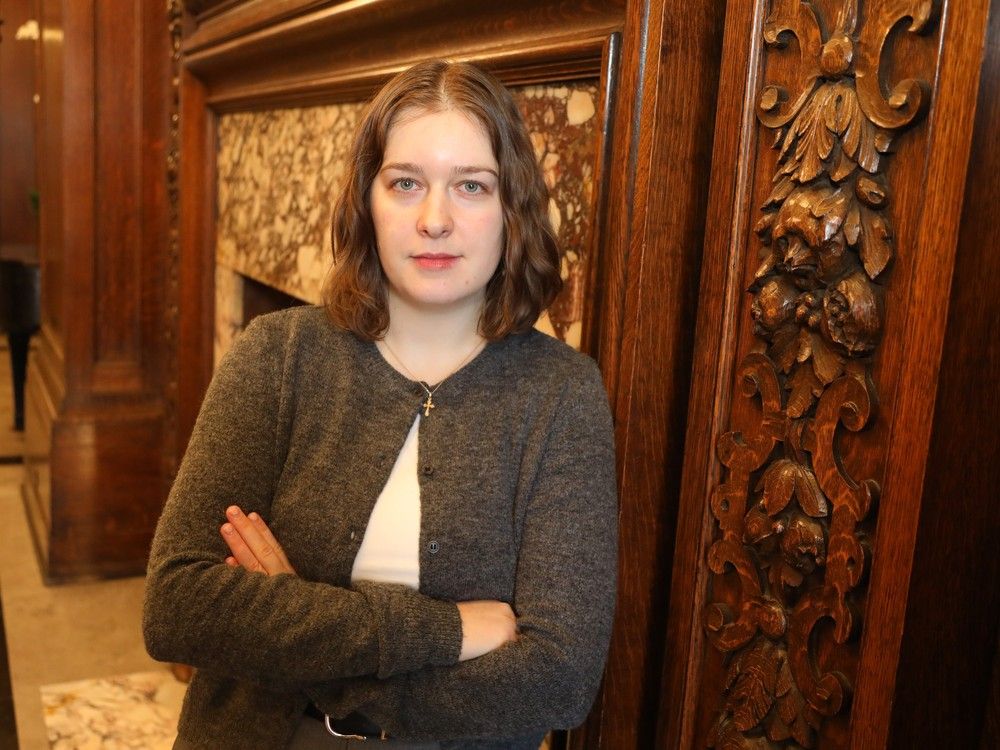
“I cried every day,” Rebekah Gold, 28, said during a national gathering of caregivers, advocates and others in Ottawa. She described acting as protector of her siblings, supporter for her mother, and negotiator with her father, who had undiagnosed psychosis, while she was in high school.
“It is complicated when you are a young person because you are simultaneously young and old, so when you are transitioning into what we call adulthood, it doesn’t really feel like that because you don’t really ever feel like you ever were young.”
Caregiving is undervalued and often overlooked, and that is even more pronounced when it comes to young caregivers. They are largely invisible in society — even to friends, classmates and teachers. Sometimes they don’t even recognize themselves as caregivers. Helping to take care of people with aging needs, disability and mental illness is just their life. Some young caregivers are barely school age.
In recent years, there has been a growing movement for better recognition and
support for caregivers
of all kinds in Canada, paid and unpaid. It is a movement that gained momentum during the pandemic. A number of Canadian provinces are now offering some form of financial support to unpaid caregivers.
At the Canadian Caregiving Summit, held earlier this month in Ottawa, caregivers, researchers, advocates and others heard about challenges, concerns and hopes for the future of caregiving.
The Canadian Centre for Caregiving Excellence, which sponsored the summit, released a roadmap for a federal strategy earlier this year, building on a commitment in the 2024 federal budget. The strategy calls for a caregiver allowance, public care insurance, a mental health fund for caregivers, federal employment insurance, and Canadian Pension Plan changes to support caregivers, reduced barriers for disability benefits and more.
Liv Mendelsohn, executive director of the Canadian Centre of Caregiving Excellence, calls caregivers “the invisible infrastructure holding up our economy.
“Like bridges, roads and buildings, care is what props up families, sustains our economy and holds our communities together. It is not a private struggle to bear. It is a shared commitment that binds us together.”
It is far from a fringe issue, she noted. One in four Canadians is a caregiver, and half of Canadians will be within their lifetimes. It contributes an estimated $97 billion in unpaid care each year.
“Care touches us all.” Yet nearly half of caregivers report feeling exhausted, burned out and overwhelmed, while two-thirds have experienced financial stress.
“We can’t afford to let this continue.”
Amid those numbers, young caregivers play a uniquely difficult role.
At the conference, attendees were handed a package that included a magazine for young caregivers that contained advice on how to talk to teachers when caregiving is affecting schoolwork, how to deal with bullying and how to ask for help.
“I am always in trouble because I’m often late to morning classes, even though I can’t help it,” one young caregiver is quoted as saying in the magazine piece on bullying. “The class laughs when the teacher calls me out.”
Gold, who spoke about her experiences providing care and support to her family, is now research coordinator for the Young Caregivers Association and co-founder and national council lead of the Young Caregiver Council of Canada, a grassroots advocacy group. She is a PhD candidate in child and youth studies at Brock University, where her research focuses on young carers and their families.
She grew up in Muskoka, part of a family wracked by her father’s psychosis and substance use. As a child, she protected her siblings and supported her mother who struggled with PTSD. Gold was often the family member who worked to de-escalate her father during a psychotic episode. It took a toll.
“There were times when we’d have to run away from home and hide in a ditch, and then we would just go back to school the next day and pretend you didn’t just experience this huge crisis moment the night before.“
The support of a teacher helped her to get through school, she said. Even so, Gold cried every day.
When she was 21, her father was finally diagnosed with a rare schizoaffective condition and is recovering from addictions, which has changed things for the family, she said. She and her father remain close.
Gold, now 28, is on the upper edge of those considered young caregivers, but the experiences of her childhood have left her in a kind of limbo. She said her life as a young caregiver is evidence of gaps in social, medical and other support systems that let her entire family down.
“Supports and services failed my parents, so I had to pick up the pieces of that.”
Gold still helps both of her parents navigate their physical and emotional challenges while she works on a PhD.
Numerous current and former young caregivers talked about their experiences at the conference.
Stephanie Muskat became a caregiver for her mother at 19. Her mother was eventually diagnosed with frontal temporal
dementia
. Muskat later cared for her grandmother as well, starting when she was 23. She felt isolated from friends and unable to find support.
“My friends didn’t understand why I couldn’t just go out with them. I joined a dementia group but found only seniors who looked at me with pity. There was no space for caregivers like me,” she said.
Muskat is a registered social worker and psychotherapist. The gaps she experienced in support as a caregiver led her to start a mental health practice, Compassion in Caregiving.
Vivian Stamatopoulos, an associate teaching professor at Ontario Tech University, is a leading Canadian expert on family caregiving. She began caring for her grandparents when she was in her 20s and started reading about young caregivers – something that made her decide to change course on her PhD thesis and focus on young caregivers in Canada.
Her research has found that there are at least one and a half million young caregivers in Canada. That number includes “astronomical” rates of young caregivers in the North where grandparents frequently step in to help raise children and later need care themselves. Many younger caregivers are not counted in statistics.
Among the children she interviewed as part of her research was a 15-year-old whose tasks included helping to care for her mother, who had diabetes and was a double amputee. The young teenager would help carry her mother up and down the stairs.
Children who work as family caregivers are often difficult to identify to those on the outside, she said.

“They don’t stand out. They don’t identify themselves because they are afraid of bullying. They don’t talk about it.” The children are also afraid they will be taken away from their families if they talk about it.
High absenteeism from school is often a red flag that children are putting in hours caring for a family member at home, Stamatopoulos said. “Their grades are suffering. They can’t keep up with their coursework. They have no social lives.”
There is work to be done in Canada when it comes to better understanding and supporting young caregivers, she said.
She noted that the U.K. has a well-organized system that includes financial and emotional support and formal recognition.
“We need to model the UK’s approach,” said Stamatopoulos. “We need to formally recognize them as caregivers. We need them to have legal rights not unlike adult caregivers.”
The first step, she said, is awareness.
“Most people just don’t know these kids are doing this work. And this is going to keep expanding as our population ages.”
Our website is your destination for up-to-the-minute news, so make sure to bookmark our homepage and sign up for our newsletters so we can keep you informed.