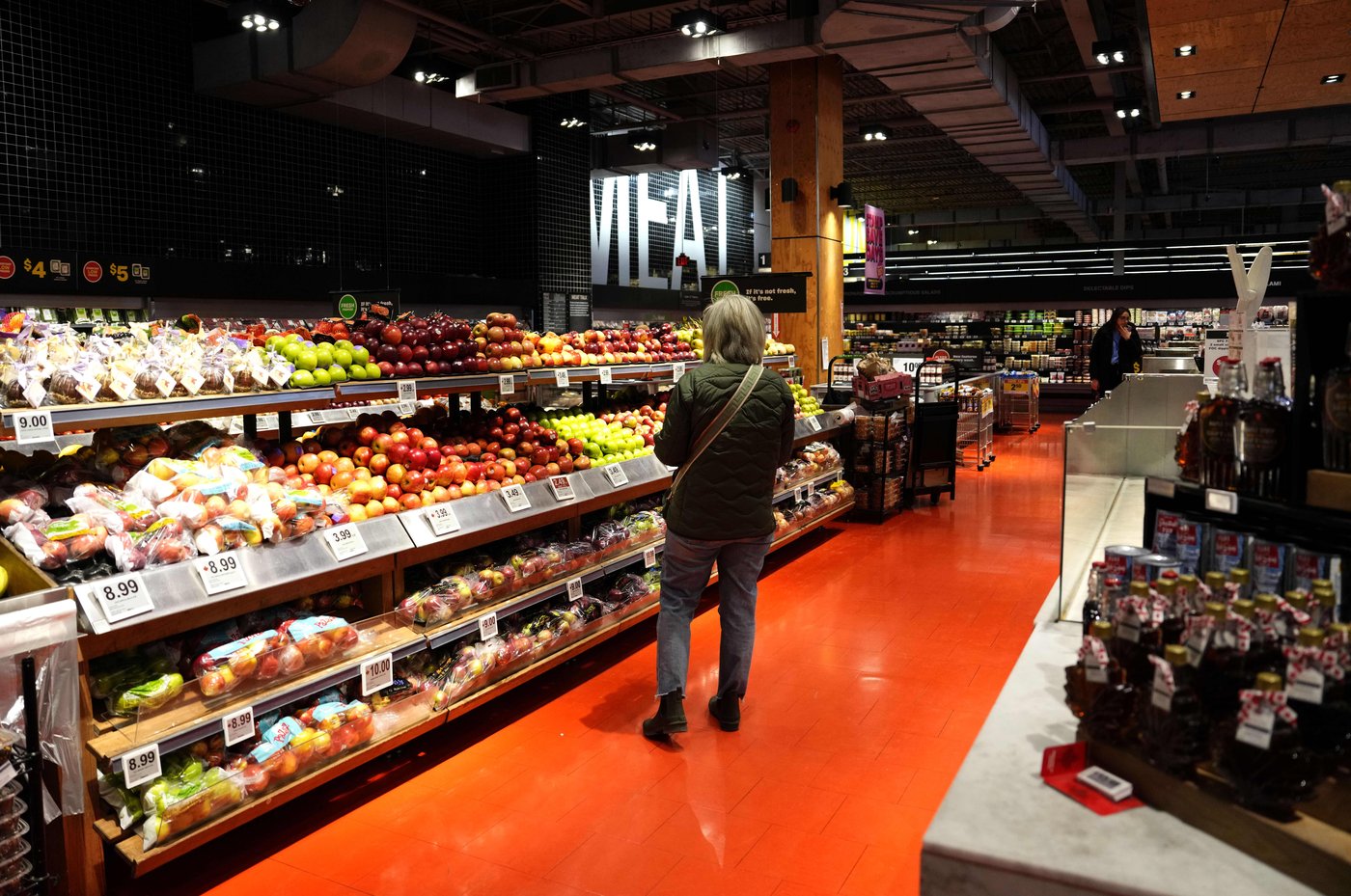
In the middle of one of his stores, Per Bank wanted to play a game. He tore a single banana off a bunch and challenged me to guess how much it cost. We both announced our bets and Bank, the CEO of Loblaw, Canada’s largest grocery chain, walked me over to a self-checkout to weigh and price the banana. He won, with a guess of 26 cents. It seemed like he’d played the game before.
During that store tour, he told me that he was toying with the idea of selling bananas as singles, rather than by the pound. That was more than a year ago, and Loblaw says it hasn’t changed its pricing model for bananas. But the concept stuck with me, and my trips to the grocery store have been a little more puzzling ever since. Avocados are priced by the piece. So are English cucumbers. But oranges, apples, bananas are typically priced by weight. Why?
I consulted sources in grocery and produce wholesale and it seems the answer has a lot to do with the size variability of certain fruits, consumer expectations and long-standing traditions in the industry. But most surprisingly, there doesn’t appear to be any widely accepted set of rules when it comes to what gets sold by weight and what is priced by the unit.
“I don’t know why they do it. Sometimes in the summertime, guys sell peppers by the piece which, to me, doesn’t make sense at all,” said Marshall Cohen, a veteran produce buyer at the Ontario Food Terminal, Canada’s largest wholesale fruit and vegetable market. “I don’t think I’ve ever seen two peppers weigh exactly the same.”
Cohen has worked at the terminal since the 1980s, and he’s seen different pricing strategies come and go, often based on how consumers reacted in stores.
“Some guys, at one time, tried to sell broccoli by the pound,” Cohen said. “People would start snapping off the ends.”
Metro, one of the top grocery chains in Canada, said there’s no “single definitive rule” when it comes to pricing produce.
”Pricing could work either way for many items, but retailers typically choose the approach that feels most familiar and intuitive for shoppers,” Metro spokesperson Marie-Claude Bacon said in an email.
In the last few decades, the industry has also seen advances in sorting technology, which has changed the way pricing works.
When Wes Visser started selling apples with his dad in the 1970s, it was always by the bushel. It wasn’t an exact science, just however many apples fit into the bin. Typically a bushel of apples weighed 48 pounds. But the same size bushel of Bosc pears could weigh about 80 pounds. “The noses of the pears, they would just all kind of nest together and you’d have a solid mass of pears you’d be picking up,” said Visser, who owns Northern Orchards, which sells apples out of the food terminal.
Now, his processing plant in Newmarket has a machine that takes 30 pictures of each apple and sorts it based on size. A size 80 apple, for example, means 80 apples fit into a case. A case of size 80 sells for $60 to $80 each. (A size 80 apple is a hand-sized apple for most adults — what Visser described as “a nice snack.”)
The shift to meticulously sorted cases of produce makes it easier for retailers to sell by the piece. Bacon, at Metro, said stores can sell “items like apples, oranges, avocados and cucumbers” by the unit “because customers can expect a relatively consistent product.”
But that model doesn’t work for everything, she said. “Bananas can vary in size,” she said. “Melons like cantaloupe and honeydew may look similar but differ in weight due to water content and growing conditions.”
I thought it was strange that she mentioned apples and oranges could be priced by the piece. Usually, they’re priced by weight. I asked Bacon if that was because Canadian consumers just weren’t used to seeing apples priced at $2 each, which might result in sticker shock.
“The short answer: you are correct,” she wrote back.
Suppliers and grocers also have to deal with changes in growing regions around the world. So it’s not always wise to let your customer get used to a per-piece price on, say, pomegranates, if that price is going to fluctuate. Even though pomegranates come sorted in different sizes, sometimes the size you want isn’t available, according to Cohen at the food terminal.
“Right now, the best pomegranates are coming out of Egypt,” he told me in mid-December. “And they come in size six, seven, eight, nine and 10. What are you going to do? One day you’re buying sixes, one day you’re buying 10s. Put them by the pound.”