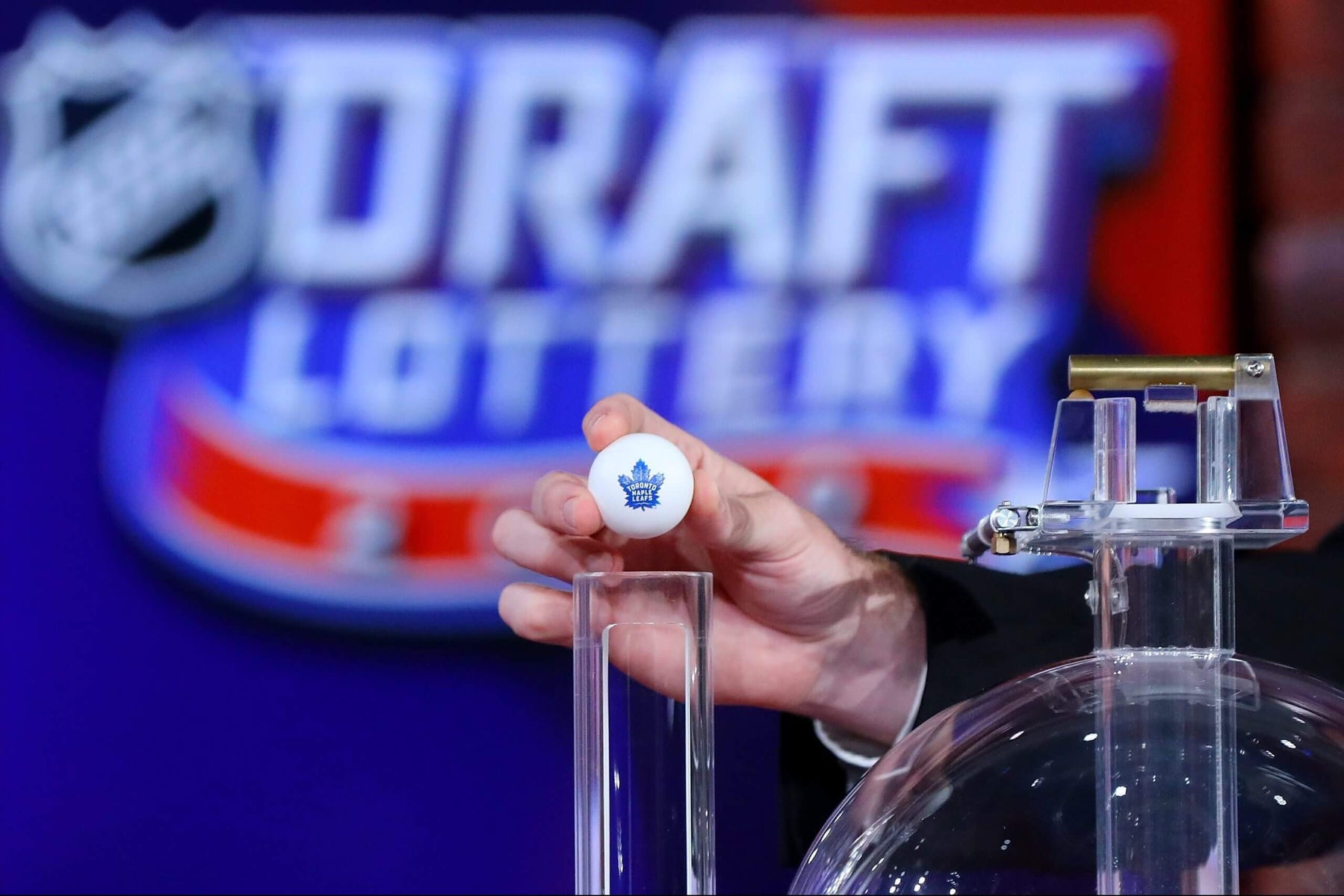
While the Stanley Cup Playoffs continue, focus will turn for a short while on Tuesday evening to the non-playoff teams as the Draft Lottery goes down at the NHL Network studio in Secaucus, N.J.
The future of these less fortunate franchises will begin to be charted. Will the last-place Vancouver Canucks get the payoff they hope for after such a turbulent season and end up with the top pick in the draft? Or will another team get lucky and supplant them in that position?
Last year, the New York Islanders finished with 82 points and missed the playoffs by nine points — not exactly a bottom-feeder. But they got lucky at the lottery, moved up to first overall, and took Matthew Schaefer, who stormed onto the scene this season and is the favourite to win the Calder Trophy as rookie of the year.
Ah, but the lottery isn’t just about the first-overall pick. The second-overall selection is in play as well.
To help clear up any lingering questions about how this process will work, read along in our primer that will explain the two draws.
And be sure to watch the lottery on Sportsnet or Sportsnet+ at 7 p.m. ET / 4 p.m. PT, where you can see each ball drawn live.
How does it work?
Fourteen numbered ping-pong balls are placed into the lottery machine and each of the teams are assigned their share of four-number combinations, weighted by their season finish. So, for example, the last-place Canucks have 185 of a possible 1,000 winning combinations, while the Washington Capitals — who have the longest odds – have just five combinations.
There will be two, four-ball draws: the first is for the first-overall pick, and the second draw is for the second-overall pick. However, it’s important to remember that teams can only move up a maximum of 10 spots, so only the bottom 11 teams can win the first-overall pick. For example, if the Capitals were to win the first draw, they’d move from the 16th-overall pick up to the sixth-overall pick. Everyone inside the top five would stay in the same order in that scenario.
Follow this link to view every one of the 1,001 possible combinations, and which team is assigned to them.
Just like last year, this draw will be done live on television, so you’ll be able to see how the odds change for each team after every ball is pulled. Some may be eliminated after the very first ball is drawn. After three balls are pulled, we’ll know precisely who still has a chance to win heading to the last ball, and which final number they’d need drawn to do it.
Last year, the Islanders had just a 3.5-per-cent chance to win the lottery, but one of their combinations was drawn first, and they shot up from 10th overall to first and took Schaefer.
What are the odds?
The following table shows the percentage chance each team has of winning the first lottery draw. These numbers will change dynamically as each of the four balls is pulled for the first draw. After the first draw is complete, every remaining team’s odds will be elevated for the second draw, based on which team wins the first draw and is no longer included in the second.
The teams are placed in reverse order of standings finish, so the last-place Canucks have the best chance of winning either draw.
| TEAM | ODDS |
| Vancouver Canucks | 18.5% |
| Chicago Blackhawks | 13.5% |
| New York Rangers | 11.5% |
| Calgary Flames | 9.5% |
| Toronto Maple Leafs* | 8.5% |
| Seattle Kraken | 7.5% |
| Winnipeg Jets | 6.5% |
| Florida Panthers | 6.0% |
| San Jose Sharks | 5.0% |
| Nashville Predators | 3.5% |
| St. Louis Blues | 3.0% |
| New Jersey Devils | 2.5% |
| New York Islanders | 2.0% |
| Columbus Blue Jackets | 1.5% |
| St. Louis Blues* | 0.5% |
| Washington Capitals | 0.5% |
Keep in mind, the lottery only sets the order of the first 16 picks of the first round. Picks 17-31 will be determined by playoff finish, with the Stanley Cup winner picking 31st overall. The Ottawa Senators are already locked in with the 32nd-overall pick — one they cannot trade — after getting their selection back from a previous league penalty.
The pick order in Rounds 2-7 is only determined by regular-season finish, so we know the Canucks’ draft pick will be the first one in every other round of the draft.
What to watch for
• As shown above, the Canucks have the best odds to win the lottery at 18.5 per cent, but since teams 12-16 can’t get the No. 1 pick, Vancouver actually has a 25.5 per cent chance to pick first overall. Vancouver has never picked first overall and might be the unluckiest draft lottery team, moving down after the 2016 (third to fifth), 2017 (second to fifth), 2018 (sixth to seventh) and 2019 (ninth to 10th) lotteries. It’s actually most likely (55.7 per cent) that they’ll end up with the third-overall pick.
• Entering the lottery with the fifth pick, the Toronto Maple Leafs will be on edge to see if they exit the draws with a first-round pick at all. The 2025 trade with Boston for Brandon Carlo included a top-five protected 2026 first-round pick going the Bruins’ way. If any team below Toronto, with the exception of Washington, wins either draw and moves up, it will knock the Leafs out of the top five and force them to transfer this year’s first-rounder to Boston. If a team ahead of the Leafs wins, Toronto will stay put, and if the Capitals win a draw, they can only move up to the sixth overall pick and keep Toronto in place as well.
• The St. Louis Blues appear here twice. The pick with the asterisk next to it (15th overall) was traded from Detroit to St. Louis at this year’s deadline for Justin Faulk as the Red Wings made a playoff push that failed. Detroit has had some recent bad luck at the lottery, too, dropping three spots in 2020 when the Red Wings finished last overall. More bad Red Wings luck here would lead to the Blues winning a draw with Detroit’s pick, but the highest it can climb is to fifth overall.
• In 2022, a new rule was introduced that restricted any team from winning the lottery more than twice in a five-year period. The four lottery winners in the past four years have been, in order: Montreal, Chicago, San Jose and the Islanders. The Blackhawks, Sharks and Islanders are all present in this year’s lottery again, and if any were to win this year’s lottery, they would be ineligible to do so again until the five-year clock expires.
Who could go first overall?
The favourite at the beginning of the season was Gavin McKenna, and he’s still very much in the mix, ranked No. 1 by Sportsnet’s Sam Cosentino in April. McKenna scored 15 goals, 36 assists and 51 points in 35 games with Penn State in the NCAA this season after making the jump over from the CHL’s Medicine Hat Tigers. A left-shot winger, McKenna’s offensive game is not in doubt. What brought in other challengers for No. 1 overall was McKenna’s unpolished defensive game. However, according to our scout Jason Bukala writing in his March rankings, McKenna “has addressed most of the concerns I’ve had about his overall game.”
The main challenger for the No. 1 spot against McKenna is Sweden’s Ivar Stenberg, another left-shot winger, but one who brings a more polished all-around game. Though Stenberg’s offence isn’t as standout as McKenna’s, the Swede was still taking a run at Daniel Sedin’s record for most SHL points in a draft-eligible season early on, but wound up well short of Daniel’s 42 points with 33 of his own. Still, those 33 points were just one shy of Henrik Sedin’s draft-year total, and more than either Leo Carlsson or William Eklund put up in their more recent draft seasons. Stenberg was also Sweden’s top scorer at the World Junior Championship with 10 points in seven games.
Those are the two most likely No. 1-overall picks, but the positions these players play make the whole top five intriguing. Because, following these two left-shot wingers, are players who play more premium positions.
Chase Reid and Keaton Verhoeff, a couple of right-shot defencemen who will be coveted, were both ranked in the top five by Cosentino and Bukala. Verhoeff started the season as a potential challenger for the No. 1 spot, while Reid has been on a rocket up the rankings all season. Reid scored 48 points in 45 games with Sault Ste. Marie in the OHL, while Verhoeff scored 20 points in 36 games with North Dakota, playing against older competition in the NCAA.
And, finally, Caleb Malhotra is the top-ranked centre, with Cosentino placing him No. 3 and Bukala writing that he could finish “up as high as No. 2 on my board by the end of the year.” In the OHL playoffs with Brantford, Malhotra had 26 points in 15 games, but his season ended with a loss on Monday. He also comes with an NHL pedigree as his dad, Manny, played 991 NHL games and is currently the head coach of Vancouver’s AHL affiliate.